

In an era defined by rapid technological shifts, intensifying political polarization, and renewed debates over the boundaries of free speech, a powerful coalition of Hollywood’s most influential figures is preparing to take a stand. Led by Academy Award-winning actress and activist Jane Fonda, the newly revitalized Committee for the First Amendment is set to host a high-profile concert event, "Rise Up, Sing Out: A Concert for the First Amendment," at New York City’s historic Town Hall.
The event, scheduled for Sunday, June 14—coinciding with Flag Day—represents more than a mere musical performance; it serves as a rallying cry for artists, storytellers, and citizens to defend the constitutional bedrock of American democracy. As the guest list continues to grow, the concert underscores a deepening anxiety within the creative community regarding government censorship, industry complicity, and the shrinking space for dissent.
The Lineup: A Convergence of Generational Talent
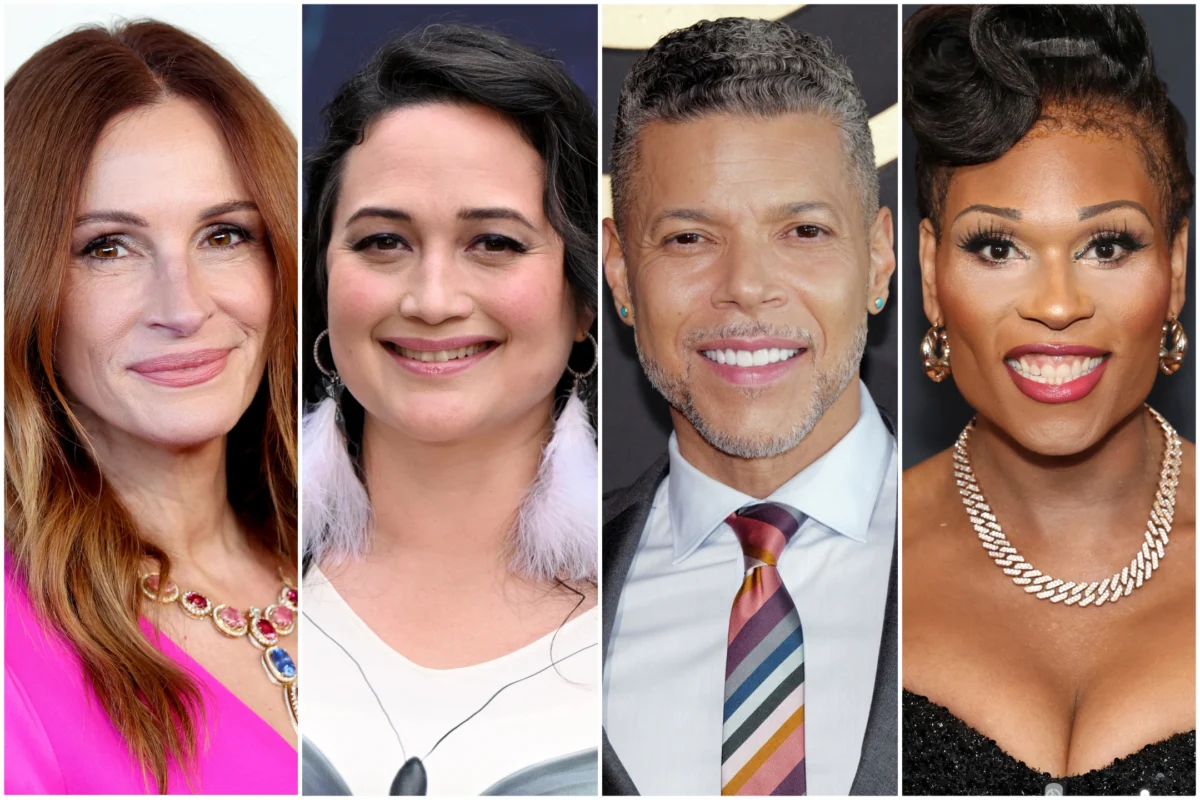
The organizers have curated an eclectic, multi-generational roster of talent designed to bridge the gap between traditional activism and contemporary cultural influence. The most recent additions to the bill—Julia Roberts, Lily Gladstone, Wilson Cruz, and Peppermint—bring a formidable level of star power and social advocacy to the evening.
These luminaries join an already robust lineup of performers and special guests, including Bette Midler, Patti Smith, Joy Reid, Rufus Wainwright, Sasha Allen, and the Broadway Inspirational Voices. The inclusion of diverse voices such as Jenn Colella, Alex Joseph Grayson, and the Rude Mechanical Orchestra suggests a production that will lean heavily on the tradition of protest music, blending theatrical performance with political urgency.
The production team, led by director Schele Williams and music director Mary Mitchell Campbell, is crafting a performance that aims to be both artistically rigorous and ideologically potent. With scripts written by Bess Kalb and a technical team encompassing high-level lighting, sound, and projection design, the event is positioned as a major cultural moment rather than a grassroots protest.
Chronology: From the McCarthy Era to the Modern Day
The Committee for the First Amendment is not a new invention; it is a profound historical revival. The original iteration of the group was formed in the late 1940s, during the height of the Red Scare and the McCarthy-era congressional hearings, which targeted perceived communist sympathizers in the entertainment industry. Henry Fonda, Jane’s father, was a prominent member, standing alongside legends like Humphrey Bogart and Lauren Bacall to protest the government’s efforts to intimidate artists and blacklist creators.
In October 2024, Jane Fonda signaled a dramatic return to these roots, announcing the formal relaunch of the coalition. The initiative was met with overwhelming support from the creative class, with more than 550 A-listers signing on as founding members. The list of signatories—which includes luminaries like Barbra Streisand, Spike Lee, Viola Davis, Pedro Pascal, and Billie Eilish—reads like a "who’s who" of the modern entertainment industry, signaling a broad-based commitment to safeguarding the First Amendment against modern threats.
Supporting Data and the Mission of the Committee
The Committee for the First Amendment describes itself as a collective of artists and cultural leaders standing together to defend free expression. While the original 1940s iteration focused on anti-communist hysteria, the modern Committee is grappling with a different set of challenges: the rise of digital surveillance, the influence of algorithmic censorship, and the chilling effect of legislative measures that target specific demographics or viewpoints.
All proceeds from the June 14 event will directly fund the Committee’s operations, which include legal advocacy, public awareness campaigns, and the development of support structures for artists who find their work under fire. By leveraging the immense reach of its celebrity members, the Committee aims to turn the tide against what it describes as "industry complicity and intimidation."
The event will be accessible to a wide audience. For those unable to attend the in-person performance at Town Hall, the concert will be available to watch for free via livestream, ensuring that the message of the night reaches beyond the walls of the venue.
Official Responses: Jane Fonda on the State of Democracy
At the heart of the movement is Jane Fonda’s vision. In a stirring statement issued in anticipation of the concert, Fonda articulated the urgency of the moment, framing the defense of free speech as a non-negotiable requirement for a functional democracy.
"We can’t sit idly by while our rights are at stake," Fonda stated. "History shows us that when democracy is threatened, song becomes one of our most powerful weapons. Right now, we are at a critical crossroads. It’s time for us to rise up, raise our voices, and stand up against a government that refuses to put its people first. We are fighting back the best way we know how to: with our community and in solidarity."
Fonda’s rhetoric reflects a growing sentiment among the coalition that the arts are not merely a mirror of society, but an essential component of the machinery that holds power accountable. By invoking the memory of her father and the legacy of the original committee, she effectively bridges the gap between historical precedent and the immediate, pressing needs of the current political landscape.
Implications for the Creative Industry
The "Rise Up, Sing Out" concert is expected to have significant implications for the entertainment industry. First, it marks a shift toward more overt political mobilization among top-tier talent. While celebrity activism is not new, the scale and structural organization of this Committee suggest a more permanent, proactive stance rather than reactive engagement.
Second, the event raises questions about the responsibility of media corporations and studios. By highlighting "industry complicity," the Committee is putting a spotlight on the platforms, financiers, and gatekeepers that dictate what stories are told and which voices are silenced. The pressure on these institutions to protect the creative freedom of their employees is likely to intensify as the Committee grows in stature and influence.
Finally, the concert serves as a litmus test for the role of the First Amendment in the 21st century. As the Supreme Court and lower courts continue to interpret the boundaries of free speech—particularly in the context of digital discourse and public education—the Committee’s advocacy will likely find itself at the center of future litigation and policy debates.
Conclusion: Looking Toward June 14
As the calendar inches toward Flag Day, the excitement surrounding the concert is palpable. The combination of high-profile advocacy, historical resonance, and the sheer breadth of the talent involved positions "Rise Up, Sing Out" as a landmark event.
For the members of the Committee, June 14 is not an end goal, but a launching pad. The concert is an invitation to the public to recognize the fragility of their rights and the power of their voices. In a world where the noise of partisanship often drowns out the nuances of expression, the Committee for the First Amendment is betting that the power of song—and the solidarity of artists—can still serve as a beacon of resistance and a catalyst for change.
Whether the event succeeds in sparking a wider movement remains to be seen, but the sheer force of the names associated with the project guarantees that the conversation around free speech will be louder, more persistent, and more visible than it has been in decades. For Jane Fonda and her fellow organizers, the mission is clear: the fight for the First Amendment is the fight for the soul of the nation, and they intend to win it with every note they sing.
 Neng Nana
 Layla Zulfa
 Azzam Bilal Chamdy
