

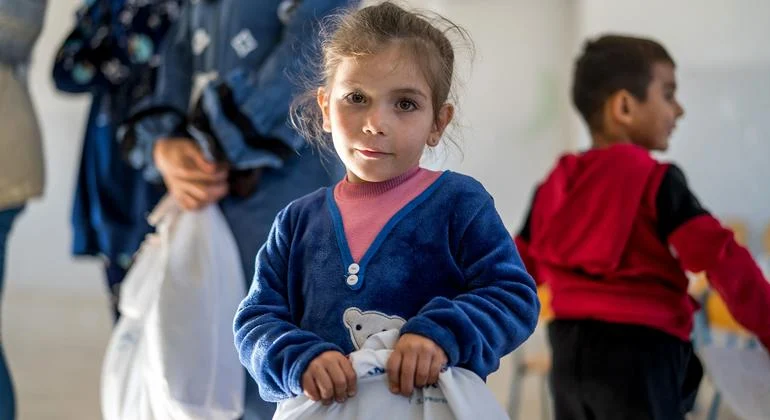
Despite a fragile diplomatic breakthrough between the United States and Iran aimed at cooling regional tensions, the reality on the ground in Lebanon remains one of profound tragedy. For the children of Lebanon, the promise of a ceasefire has yet to translate into safety. As hostilities between Israel and Hezbollah persist, the humanitarian fallout has reached a catastrophic inflection point, with new data revealing a devastating toll on the country’s most vulnerable population.
Main Facts: A Humanitarian Crisis in Freefall
Since the escalation of hostilities on March 2, 2026, Lebanon has become a theatre of unrelenting violence. According to the latest flash update from the United Nations Office for the Coordination of Humanitarian Affairs (OCHA), the conflict has claimed the lives of 247 children, while another 992 have been maimed or injured. This translates to a harrowing average of 12 children killed or wounded every single day.
The violence has shattered the infrastructure of daily life. Homes, schools, and essential water and sanitation systems have been decimated, turning neighborhoods into landscapes of ruin. More than 770,000 children are currently experiencing extreme psychological distress, compounded by the trauma of repeated displacement and the ever-present threat of unexploded ordnance (UXO) that litters the countryside, waiting to claim its next victim.
Chronology of Escalation: From March to Mid-June
The timeline of this crisis is marked by a steady erosion of security. Following the initial flare-up on March 2, the conflict rapidly expanded beyond the southern border regions.
- March – May 2026: Intensification of cross-border shelling and tactical airstrikes. The scale of the conflict forced hundreds of thousands of families to flee their ancestral homes, many for the second or third time.
- Early June 2026: Reports of increased military activity, including high-density armored movements by the Israel Defense Forces (IDF) and sustained engineering operations, signaled that the conflict was far from abating.
- June 15, 2026: A Memorandum of Understanding between the United States and Iran offered a glimmer of hope for a regional de-escalation. However, the optimism was short-lived.
- June 17, 2026: Despite the diplomatic announcement, UNIFIL recorded a massive surge in kinetic activity, including 312 separate trajectories of fire between midnight and 4:00 PM local time. UN peacekeepers observed 26 violations of Lebanese airspace by Israeli military aircraft and at least one major air attack.
Supporting Data: The Anatomy of Violence
The data provided by UNIFIL and humanitarian agencies paints a picture of a conflict that ignores traditional boundaries. The sheer volume of artillery and airstrikes in recent days highlights the fragility of the current "de-escalation."
UNIFIL monitors reported that on Wednesday alone, 291 trajectories were attributed to the IDF, compared to 21 attributed to Hezbollah. These figures reflect a sharp increase in activity compared to the preceding 48 hours, where reports of 174 and 189 trajectories were logged.
Beyond the immediate theater of the border, the conflict has encroached upon urban centers. Areas such as Nabatieh, Saida, and Jezzine have been subjected to sustained artillery shelling and airstrikes. Even the capital, Beirut, and its southern suburbs have been under the constant shadow of surveillance drones, creating a pervasive atmosphere of fear. In one tragic incident in Shukin, a strike on a civilian vehicle resulted in four immediate fatalities, illustrating the lethal risk to civilians moving within the country.
Maritime security has also been compromised. UNIFIL reported two IDF vessels conducting patrols within 600 meters of the Naqoura coastline—a highly provocative move in an area that serves as the headquarters for UN peacekeeping operations.
Official Responses: "Where is Humanity?"
The human cost of this conflict has elicited visceral reactions from international humanitarian leaders. Marcoluigi Corsi, the UNICEF Country Representative in Lebanon, has been a vocal advocate for the protection of children, expressing deep skepticism about the current state of the ceasefire.
"We hope that this ceasefire will be indeed a real ceasefire, because since the declaration of the previous one, violence against children and the conflict hasn’t really stopped," Corsi told UN News.
Corsi shared a harrowing encounter with a 14-year-old girl in a UNICEF-supported hospital. The girl, who survived an attack that killed her father and three brothers, was left in a coma. Upon waking, her first words were not of her own pain, but a searing indictment of the world: "Where is humanity? Where is a sense of justice?"
For humanitarian workers on the ground, these questions are unanswerable. The systematic destruction of civil society—the schools that no longer stand, the water systems that no longer function, and the shattered sense of safety—represents a generational crime. UNICEF’s message remains consistent: the scale of physical and psychological harm is unacceptable, and the "collateral damage" of this conflict is, in truth, the destruction of Lebanon’s future.
The Implications: A Stunted Generation
The consequences of this conflict extend far beyond the current casualty lists. The primary implication of the ongoing violence is the systematic disruption of childhood.
The Psychological Scars
With 770,000 children living in a state of high-alert stress, the long-term mental health crisis in Lebanon will be a multi-generational burden. The trauma of losing loved ones, witnessing extreme violence, and living as displaced persons in makeshift shelters will require decades of specialized support. Experts warn that the normalization of violence in the lives of these children will have profound effects on their ability to learn, socialize, and integrate into society in the future.
The Erosion of Sovereignty and Security
The inability to secure the maritime and land borders is further destabilizing the Lebanese state. UNIFIL’s recent efforts to assist the Lebanese Navy in assuming maritime security duties, as established in the December agreement, are being undermined by persistent violations of territorial integrity. As Force Commander Major General Diodato Abagnara noted, "Long-term stability on land is intrinsically linked to security at sea." Without a cessation of the aerial and maritime incursions, the Lebanese state remains unable to project authority, leaving a power vacuum that further empowers non-state actors.
The Loss of Future Potential
The "true cost" of this crisis, as humanitarian agencies point out, is not just in lives lost today, but in the opportunities missed tomorrow. An entire generation is being denied education, healthcare, and the fundamental right to play and grow in a secure environment. The destruction of schools and the displacement of teachers mean that thousands of children are effectively being denied their right to an education, a setback that will echo through the Lebanese economy and social fabric for decades.
Call to Action: The Need for Sustained Protection
As the international community watches, the mandate for protection is clear. UNICEF and other agencies have issued an urgent plea for:
- Immediate Protection of Infrastructure: Hospitals, schools, and water systems must be declared off-limits to all combatants.
- Unrestricted Humanitarian Access: The ability for aid agencies to reach the displaced must be guaranteed without the threat of bombardment.
- Adherence to International Law: All parties must be held accountable for the violations that have led to the deaths of hundreds of children.
"Most importantly," Corsi emphasized in his statement, "Lebanon’s children must be given the chance not only to survive this crisis, but to recover from it and reclaim the future that conflict has placed at risk."
As the UN prepares to release its latest report on children and armed conflict, the world is forced to reckon with a harrowing reality: in the heart of the Middle East, the most innocent among us are paying the highest price for political failures. Whether the current diplomatic efforts can finally bring a halt to the violence remains the single most important question for the survival of Lebanon’s next generation.
 Lina Hope
 Asro
Asro
 Layla Zulfa
