

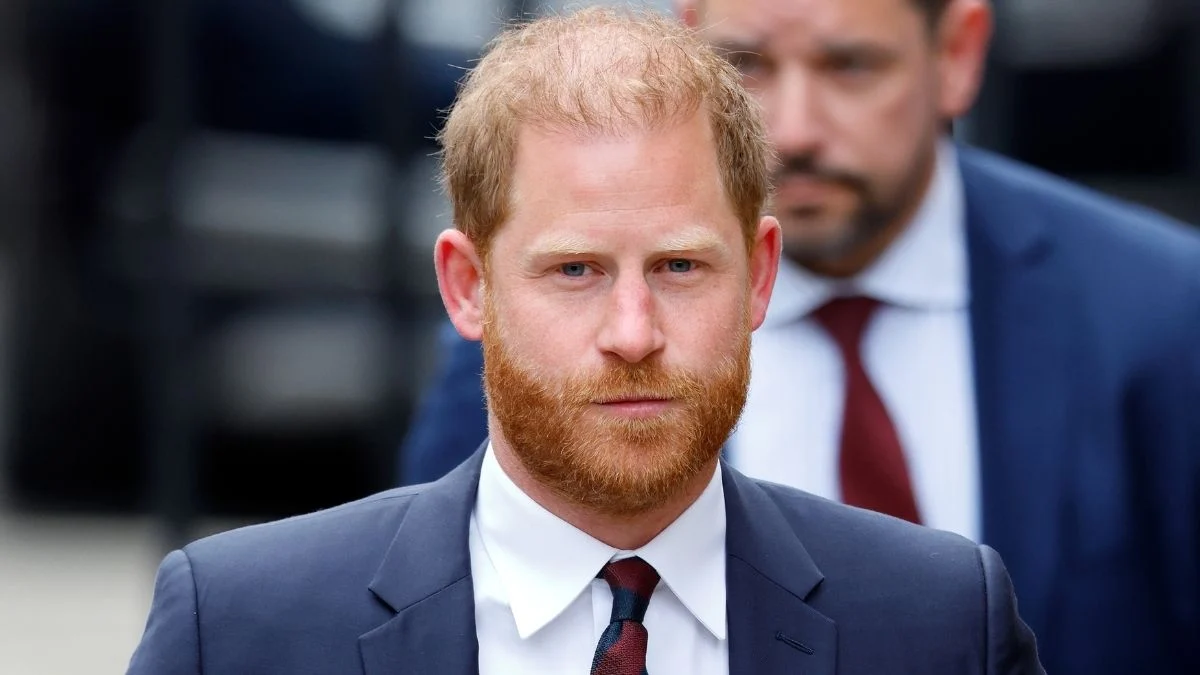
In a move that has once again ignited discourse regarding the complex interplay between royal heritage, personal privacy, and the public eye, Prince Harry has reportedly doubled down on his commitment to a personal tribute project honoring his late mother, Princess Diana. During a recent and largely understated return to the United Kingdom, the Duke of Sussex made a pilgrimage to Althorp—the Spencer family ancestral estate and the final resting place of the "People’s Princess."
Sources close to the Duke suggest that the visit was not merely a moment of quiet reflection, but an active step in a larger, long-term project designed to preserve and promote the values held by Diana. Despite anticipating significant backlash from critics and royal observers, Harry remains steadfast, signaling that his dedication to his mother’s legacy now supersedes the concerns of public perception.
The Pilgrimage to Althorp: A Private Moment, A Public Intent
The Althorp estate, situated in Northamptonshire, has long served as the sanctuary for Diana’s memory. Overseen by her brother, Charles Spencer, 9th Earl Spencer, the grounds remain a place of profound emotional weight for the Spencer family. Prince Harry’s recent visit, while framed as a private excursion to pay his respects, appears to have served a secondary, more utilitarian purpose.
According to reports from Closer, the Duke of Sussex utilized the visit to gather visual material. Insiders claim that Harry captured discreet photographic and video footage during his time at the site. The intent behind this documentation remains the subject of intense speculation, though it is widely believed to be destined for a future documentary or commemorative project intended to educate future generations about the Princess of Wales.
Beyond the lens, the visit was marked by a moment of quiet gratitude. The Duke reportedly took the time to personally meet with the estate’s ground staff, expressing his sincere appreciation for their years of "lovingly maintaining" his mother’s final resting place. This act of humility underscored the personal nature of the trip, yet it is the potential commercial or public application of the footage that has caused a stir among royal watchers.
Chronology of a Growing Divide
To understand the weight of this current development, one must look at the timeline of the Sussexes’ relationship with the narrative surrounding Diana.
- 1997–2020: The memory of Princess Diana was largely curated through official royal channels, state-sanctioned statues, and public memorial services. During his time as a working royal, Harry’s participation in these tributes was synchronized with the broader institution of the monarchy.
- 2020–2021: Following his "Megxit" departure from royal duties, Harry began to assert more autonomy over how his mother’s story was told. This period saw the launch of the Archewell Foundation, which explicitly cites the values of "compassion" and "community" that Diana championed.
- 2022–2023: The release of the Harry & Meghan Netflix docuseries and the Duke’s memoir, Spare, brought his mother’s legacy to the forefront of his public-facing brand. Critics argued that the use of Diana’s image in these projects bordered on exploitation, while supporters viewed it as a necessary reclamation of her story.
- 2024–Present: The current controversy centers on the Althorp footage. By moving beyond archival material to capture "new" content at the gravesite, the Duke has entered a new phase of his project—one that is inherently more personal and, consequently, more polarizing.
Supporting Data: The Debate Over "Legacy Management"
The central tension in this story is the difference between "private grief" and "public legacy." Critics argue that by filming at a private gravesite, the Duke is blurring the lines between a son’s devotion and a media-savvy branding strategy. They contend that such moments should remain unrecorded, free from the pressures of production schedules and streaming platforms.
However, supporters of the Duke point to a different reality. In an age where digital memory is ephemeral, they argue that the Prince is acting as the primary guardian of a narrative that the traditional establishment may wish to sanitize or diminish.
The Values at Stake
The source material indicates that the Duke’s project is anchored in three specific pillars of Diana’s character:
- Decency: A commitment to treating others with inherent worth, regardless of status.
- Compassion: The proactive desire to alleviate suffering, particularly among the marginalized.
- Selflessness: The willingness to place the needs of others above one’s own, even at a personal cost.
Harry’s internal logic, as relayed by those in his circle, is that if these values are not actively curated and taught, they risk being lost to the cynical interpretations of his mother’s life that have dominated the tabloids for decades.
Official Responses and the "Silence of the Palace"
Thus far, there has been no official comment from Buckingham Palace or Kensington Palace regarding the Duke’s visit to Althorp. This silence is typical, yet it speaks volumes. In the current climate of strained relations between Prince Harry and his brother, the Prince of Wales, any engagement with the Spencer family or their estates is viewed through a lens of potential friction.
The Earl Spencer, while traditionally a private figure, has generally maintained a warm, supportive relationship with his nephew. His facilitation of the visit—or at least his lack of objection to it—suggests a continued alliance between the Duke and the Spencer side of the family, independent of the Windsor establishment. This "Spencer-Sussex" alignment has become a significant subplot in the wider royal drama, representing a pivot away from the traditional royal hierarchy toward a more personal, blood-line-focused narrative.
Implications: A New Era of Royal Autonomy
The implications of Harry’s decision to move forward, despite the threat of public outcry, are profound.
1. The Death of the "Royal Script"
For centuries, the British Royal Family has adhered to a strict, highly managed communication strategy. By ignoring the expected backlash and proceeding with his own vision, Prince Harry is effectively declaring that the "Royal Script" is no longer binding. He is operating as an independent entity, accountable only to his own conscience.
2. The Commercialization of Memory
There is a legitimate concern regarding the ethics of using private family moments for public consumption. If this footage appears in a documentary, it will inevitably raise questions about the commodification of Diana’s memory. The challenge for the Duke will be to prove that the project’s motive is, in fact, the preservation of her legacy rather than the generation of content.
3. The "Water off a Duck’s Back" Doctrine
Perhaps the most significant takeaway from the recent reports is the shift in Harry’s own psychology. The source notes that he is "past the point" of being affected by public judgment. This suggests a hardening of resolve. The Duke has seemingly concluded that the cost of being misunderstood is lower than the cost of failing to tell his mother’s story as he believes it should be told.
Conclusion: The Duke’s Singular Path
Prince Harry’s journey is one of increasing isolation from the traditional royal machinery, but it is also one of increasing clarity regarding his own goals. Whether one views his actions as a heartfelt tribute or a calculated public relations move, it is undeniable that he is operating with a singular sense of purpose.
As he navigates the criticism that inevitably follows his every move, the Duke appears to have reached a conclusion that many in the public eye struggle to find: that the opinion of the collective is secondary to the conviction of the individual. In his view, Diana would have trusted his judgment. For Harry, that belief is the only metric that truly matters.
As we look toward the potential release of this new project, the world will be watching to see if his gamble pays off—not in ratings or reviews, but in the successful transmission of the "decency, compassion, and selflessness" that he believes defined his mother’s life. Until then, the Duke remains a man on a mission, walking a path that is, for better or worse, entirely his own.
 Neng Nana
 Azzam Bilal Chamdy
 Nana
Nana
