

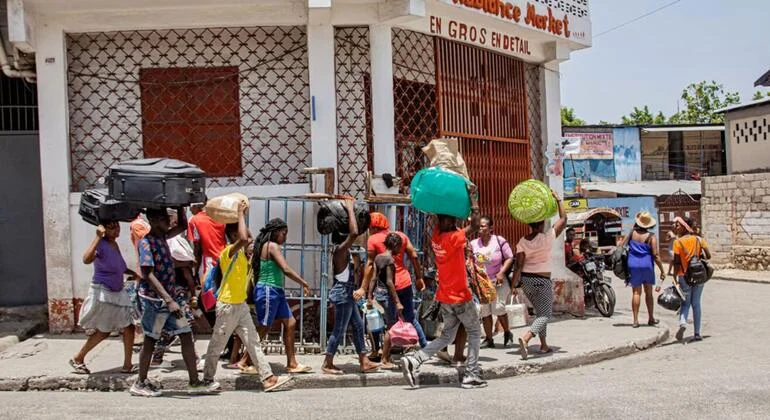
Haiti currently stands at a precarious intersection of history. While the Caribbean nation remains gripped by a humanitarian catastrophe of staggering proportions—characterized by gang-controlled territories, mass displacement, and systemic violence—a glimmer of long-term strategic optimism has begun to emerge. For the first time in years, the confluence of targeted international security support, judicial reform, and a concrete, funded roadmap for democratic elections suggests that the cycle of total collapse may be nearing a turning point. However, the path to stability remains fraught with the realities of daily terror.
The Current Landscape: A Humanitarian Crisis of Unprecedented Scale
The humanitarian situation in Haiti is not merely a crisis; it is a profound erosion of the social fabric. With over half of the country’s 11 million residents in urgent need of humanitarian assistance, the nation is grappling with the cumulative effects of state fragility, economic paralysis, and rampant criminality.
The epicenter of this instability is Port-au-Prince. Heavily armed gangs, once confined to the periphery, have consolidated control over the capital’s arteries, effectively strangling the flow of food, medicine, and fuel. As a result, schools have shuttered their doors, and health centers—the final line of defense for a vulnerable population—have been forced to close due to threats of violence or a total lack of supplies.
Humanitarian agencies, already overstretched and underfunded, are struggling to operate in an environment where even the delivery of aid is considered a high-risk activity. Families are fleeing their homes in record numbers, creating a growing class of internally displaced persons (IDPs) who occupy makeshift shelters, living in conditions that exacerbate the risk of disease and further psychological trauma.
Chronology of a Crisis: From Political Vacuum to Strategic Intervention
To understand Haiti’s current state, one must look at the timeline of its recent descent:
- July 2021: The assassination of President Jovenel Moïse creates an unprecedented power vacuum, effectively paralyzing the executive branch and eroding the legitimacy of state institutions.
- 2022–2023: Gang violence escalates from localized skirmishes to a national epidemic. Criminal cartels unify and expand their territorial reach, effectively challenging the state’s monopoly on force.
- Early 2024: A massive surge of violence in the Cité Soleil neighborhood results in at least 542 deaths and 355 injuries, marking a peak in civil insecurity. During this period, the systemic use of sexual violence—with at least 176 women and girls reported as victims—becomes a weapon of control.
- June 2024: The arrival and deployment of the UN-backed Gang Suppression Force signals a shift from passive observation to active international intervention.
- Late 2024: The establishment of a $120 million budget for electoral processes marks the first significant step toward re-establishing a constitutional government.
Supporting Data: The Cost of Inaction
The statistics surrounding Haiti’s turmoil underscore the urgency of the international community’s response. The recent violence in the capital was not merely a surge in crime but a coordinated campaign of terror.
The Human Toll:
- Displacement: Hundreds of thousands of Haitians are now "internal refugees," displaced from neighborhoods that have become war zones.
- Violence against the vulnerable: Reports confirm that children are being actively recruited by armed factions, stripping a generation of their education and future prospects.
- Sexual Violence: The weaponization of rape in neighborhoods like Cité Soleil has created a climate of fear that keeps families from returning to their homes, even when the immediate fighting subsides.
Financial and Structural Realities:
The $120 million election budget represents a massive fiscal commitment. This funding is intended to cover the logistical nightmare of registering millions of voters in areas where the state has no physical presence. Without a significant reduction in the territory currently held by gangs, these funds risk being tied to a process that may be deemed illegitimate if the electorate cannot safely reach the polls.
Official Responses and the Security Pivot
For months, the Haitian National Police faced near-impossible odds. However, the tide is beginning to turn through a two-pronged strategy: kinetic operations and judicial accountability.
The Gang Suppression Force (GSF)
The GSF represents a new chapter in international cooperation. Unlike past missions that focused primarily on peacekeeping, this force is explicitly tasked with "gang suppression." By conducting targeted patrols in Port-au-Prince, the force has managed to reclaim key strategic intersections. In a recent operation, the seizure of hundreds of Molotov cocktails and the arrest of 14 key suspects demonstrated that the state is finally beginning to dismantle the logistical networks of the gangs.
Judicial Reform
Security alone cannot solve Haiti’s problems. Recognizing this, the government has launched two specialized judicial units dedicated to investigating "mass crimes." By focusing on the prosecution of sexual violence and financial crimes that fund the gangs, these units aim to break the impunity that has allowed gang leaders to operate with total immunity for decades.
Implications: The Interdependency of Stability
The way forward for Haiti is built on the realization that its crises are a "triad of failure": the political, the security, and the humanitarian.
- The Security-Electoral Link: It is widely accepted that credible voting is impossible without a secure environment. The strategy to hold elections by 2026, leading to a new president in February 2027, is contingent upon the GSF successfully creating "security corridors" that allow for voter registration and the transport of electoral materials.
- The Governance Gap: The primary challenge for the current transitional authorities is to provide services in the areas liberated by the police. If the state cannot provide food, water, and schools immediately after the police move in, the gangs will inevitably return to fill the vacuum.
- Sustainable Economic Recovery: The economic hardship is both a cause and a consequence of the violence. Without a return to agricultural productivity and the reopening of trade routes into Port-au-Prince, the dependency on humanitarian aid will only grow, regardless of the security situation.
The Road Ahead: Priorities for the Future
As Haiti looks toward the 2027 transition, the international community and domestic stakeholders have identified three critical pillars for the next 24 months:
- Restoration of the Rule of Law: Strengthening the judicial units to ensure that gang leaders face trial. This is essential to restoring public trust in the Haitian state.
- Humanitarian Resiliency: Shifting from "emergency aid" to "resilient support." This includes rehabilitating health centers and supporting the reintegration of displaced families.
- The Electoral Roadmap: Maintaining the momentum for the 2026 voting cycle. This requires transparent management of the $120 million budget and, crucially, a broad national dialogue that includes civil society, not just the political elite.
Conclusion
Haiti remains a nation in pain, but for the first time in years, the narrative has shifted from one of inevitable decay to one of difficult, painstaking reconstruction. The road to the 2027 presidential inauguration is long and filled with potential pitfalls. Gangs still exert significant influence, and the humanitarian needs remain staggering. Yet, the combination of international security support, a clear judicial framework, and a funded path to democracy offers the Haitian people something they have been denied for too long: a legitimate hope for a future where their government, not the gangs, defines their daily lives.
The success of these efforts will ultimately depend on whether the international community remains committed to the long-term, and whether the Haitian authorities can prove to their citizens that the state is once again capable of protecting them. The next two years will be the most consequential in the country’s modern history.
 Lina Hope
 Asro
Asro
 Layla Zulfa
