

The landscape of television’s most prestigious awards is undergoing its most significant structural shift in over a decade. As the 2026 Emmy Awards approach, the Television Academy has unveiled a transformative rule change that promises to make this year’s race for "Best Variety Series" one for the history books. By merging the previously fractured "Best Talk Series" and "Best Scripted Variety Series" categories, the Academy is returning to a unified format last seen in 2014, signaling a pivot toward a more holistic evaluation of the variety medium.
This year’s competition is defined not just by the caliber of the content, but by the volatile nature of the industry itself. The projected nominees represent a fascinating cross-section of the current media environment: the farewell lap of a canceled titan, the triumphant return of a suspended icon, the enduring dominance of sketch comedy, and the consistent excellence of political satire.

The Structural Shift: A Return to Form and a New Philosophy
The decision to consolidate the categories was driven by a measurable decline in submissions for specialized talk and scripted variety programs. Recognizing that the line between "talk" and "sketch" has become increasingly blurred in the digital age, the Academy opted to simplify the landscape.
However, the most radical departure is not the merger, but the methodology of the win. The Television Academy has reclassified "Best Variety Series" as an "area award." In this new paradigm, nominees are no longer competing against one another in a zero-sum game where only one show can take home the statue. Instead, voters are tasked with an individual assessment: "Does this nominee merit an Emmy?" Any program that secures a 90% "yes" threshold from the voting body will be awarded an Emmy. This allows for the possibility of multiple winners, theoretically rewarding excellence across the board rather than forcing a choice between disparate styles of production.

The Contenders: A Field of Titans and Turbulence
Per current Gold Derby projections, the field is remarkably solidified. The frontrunners include The Late Show With Stephen Colbert (99% probability), Saturday Night Live (99%), Jimmy Kimmel Live (95%), The Daily Show (93%), and Last Week Tonight With John Oliver (93%).
While these five appear to be the clear favorites, they are being challenged by a robust group of contenders vying for a spot in the final five, including the viral sensation Hot Ones, the long-running Late Night With Seth Meyers, The Tonight Show Starring Jimmy Fallon, the experimental Very Important People, the sharp-witted Ziwe: You’d Be an Iconic Guest, and the hard-hitting Real Time with Bill Maher.

Chronology of a Volatile Season
To understand the stakes of this year’s Emmy race, one must look at the tumultuous journey these programs have taken over the last 18 months.
The Farewell: The Late Show With Stephen Colbert
In July 2025, CBS made the stunning announcement that The Late Show would be canceled for "purely financial" reasons. The news sent shockwaves through the industry, effectively putting a clock on one of the most successful runs in modern late-night history. CBS, however, granted the production a full year to craft a swan song. The show concluded its historic run in May 2026 with a star-studded finale featuring Barack Obama, David Letterman, and the "Strike Force Five" collective—Jimmy Fallon, Jimmy Kimmel, Seth Meyers, and John Oliver. Having earned 33 nominations and two wins—specifically in the wake of its cancellation—The Late Show is the sentimental favorite to receive a final "goodbye hug" from the Academy.

The Suspension: Jimmy Kimmel Live
Perhaps no show navigated a more precarious path this season than ABC’s Jimmy Kimmel Live. In September 2025, the program was suspended indefinitely following controversy surrounding host Jimmy Kimmel’s commentary on the murder of activist Charlie Kirk. The incident became a lightning rod for national discourse, with FCC Chair Brendan Carr publicly urging affiliates to challenge the network. The standoff highlighted the broader, tense relationship between the entertainment industry and the prevailing political climate of the Trump administration.
Kimmel’s return on September 23, 2025, served as a defining moment for the late-night genre. His monologue, which pivoted sharply toward the defense of First Amendment rights, was a ratings juggernaut, drawing 6 million viewers—the highest audience the show had seen in a decade.

The Evolution: Saturday Night Live and The Daily Show
Season 51 of Saturday Night Live proved that the legendary institution remains as culturally relevant as ever. Despite a shifting media landscape, the show dominated the 18–49 demographic and saw significant growth on social media, fueled by viral moments like the "Passing Notes" sketch featuring Ryan Gosling and the emotional departure of long-time star Bowen Yang. With 113 total wins, SNL is the most decorated program in Emmy history, and its transition back into a combined category feels like a return to its natural habitat.
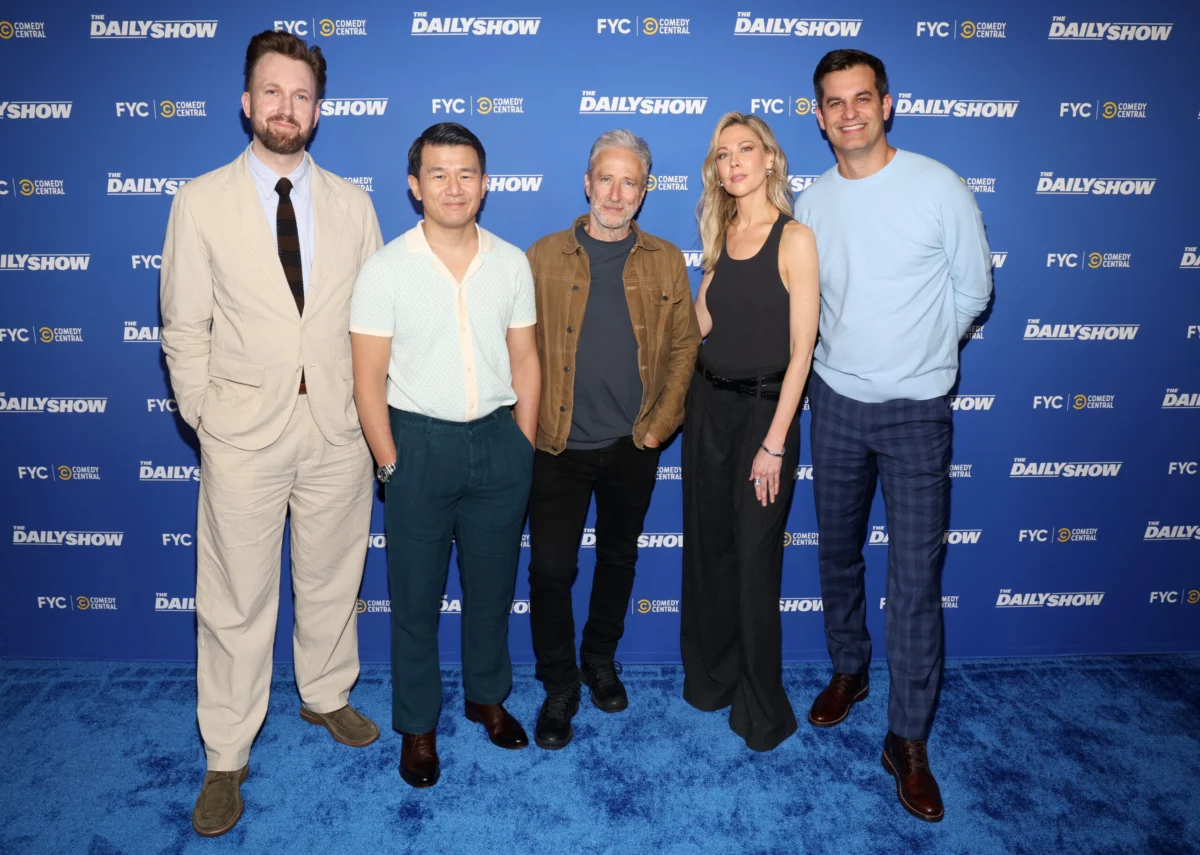
Meanwhile, The Daily Show has successfully navigated its own period of transition. Moving away from a single host model, the Comedy Central staple has utilized a rotating roster of talent—including Jon Stewart, Ronny Chieng, and newcomer Josh Johnson—to maintain its edge. By keeping the satire sharp and the interviews high-profile, the franchise continues to add to a legacy that spans decades of political commentary.

Supporting Data: Why the Academy is Watching
The shift in categories is supported by viewing trends that suggest audiences no longer categorize content as strictly "sketch" or "talk." Last Week Tonight With John Oliver, for instance, consistently performs as the gold standard for the category, regardless of the classification. His deep dives—ranging from the Department of Homeland Security to the complexities of AI chatbots—have secured his place as a perpetual nominee. The show’s dominance over the past decade (10 consecutive wins) serves as the anchor against which all other variety series are measured.
Data from the 2026 season indicates that these shows are not just surviving, but thriving in the digital-first era. The Daily Show and SNL have both reported significant engagement spikes on platforms like TikTok and YouTube, proving that the traditional "late-night" format has successfully migrated to the pockets of the younger demographic.

Implications for the Future of Television
The implications of the 2026 Emmy rule change are profound. By moving to an "area award" system, the Television Academy is essentially acknowledging that in a crowded, fragmented television market, excellence is not a zero-sum game.
1. The Death of the "Category Gatekeeping"
For years, the split between Talk and Scripted Variety created arbitrary barriers. Shows that featured both interviews and sketches often struggled to find their place. The merger encourages a more hybrid approach, potentially leading to more experimental programming in the coming years.

2. The Power of Political Commentary
The 2026 race highlights a trend where variety shows are becoming the primary venues for national discourse. From Kimmel’s defense of the First Amendment to Colbert’s retrospective on American politics, the "Best Variety Series" category is no longer just about comedy—it is about the role of the host as a cultural mediator.
3. Institutional Longevity vs. Cultural Relevance
The inclusion of The Late Show as a farewell nominee and the continued dominance of SNL and Last Week Tonight suggests that the Academy still values the weight of history. However, the presence of newer, lower-budget, or digital-native contenders like Very Important People suggests that the definition of "variety" is expanding.

As the ballots are cast, the industry watches with bated breath. Will the new system result in a flood of winners, or will it uphold the traditional hierarchy of the titans? One thing is certain: the 2026 Emmy Awards will be remembered as the moment the Television Academy finally caught up to the reality of the modern variety landscape—a landscape that is as unpredictable, provocative, and resilient as the shows themselves.
 Ammar Sabilarrohman
 Siti Muinah
 Iffa Jayyana
