

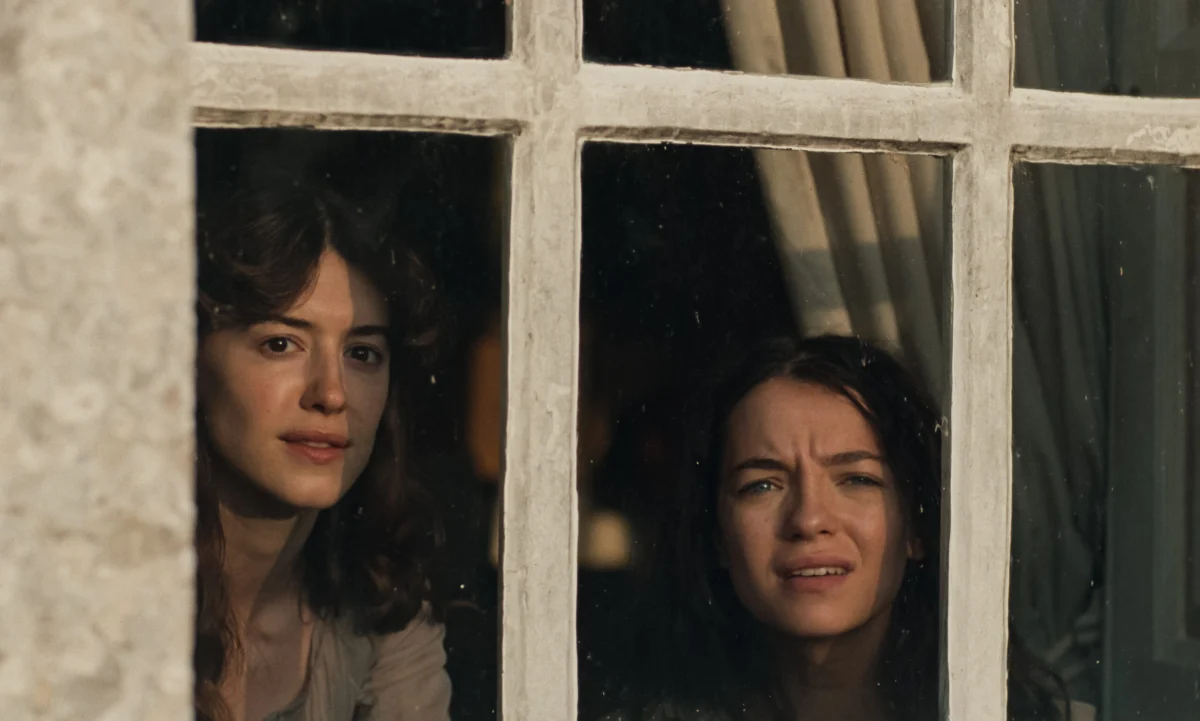
The literary world of Jane Austen, characterized by its sharp social commentary, enduring wit, and the delicate dance of courtship, is set to return to the global stage. Focus Features has officially pulled back the curtain on its highly anticipated adaptation of Sense and Sensibility, debuting the first trailer for the project today. This latest cinematic iteration promises to breathe fresh life into one of English literature’s most beloved tales, balancing the traditional aesthetics of the Regency era with a contemporary narrative urgency.
Directed by the visionary Georgia Oakley—whose breakout feature Blue Jean garnered significant critical acclaim—and penned by rising screenwriter Diana Reid, the film is positioned as a defining moment for modern period dramas. As audiences get their first glimpse of the film’s visual language and emotional tone, it becomes clear that this is not merely a retread of familiar ground, but a nuanced exploration of the sisterly bond under the crushing weight of societal expectation.
The Core Narrative: A Fresh Perspective on the Dashwood Sisters
At its heart, Sense and Sensibility remains a story of survival. The plot follows the Dashwood sisters—Elinor and Marianne—as they are thrust into a state of precariousness following the sudden death of their father and their subsequent financial downfall. Stripped of their inheritance and forced to vacate their ancestral home, the women must navigate a rigid high-society landscape that views their lack of fortune as a character flaw.
While the story is well-trodden, the upcoming adaptation aims to emphasize the "relatable" nature of their plight. The official logline frames the film as a "charming, witty, and deeply relatable story of love and sisterhood." By focusing on the friction between the pragmatic, reserved Elinor (Daisy Edgar-Jones) and the impulsive, romantic Marianne (Esmé Creed-Miles), the film highlights the timeless struggle of reconciling one’s head with one’s heart.
The transition from the security of Norland Park to the modest circumstances of Barton Cottage serves as the catalyst for the film’s emotional arc. It is in this crucible of reduced means that the sisters must confront the prejudices of the ton, the fickleness of suitors, and the silent, mounting pressures of marriage markets that demand both decorum and dowries.

The Cast: A Fusion of Established Talent and Rising Stars
The success of any Austen adaptation hinges on the chemistry of its leads, and Focus Features has assembled a formidable ensemble.
Daisy Edgar-Jones, fresh off her string of critically lauded performances, steps into the role of Elinor Dashwood. Her ability to convey internal turmoil through subtle, nuanced expression makes her an ideal choice for the eldest sister who must suppress her own heartache to hold her family together. Opposite her, Esmé Creed-Miles brings a visceral energy to Marianne, portraying the younger sister’s reckless pursuit of passion with a raw, youthful intensity that threatens to destroy her.
The supporting cast is equally impressive, ensuring that the world surrounding the sisters feels lived-in and authentic:
- Caitríona Balfe: Portrays the widowed Mrs. Dashwood, capturing the desperation of a mother attempting to secure a future for her daughters in an unforgiving economic climate.
- Frank Dillane: Takes on the role of the dashing, albeit enigmatic, John Willoughby. His performance is expected to be a focal point, as he embodies the intoxicating blend of charm and moral ambiguity that defines the character.
- George MacKay: Steps into the role of Edward Ferrars. MacKay’s reputation for emotional depth suggests a complex, perhaps more tortured, iteration of the man who captures Elinor’s heart.
- Fiona Shaw: Rounds out the cast as the indomitable Mrs. Jennings. Shaw, a veteran of stage and screen, is expected to bring a necessary layer of levity and sharp-eyed observation to the role of the well-meaning socialite who chaperones the sisters through the complexities of London society.
Chronology and Historical Context: The Long Shadow of 1995
To understand the weight of this new project, one must acknowledge the shadow cast by the 1995 adaptation directed by Ang Lee. That film, which starred Emma Thompson as Elinor and Kate Winslet as Marianne, set the "gold standard" for Austen adaptations in the modern era.
The 1995 film was a juggernaut of the awards season, securing seven Academy Award nominations. Emma Thompson’s screenplay won the Oscar for Best Adapted Screenplay—a testament to the film’s structural perfection. Beyond that, the film was a major player at the BAFTAs, winning Best Film and establishing the definitive visual shorthand for Regency-era cinema.

Following the 1995 masterpiece, the story continued to find life in various formats. The 1981 BBC six-part series offered a more expansive, novel-accurate runtime, while the 2008 Masterpiece Classic miniseries, featuring Hattie Morahan and Dan Stevens, provided a tighter, more intimate look at the sisters’ journey.
This new version by Georgia Oakley arrives nearly two decades after the last major television iteration. In the intervening years, the "Austen-mania" of the 90s has evolved, with contemporary audiences demanding greater diversity in casting and a more critical eye toward the systemic inequities of the 19th century. This 2026 production is expected to bridge the gap between traditional period aesthetics and a 21st-century sensibility.
Behind the Lens: The Creative Force
The production is helmed by a team that balances established industry heavyweights with fresh creative voices. Georgia Oakley, having proved her ability to direct intimate, character-driven narratives in Blue Jean, is tasked with grounding the heightened stakes of Austen’s world. Her collaboration with screenwriter Diana Reid suggests a screenplay that will lean into the biting irony of Austen’s prose rather than the saccharine tropes often associated with historical romance.
The production is backed by Working Title Films, a powerhouse in the genre, with Tim Bevan and Eric Fellner producing. Their involvement guarantees the high production values—lavish costumes, sweeping landscapes, and meticulous set design—that are essential for a period drama of this scale. Executive producers Thea Paulett and Angela Moneke oversee the project, ensuring the film remains faithful to its source material while pushing the boundaries of the genre.
Implications for the Period Drama Genre
The release of Sense and Sensibility on October 16, 2026, represents more than just another adaptation; it is a barometer for the current health of the period drama genre. In an era dominated by high-concept science fiction and franchise-heavy blockbusters, the sustained interest in Austen suggests that audiences remain deeply invested in stories of personal morality and social maneuvering.

By prioritizing a "fresh take," Focus Features is signaling a shift toward more psychological depth. If successful, this film could redefine the "Austen cinematic universe" for a new generation, potentially spawning a wave of similar projects that prioritize character development over the mere aesthetics of the Regency era.
Moreover, the casting choices and the modern directorial lens imply a move toward more inclusive and emotionally honest storytelling. The film’s success will likely be measured not just by its box office performance, but by its ability to engage with a younger demographic that has discovered Austen through social media discourse and digital literary circles.
Final Thoughts: The Road to October
As the release date of October 16 approaches, the buzz surrounding the film is set to intensify. With the trailer providing a tantalizing look at the chemistry between Edgar-Jones and Creed-Miles, the stage is set for a significant cultural event.
Will this version stand the test of time? Can it carve out a space for itself alongside the legacy of the 1995 classic? While only time will tell, the pedigree of the cast, the sharp direction of Georgia Oakley, and the enduring power of Jane Austen’s original text provide all the ingredients for a cinematic triumph. Whether you are a lifelong devotee of Austen’s novels or a newcomer to the Regency world, this latest iteration of Sense and Sensibility is poised to be one of the most talked-about films of the year.
As we look toward the autumn release, the narrative remains clear: the Dashwood sisters are ready to return, and this time, they are bringing a new, bold perspective to the heartbreak and humor of the human condition.
 Ammar Sabilarrohman
 Siti Muinah
 Iffa Jayyana
