

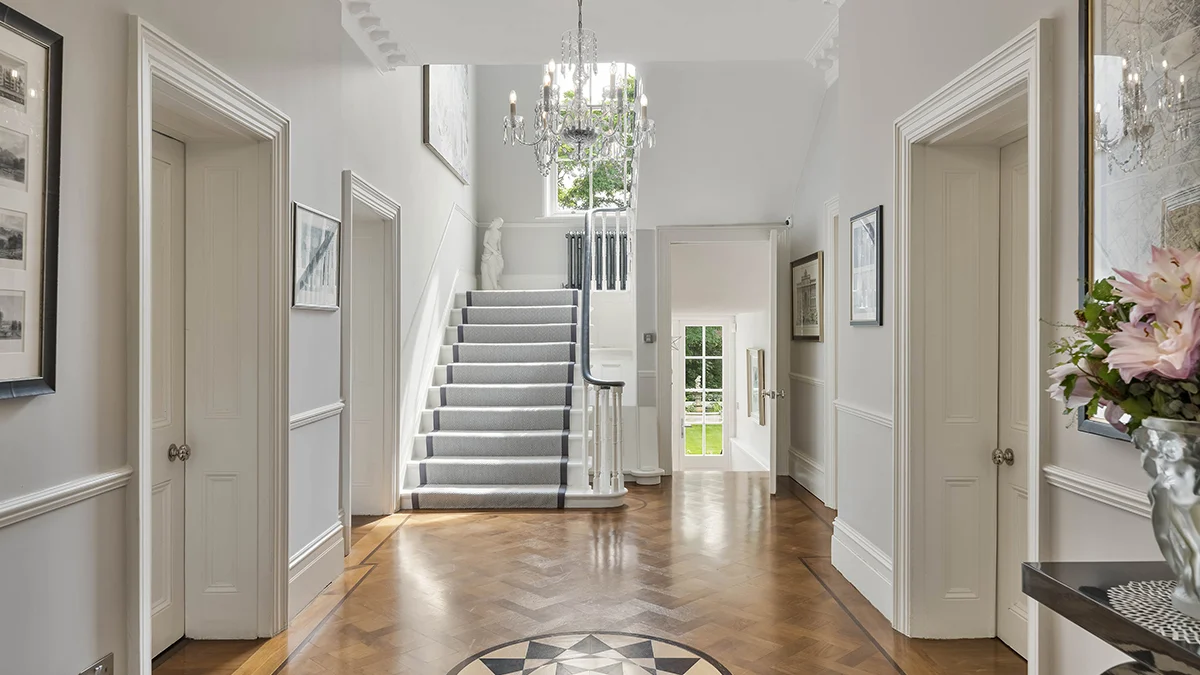
In the leafy, affluent enclave of Richmond, a stone’s throw from the banks of the Thames, lies a property that serves as more than just a home—it is a physical manifestation of British history. Wentworth House, currently on the market for £11.5 million (approximately $15.5 million), is a Grade II-listed residence that stands on the literal foundations of one of the most significant power centers of the Tudor dynasty. While modern buyers often seek privacy and prestige, the future owner of Wentworth House will acquire something far rarer: a direct connection to the monarchs who forged the identity of the United Kingdom.
The Weight of History: A Royal Provenance
More than 500 years ago, the land occupied by Wentworth House was an integral part of Shene Palace, a sprawling 14th-century royal residence. The site was not merely a building but a stage for the dramas of the Plantagenet and Tudor lines. King Richard II, one of the most enigmatic figures of the Middle Ages, held the palace in high regard, treating it as a sanctuary. However, his attachment to the estate was transformed into a site of profound grief in 1394 when his beloved wife, Anne of Bohemia, succumbed to the plague. Distraught by the loss, Richard II famously ordered the demolition of the palace, a testament to the visceral impact of royal mourning on the physical landscape of England.
The site was eventually resurrected, expanded, and fortified by successive monarchs. What is now the tranquil, picturesque expanse of Richmond Green was, in earlier centuries, the site of grand jousting tournaments, where knights displayed their prowess before the royal court.
Chronology of a Lost Landmark
The evolution of the estate can be traced through the seismic shifts of English history:

- 14th Century: The site is established as Shene Palace, a favorite retreat for the crown.
- 1394: Following the death of Anne of Bohemia, Richard II orders the destruction of the palace, marking a period of dormancy.
- 1497: After a devastating fire, King Henry VII commissions a grand reconstruction. He renames the site "Richmond Palace" after his own earldom, effectively lending his title to the surrounding village.
- 16th Century: The palace enters its golden era under the Tudors. Henry VIII, Mary I, and Elizabeth I frequently reside here.
- 1603: Queen Elizabeth I, who found the palace to be a vital winter retreat and a cultural hub for the arts—including performances by William Shakespeare’s theater troupe—breathes her last within its walls.
- 17th Century: Following the execution of King Charles I during the English Civil War, the property is seized and liquidated by the Commonwealth government. The palace is systematically dismantled, its stone and timber scavenged for local construction.
- 1703: Wentworth House is constructed on the footprint of the former royal complex, preserving the legacy of the site through its architecture and orientation.
A Masterclass in Architectural Adaptation
Constructed in 1703, Wentworth House represents the transition from the chaotic, fortress-like grandeur of the Tudor period to the refined, balanced aesthetics of the early 18th century. Today, the property operates as a synthesis of these two worlds. It is not merely adjacent to history; it is built into the stratigraphy of the palace grounds.
The rear of the residence provides direct access to remnants of the original structure, including the historic Palace Gatehouse and the Wardrobe. From the main reception rooms, residents enjoy an unobstructed view of Richmond Green, a vista that has remained largely unchanged for centuries.
Modern Luxury Meets Heritage
While the history is ancient, the interior experience of Wentworth House is firmly rooted in the 21st century. The property encompasses roughly 6,500 square feet of living space, meticulously renovated to cater to the demands of modern luxury living.
The main level is defined by high ceilings and expansive windows that bathe the living areas in natural light, centered around grand, period-appropriate fireplaces. A sparkling crystal chandelier serves as a focal point in the primary reception room, bridging the gap between traditional English grandeur and contemporary interior design.

The layout includes five bedrooms and four bathrooms, each designed with a focus on high-end materials and spatial efficiency. For the modern resident, the home offers a suite of private amenities that would have been unimaginable to the Tudor kings who once walked this ground: a bespoke home cinema, a professional-grade gym, and a temperature-controlled wine cellar.
Outside, the west-facing garden offers a serene escape, featuring a manicured lawn, a sophisticated stone terrace, and a balcony designed for entertaining. The property also addresses the practical needs of modern life with a double garage and secure off-street parking—a rare commodity in the highly sought-after Richmond area.
Supporting Data: The Market for Royal Proximity
The valuation of £11.5 million reflects the convergence of historical significance and prime London-fringe location. According to luxury real estate analysts, properties with verifiable historical links—specifically those associated with the Tudor dynasty—consistently command a premium in the market.
"The allure of a home like Wentworth House isn’t just about square footage," notes one property consultant familiar with the listing. "It’s about the narrative. Buyers at this level are looking for a ‘trophy’ property that serves as a conversation piece. When you own a piece of the former Richmond Palace, you aren’t just buying a house; you are becoming a custodian of English history."

The Grade II-listed status ensures that the architectural integrity of the exterior is protected, preventing future owners from compromising the historical aesthetics of the site. This regulatory framework acts as a safeguard, ensuring that the property remains a landmark of the Richmond community.
Implications: The Value of "Living History"
The listing of Wentworth House raises an interesting discussion about the preservation of heritage in the modern property market. As London’s footprint expands and land becomes increasingly scarce, the transformation of former royal sites into private residences has been the primary way these stories have survived.
Critics of such developments often point to the "privatization" of history, arguing that sites of national importance should remain accessible to the public. However, proponents suggest that by integrating these sites into private homes, owners take on the massive financial burden of maintaining these structures—costs that might otherwise fall to the state or lead to total demolition. Wentworth House is a prime example of this model: the preservation of the Palace Gatehouse and the maintenance of the grounds are handled by the private sector, keeping the history alive for future generations to observe from the perimeter.
Final Thoughts: A Rare Opportunity
For the discerning buyer, Wentworth House offers an unparalleled lifestyle. It provides the quiet seclusion of a private estate combined with the cultural richness of Richmond, all while being situated in the heart of what was once the center of English political power.

As the property awaits its next chapter, it remains a silent witness to the passage of time. From the mourning of Richard II to the final days of the Virgin Queen, the soil beneath Wentworth House has absorbed the triumphs and tragedies of a nation. Now, it stands ready to house a new generation of residents who, in their own way, will contribute to the ongoing story of one of London’s most storied addresses.
Interested parties can find full details of the property through the agency Strutt & Parker. Whether it is the history of the walls or the modern sophistication of the interior that captures the imagination, Wentworth House remains a singular opportunity to inhabit the grandeur of the past without sacrificing the comforts of the present.
 Ali Ikhwan
 Laily UPN
 Raul Delapena Setiawan
