

Main Facts
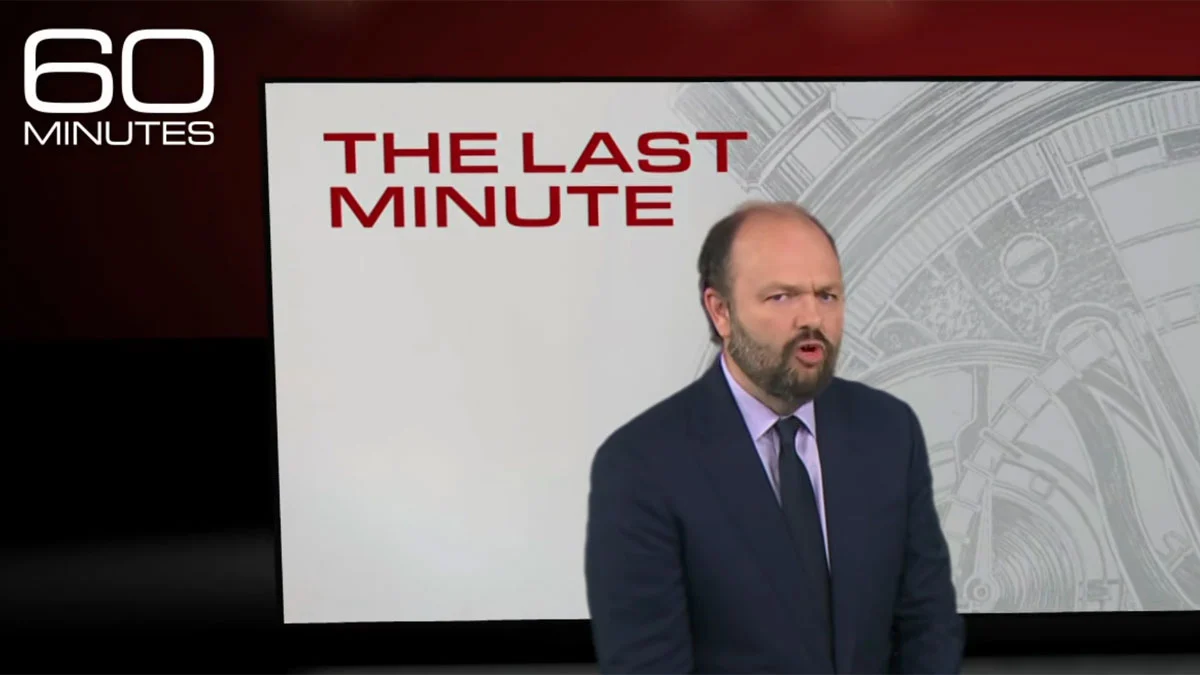
The historic CBS investigative newsmagazine 60 Minutes returned for its landmark 59th season under a cloud of controversy and a significant cooling of audience interest. According to Nielsen data cited by Variety, the season premiere drew 7.94 million viewers, representing a steep 21% falloff compared to the 10.02 million who tuned in for the previous season’s debut.
The demographic metrics proved even more concerning for network executives. Viewership among adults aged 25 to 54—the demographic most coveted by advertisers and news executives—plummeted by 33%, dropping to approximately 1.58 million.
The premiere marked the formal debut of a heavily publicized creative overhaul engineered by CBS News Editor-in-Chief Bari Weiss and newly appointed Executive Producer Nick Bilton. Billed as a necessary modernization of television’s longest-running and most decorated newsmagazine, the structural and editorial changes were meant to breathe fresh life into the program. Instead, the debut numbers suggest the show is facing an uphill battle to retain its traditional broadcast audience while navigating a turbulent transition period characterized by high-profile staff departures, internal strife, and external political controversies.
Chronology of an Overhaul
To understand the current ratings slump, industry analysts point to a tumultuous sequence of events that have defined the leadership tenure of Bari Weiss and Nick Bilton at CBS News.
- September 1968: 60 Minutes makes its historic television debut on CBS, setting the gold standard for investigative broadcast journalism and long-form reporting.
- Late 2024 – Throughout 2025: Following leadership changes at CBS News, Bari Weiss takes the role of editor-in-chief, initiating a sweeping strategic review of the network’s flagship news division. Nick Bilton is subsequently brought in as the new executive producer of 60 Minutes, tasked with overhauling the program’s format, pacing, and editorial focus.
- Early to Mid-2025: Tensions mount behind the scenes. A series of high-profile departures, non-renewals of contracts, and reshufflings sweep through the newsroom. Most notably, veteran correspondent Scott Pelley is fired following a very public, contentious battle with Weiss regarding the editorial direction and future of the broadcast. Several other prominent reporters and behind-the-scenes producers are similarly shown the door or quietly exit.
- Late 2025: CBS navigates a public relations and legal firestorm, ultimately agreeing to a $16 million settlement with Donald Trump over a disputed 60 Minutes interview segment from a prior broadcast cycle. The settlement fuels external criticism and accusations of editorial capitulation.
- September 15, 2026: 60 Minutes premieres its 59th season. Nielsen data reveals a sharp 21% drop in overall viewership and a 33% decline in the key 25-to-54 demographic compared to the previous season’s launch.
Supporting Data and Lead-In Dynamics
Network defenders have been quick to point out external factors that may have influenced the raw viewership numbers for the Season 59 premiere.
Prior to the broadcast of 60 Minutes, CBS aired a regular-season NFL matchup between the Green Bay Packers and the Minnesota Vikings. The football game drew 18.6 million viewers. While this is a massive audience by television standards, it was notably lower than the NFL lead-in that bolstered the 60 Minutes season premiere the previous year. That drop was largely attributed to an NFL scheduling shift that featured dual network doubleheaders on both CBS and Fox, effectively diluting the massive, captive post-game audience that the newsmagazine typically inherits.
Nevertheless, media analysts emphasize that a lead-in explanation only goes so far. Despite the lower football ratings, 60 Minutes still suffered a massive audience drop-off, bleeding over 10 million viewers between the conclusion of the NFL game and the start of the news broadcast.
Furthermore, the demographic erosion cannot be entirely dismissed as a scheduling anomaly. The 33% drop in viewers aged 25 to 54 indicates that younger, core news-consuming demographics actively chose not to engage with the retooled format, pointing toward deeper engagement and branding challenges rather than merely casual channel-surfing habits.
Official Responses and Editorial Vision
In the wake of the ratings data release, network executives and producers have defended the trajectory of the program, emphasizing that a transition period is natural for a nearly six-decade-old institution undergoing modernization.
Neither Bari Weiss nor Nick Bilton has shied away from the mandate to alter the DNA of 60 Minutes. Bilton’s early creative stamp was visible in the season premiere, which sought to balance traditional reporting with contemporary investigative techniques. The episode featured a high-stakes segment detailing the ordeal of a U.S. airman shot down in Iran, alongside a hidden-camera investigation into brokers allegedly selling criminal pardons connected to Donald Trump. Producers have also signaled that future episodes will heavily feature deep-dive reporting on artificial intelligence and its rapid integration into society.
However, the editorial shifts have been heavily scrutinized. Critics and media observers note that while Bilton retained several familiar structural elements—such as the iconic ticking stopwatch and traditional anchor pacing—the underlying editorial voice feels fundamentally altered.
Addressing accusations of political bias that have dogged her short tenure, Weiss and CBS News representatives have steadfastly denied that political pressure dictates their editorial decisions. Network officials maintain that the goal of the revamp is to expand the ideological diversity of the reporting and make the program more relevant to a fractured, modern media landscape.
The political cloud, however, has proven difficult to shake. The fallout from the 2025 legal settlement with Donald Trump continues to resonate within media circles, where commentators have frequently charged that corporate leadership is yielding to political interference at the expense of journalistic independence.
Implications for the Future of Broadcast Journalism
The struggles of the retooled 60 Minutes carry significant implications not just for CBS News, but for the broader landscape of traditional television journalism.
For decades, 60 Minutes stood as an untouchable titan—both a critical darling and a massive commercial success that regularly dominated Sunday night ratings. Its ability to command tens of millions of viewers made it an economic engine for CBS and a cultural touchstone for American public discourse. The erosion of that audience base signals a broader structural shift in how audiences consume investigative journalism.
As younger generations increasingly migrate toward digital-native platforms, independent podcasts, and niche digital investigative outlets, legacy television networks are finding it increasingly difficult to hold their attention. The attempt by Weiss and Bilton to modernize 60 Minutes was an explicit acknowledgment of this reality. However, the early returns suggest a perilous tightrope walk: alienating the loyal, older demographic that forms the bedrock of traditional broadcast viewership while failing to capture the elusive younger demographic that has already abandoned linear television.
Moreover, the internal turmoil—marked by the ouster of trusted veterans like Scott Pelley and ongoing debates over editorial integrity—risks damaging the brand equity that took 59 years to build. Trust is the primary currency of investigative journalism; when audiences perceive that a historic institution is being weaponized for political purposes or subjected to heavy-handed corporate interference, viewer flight is often swift and unforgiving.
As Season 59 progresses, all eyes within the media industry will be fixed on CBS News. Whether Nick Bilton and Bari Weiss can stabilize the ratings, rebuild internal morale, and prove that a revitalized 60 Minutes can thrive in the 21st-century media ecosystem remains one of the most closely watched narratives in television.
 Asro
Asro
 Lina Irawan
 rifanmuazin
