

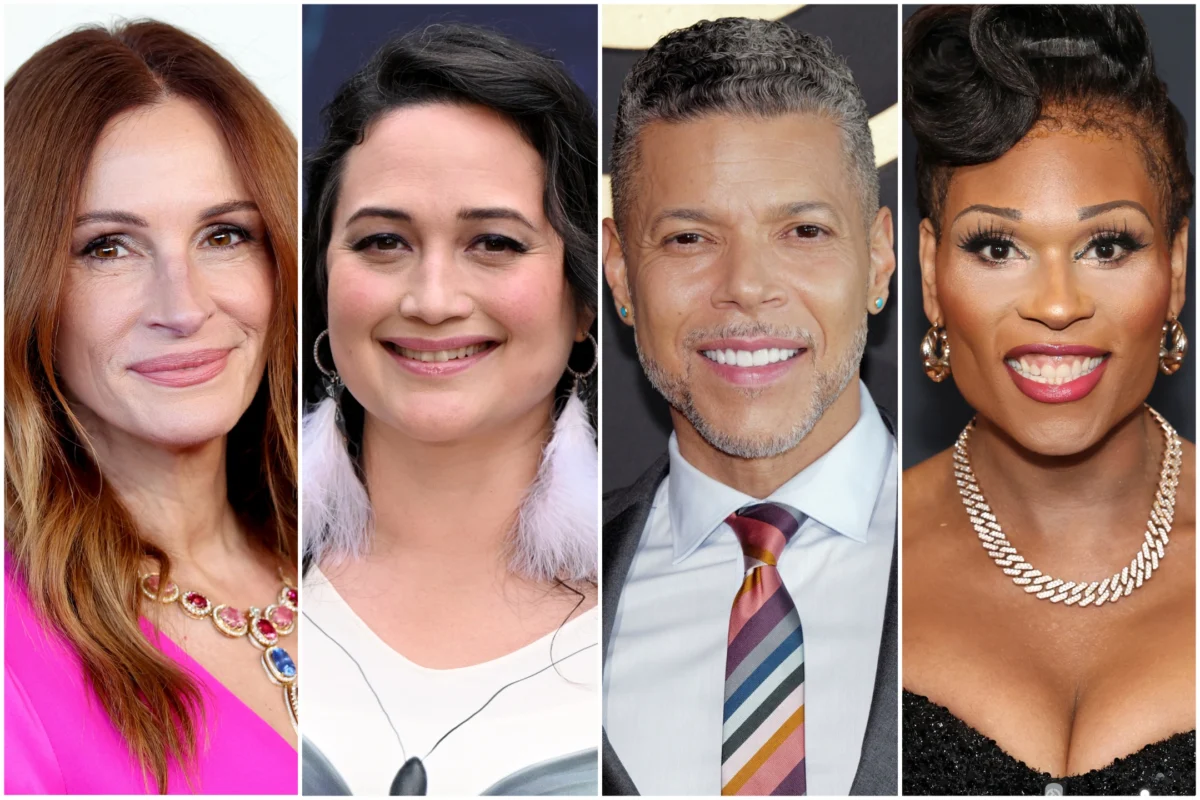
In an era defined by fractured discourse and escalating concerns over the erosion of civil liberties, the American entertainment industry is preparing to mount a significant, music-driven defense of free expression. Jane Fonda, the legendary actor and activist, has spearheaded a high-profile initiative under the banner of the Committee for the First Amendment. On Sunday, June 14—coinciding with Flag Day—the collective will host "Rise Up, Sing Out: A Concert for the First Amendment" at New York City’s historic Town Hall.
The event serves as the primary fundraising mechanism for the newly revitalized Committee, an organization dedicated to shielding artists, storytellers, and cultural leaders from government overreach, industry censorship, and institutional intimidation.
The Lineup: A Converging Force of Cultural Icons
The concert’s roster has expanded significantly in recent weeks, drawing from the upper echelons of stage, screen, and song. Joining Jane Fonda on the bill are Academy Award winner Julia Roberts, Killers of the Flower Moon breakout star Lily Gladstone, Pose actor Wilson Cruz, and the iconic performer Peppermint.
These additions bolster a lineup already teeming with formidable talent, including musical powerhouses Bette Midler, Patti Smith, and Rufus Wainwright. The program will also feature appearances by journalist Joy Reid, performer Sasha Allen, and the acclaimed Broadway Inspirational Voices. The breadth of the guest list—spanning from the Broadway stage to the front lines of televised news—underscores the committee’s goal: to bridge the gap between niche political advocacy and mainstream cultural dialogue.
Further contributors announced to the bill include Jenn Colella, Alex Joseph Grayson, the activist group Singing Resistance, the Rude Mechanical Orchestra, Kayla Davion, and the Rev. Adriene Thorne. This diverse assembly suggests that the concert aims to be more than a celebrity gala; it is being positioned as a broad-based coalition of voices addressing the perceived instability of democratic norms.
Historical Precedent and the Relaunch of a Legacy
The Committee for the First Amendment is not a new invention; it is a profound historical revival. The organization traces its origins to the 1940s, a period marked by the harrowing anti-communist hysteria of the McCarthy era. During that time, the original committee—which included industry titans such as Henry Fonda, Jane’s father—stood in vocal opposition to the House Un-American Activities Committee (HUAC), which sought to blacklist artists suspected of subversive political leanings.
In October of last year, Jane Fonda announced the formal relaunch of the organization, citing a modern landscape that she argues mirrors the pressures of the past. The mission is, at its core, a response to what the group defines as "industry complicity" and modern-day efforts to silence dissent.
The support for this revival is staggering in scope. The relaunch was backed by a coalition of over 550 A-list signatories, a "who’s who" of the creative world. Names ranging from Aaron Sorkin and Anjelica Huston to Barbra Streisand, Ben Stiller, and Billie Eilish demonstrate the widespread anxiety within the creative community regarding the fragility of free speech. The list also includes stalwarts of stage and screen like Julianne Moore, Pedro Pascal, Quinta Brunson, Spike Lee, Viola Davis, and Whoopi Goldberg, all of whom have pledged their support to the collective’s mission to defend the fundamental right to create and express without fear of retribution.
The Call to Action: Fonda’s Stance
For Jane Fonda, the impetus for this concert is rooted in a fundamental belief that art is the most effective weapon against political erosion. In a statement released ahead of the concert, she was clear about the urgency of the moment.
"We can’t sit idly by while our rights are at stake. History shows us that when democracy is threatened, song becomes one of our most powerful weapons," Fonda noted. "Right now, we are at a critical crossroads. It’s time for us to rise up, raise our voices and stand up against a government that refuses to put its people first. We are fighting back the best way we know how to: with our community and in solidarity."
This rhetoric highlights the committee’s specific focus: the intersection of government policy and the ability of the public to hear dissenting voices. By choosing Flag Day as the date for the event, organizers are engaging in a symbolic reclamation of patriotism, arguing that the true defense of the nation lies in the protection of its foundational amendment rather than mere nationalistic displays.
Logistical Details and Accessibility
"Rise Up, Sing Out" will take place at New York City’s Town Hall, a venue steeped in the history of social and political gatherings. Doors for the event will open at 6:45 p.m. ET, with the main program commencing at 7:30 p.m. ET.
Recognizing the need for the message to reach a wide, diverse audience, the Committee for the First Amendment has confirmed that the event will be free to watch via a global livestream. For those attending in person, tickets are available through Ticketmaster and the official concert website. The organizers have made it clear that every dollar raised will be funneled directly into the committee’s legal and advocacy efforts.
The Creative Engine: Behind the Production
The artistic success of the evening is being entrusted to a team of industry veterans. The production is being helmed by director Schele Williams, with music direction provided by Mary Mitchell Campbell. The evening’s script, which is expected to weave historical context with contemporary commentary, is being written by Bess Kalb.
The technical production of the evening is equally robust, featuring lighting design by Jamie Roderick, sound design by Cody Spencer, and projection design by the team of Daniel Brodie and Olivia Sebesky. Linda Marvel will serve as the production stage manager, overseeing an event that is being produced by Bruce Cohen and the creative firm rigor + ruckus (comprised of Robb Nanus, Heather Shields, and Rachel Sussman).
Implications: The Role of the Artist in Democracy
The formation of this committee and the execution of this concert suggest a shift in how Hollywood interacts with political power. For decades, celebrity activism was often criticized as performative. However, by establishing a permanent, legacy-driven committee—and by aligning it with the structural legal and lobbying challenges of the 21st century—Fonda and her cohorts are attempting to professionalize the role of the artist in public life.
The committee’s focus on "industry complicity" is particularly notable. It suggests that the fight is not just against government legislation, but also against corporate media entities that may choose to self-censor or steer away from controversial topics to maintain market access.
As the June 14 date approaches, the eyes of the public and the political establishment will be on Town Hall. Whether this event marks the beginning of a sustained movement or a temporary flashpoint remains to be seen. However, the sheer volume of high-profile support suggests that the entertainment industry is no longer satisfied with passive observation. As Fonda aptly put it, the community is moving toward a strategy of "solidarity," leveraging the unique reach of their platforms to turn the volume up on the conversation surrounding the First Amendment.
In a modern digital landscape where the lines between information, propaganda, and censorship are increasingly blurred, the Committee for the First Amendment intends to draw a hard line in the sand. With a blend of Broadway-caliber production values and deep-seated political conviction, "Rise Up, Sing Out" stands as a testament to the enduring, albeit fraught, relationship between the American stage and the American state.
 Nana
Nana
 Ali Ikhwan
 Iffa Jayyana
