

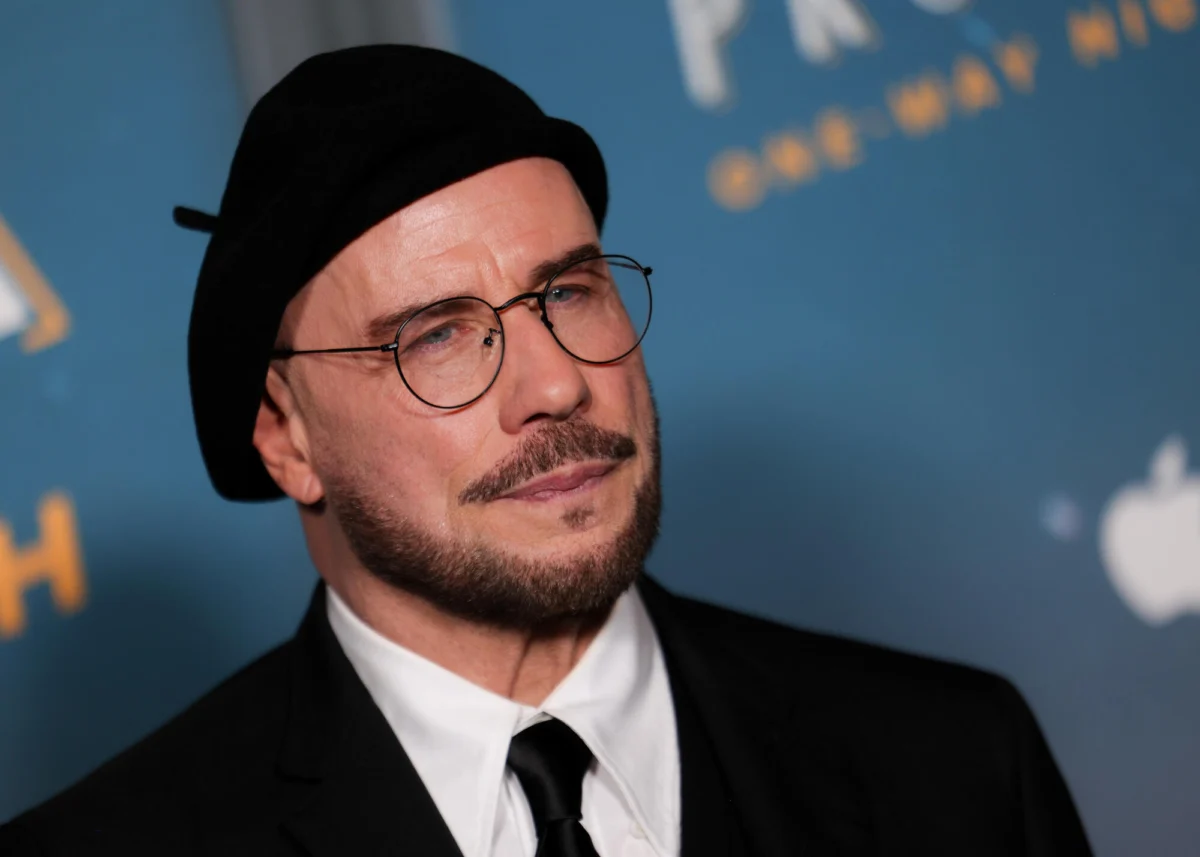
In the ever-evolving theater of Hollywood fashion, few style pivots have been as sudden—or as culturally resonant—as John Travolta’s recent embrace of the beret. Once a garment synonymous with French painters, military specialists, and mid-century intellectuals, the humble felt cap has become the definitive accessory for the legendary actor-turned-director. Following his critically lauded appearances at the Cannes Film Festival and his presence at the recent DGA premiere of his directorial debut, Propeller One-Way Night Coach, Travolta has made it clear: the hat is not merely a fleeting aesthetic choice. It is a declaration of intent.
The Genesis of an Icon: Why the Beret?
The transformation of John Travolta’s public persona began with a moment of introspection. Speaking exclusively to Variety’s Marc Malkin at the DGA premiere in Los Angeles, the Saturday Night Fever star revealed that the transition to the beret was spurred by a desire to demarcate his career trajectory.
"I looked at all the photographs of me for 50 years and I can’t tell you the difference," Travolta explained. "I started to not be able to differentiate between my roles, and I said, ‘Well, you’re not an actor really.’ I wanted to shift that energy."
For an artist who has defined the landscape of American cinema for five decades, the need for a visual anchor to represent his shift into the director’s chair was paramount. His research into the history of cinema led him to the "old school" masters of the craft. "I looked up all the old-school directors, and they all had berets and sometimes glasses," he noted. "It was cliché, but in a wonderful way—they were reflecting the painters and musicians of their time."
The beret, which has roots stretching back some 800 years, offered Travolta a link to a lineage of artistic authority. It is a symbol that commands attention while suggesting a certain intellectual rigor, effectively signaling to the industry—and the audience—that the man behind the camera is operating from a place of seasoned craftsmanship.
A Chronology of the Transformation
The evolution of Travolta’s "Director Look" can be traced through a series of high-profile appearances that culminated in his recent directorial push.
- Pre-Cannes Introspection: During the production of Propeller One-Way Night Coach, Travolta began experimenting with his wardrobe, seeking a look that bridged the gap between his iconic status as an actor and his newfound ambition as a filmmaker.
- The Cannes Reveal: The beret made its international debut at the Cannes Film Festival earlier this month. The choice was met with immediate, widespread attention, with fashion critics from Vogue, GQ, and Harper’s Bazaar placing him on various best-dressed lists.
- The DGA Premiere: By the time Travolta arrived at the Directors Guild of America for the screening of his film, the beret was no longer a curiosity—it was a signature. Travolta confirmed he now owns at least 12 variations of the cap, ensuring he is never without his chosen "uniform."
Beyond the Cap: A Deeper Look at Men’s Fashion
Travolta’s interest in style is not a newfound hobby; it is a lifelong engagement with the power of self-presentation. During his conversation with Variety, the actor touched upon the limitations currently imposed on men’s fashion, lamenting the lack of creativity often seen on modern red carpets.
"Guys don’t have enough to do," Travolta remarked, critiquing the current trend of avant-garde experiments that sometimes feel disjointed. "They’re putting men in skirts because there’s a lack of something there… why not change it up? We can have fun too."
For Travolta, the beret serves as a sophisticated alternative to the overly safe or the intentionally bizarre. It is a classic element of menswear that offers elegance without sacrificing masculinity. His perspective is deeply rooted in his own upbringing, influenced by family members who worked at the pinnacle of the fashion industry during the 1960s.

"My brother-in-law worked for Vogue in the ’60s and Harper’s Bazaar, and he would style me as a teenager," Travolta reminisced. "I had my first bell bottoms, my first wide belt, my first double-breasted suit. I looked like Warren Beatty in Bonnie and Clyde. So, I’m very aware of how women have more options than we do, and I’ve always appreciated the art of styling."
Supporting Voices: The Family Perspective
The transition to the beret has not been a solitary journey. Travolta’s daughter, Ella, who appears in Propeller One-Way Night Coach and has been a constant companion on the promotional tour, has been a vocal supporter of her father’s sartorial evolution.
On the red carpet, Ella dismissed any notion that her father’s choice was an oddity, instead praising his courage to break the mold. "To make an amazing and artistic decision and just rock it is so cool," she told Variety. "So many people play fashion choices safe. He’s so good with that, and he knows what looks good."
The duo initially toyed with the idea of a coordinated look. "We could have done twin berets," Travolta admitted with a laugh. However, the pair eventually opted for a more complementary approach, with Ella channeling the timeless glamour of Brigitte Bardot. The synergy between father and daughter on the red carpet has added a layer of warmth to the press cycle for the film, emphasizing a collaborative creative spirit.
Implications: The Power of Personal Branding
The implications of Travolta’s new look extend far beyond the pages of fashion magazines. In an industry that often demands conformity, Travolta’s decision to adopt a "director’s uniform" is a masterclass in personal branding.
- Establishing Authority: By adopting the aesthetic of the "old school" auteur, Travolta creates an immediate visual shorthand that defines his role on set. It is a psychological cue to cast, crew, and investors that he is fully invested in the craft of direction.
- Redefining the Leading Man: As actors age in Hollywood, they often struggle with the transition from the "heartthrob" to the "elder statesman." Travolta’s embrace of the beret allows him to pivot into a space of distinguished, creative leadership, effectively redefining what it means to be a "leading man" in his 70s.
- The Renaissance of Classic Menswear: By explicitly rejecting the "skirt" trend in favor of a timeless European accessory, Travolta is championing a return to tailored, classic aesthetics. His influence could potentially spark a trend of "Director Chic," encouraging men to look to history rather than shock value for their fashion inspiration.
A Legacy of Artistic Directorship
Propeller One-Way Night Coach, the film at the center of this fashion storm, is a testament to the versatility of Travolta’s career. Based on his own 1997 children’s book, the project represents a deeply personal creative milestone. Now streaming on AppleTV+, the film is a one-hour exploration of storytelling that aligns with the whimsical yet disciplined aesthetic Travolta is currently projecting.
As Travolta continues to navigate his career, the beret serves as a constant: a symbol of his transition from the star of the stage to the architect of the frame. Whether or not the trend catches on with other directors remains to be seen, but for John Travolta, the cap has served its purpose perfectly. It has helped him step out of the shadow of his own legendary acting career and into the light of his new, self-defined role as an auteur.
In the end, as Travolta himself noted, it is about having fun and reclaiming the narrative. If the beret is the tool that helps him tell the stories he wants to tell, then it is, quite literally, the perfect fit.
 Ali Ikhwan
 Iffa Jayyana
 Siti Muinah
