

The stage of America’s Got Talent Season 21 has once again become a crucible for the weird, the wonderful, and the truly world-class. As the competition pushes through its sixth night of auditions, the pressure on contestants—and the judges—has reached a fever pitch. With the introduction of a new "Judges’ Callbacks" round, the stakes have never been higher for performers vying for a coveted spot in the live shows.
On this latest installment, which aired July 14 on NBC, judges Simon Cowell, Mel B, Sofia Vergara, and Howie Mandel were treated to a kaleidoscopic parade of talent, ranging from high-octane aerialists to offbeat ventriloquists. As the season progresses, the path to the million-dollar prize is narrowing, making every "Yes" vote from the panel a crucial stepping stone toward stardom.
The Evolution of the Competition: New Rules for a New Era
Season 21 has implemented a rigorous selection process designed to ensure that only the most compelling acts make it to the final stages. Each judge, along with host Terry Crews, has been granted two Golden Buzzers, totaling 10 acts that receive an automatic "fast pass" to the live broadcasts.
However, for the vast majority of performers, the road is more treacherous. Any act that secures three or more "Yes" votes from the panel but fails to capture a Golden Buzzer is no longer immediately discarded. Instead, they enter the newly minted "Judges’ Callbacks" round. This deliberative phase allows the panel to review their decisions, compare the strength of the talent pool, and finalize the roster for the live shows. This change adds a layer of strategic tension, as the judges must weigh the potential of each act against the collective talent of the season.
Chronology of the Night: A Night of Contrasts
The evening was a masterclass in variety, perfectly encapsulating the chaotic charm that has made America’s Got Talent a cultural phenomenon for two decades.
The Opening Acts: Comedy and Character
The show kicked off with Yukuta, a Japanese comedian whose unconventional style polarized the judges. While Howie Mandel found the set "hysterical," Mel B remained unconvinced, resulting in a tense split decision. Following him, Cameron Logsdon from Omaha brought a touch of celebrity flair to the stage with his impressions. While Mel B critiqued the lack of a cohesive narrative, Simon Cowell praised the originality of the presentation, ultimately helping secure a path forward for the impressionist.
The Bizarre and the Brilliant
The variety portion of the night took a turn for the surreal with Viola Panik and Mister Punch, a Venezuelan puppeteer burlesque duo. The act left the judges visibly unsettled, with Simon Cowell famously comparing the performance to a "strange kids’ show from the 1970s."

Conversely, the Italian duo Naimana & Danielle brought a refreshing, if confusing, twist to ventriloquism. By incorporating opera singing, they challenged the judges’ perceptions of what a ventriloquist could be. Despite Mel B’s confusion, Simon Cowell acknowledged their technical skill, drawing comparisons to past AGT champions in the same genre.
Musical Moments: From Nashville to Mississippi
The musical performances spanned a wide emotional and stylistic spectrum. The Nashville-based band Butter & Grit brought a warm, authentic Americana sound that resonated with all four judges. Simon Cowell, often the toughest critic, noted their commercial appeal, while Howie Mandel emphasized the clear audience for their specific style.
On the soulful side, Elsie and Ashford Sanders showcased the immense vocal power present in this season’s lineup. Ashford Sanders, in particular, moved the panel with a performance that Mel B compared to the legendary Luther Vandross. His ability to blend technical precision with genuine emotion marked him as a frontrunner in the vocal category.
The Golden Moment: Veronika Goroshkova
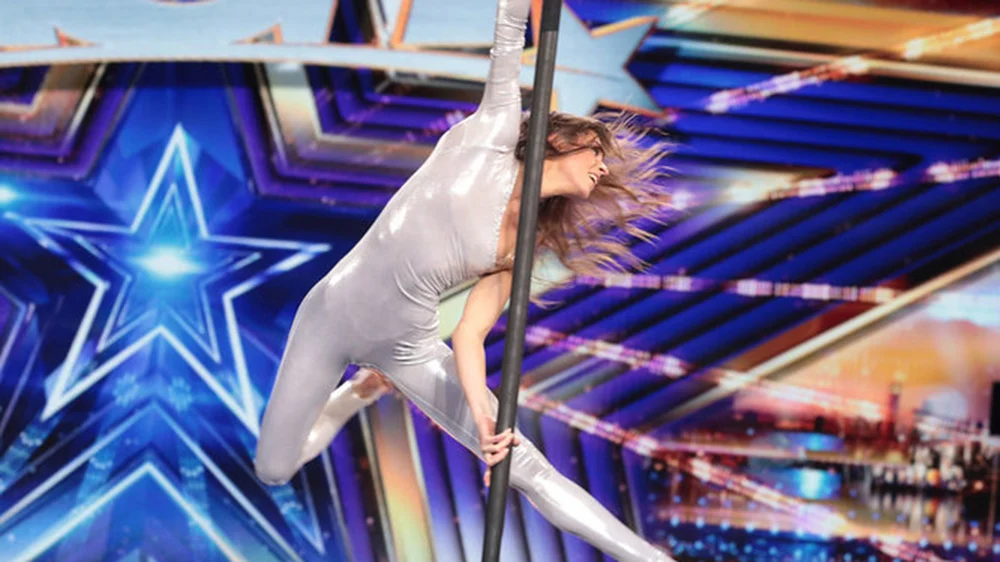
The highlight of the evening, and perhaps the most defining moment of the episode, was the performance by Ukrainian aerial pole artist Veronika Goroshkova. Her routine was characterized by a level of difficulty and showmanship that transcended the standard audition.
Sofia Vergara, clearly moved by the artistry and athleticism on display, became the final judge to use one of her two Golden Buzzers. "I was really, really into it," Vergara remarked before hitting the buzzer. "I don’t know why I have this feeling I want to do this right now." Simon Cowell echoed the sentiment, labeling the performance as "perfection" and a true "gold medal" effort.
Supporting Data: The Current Golden Buzzer Landscape
As we approach the halfway point of the audition rounds, the distribution of the Golden Buzzers reflects the diversity of the talent scouted this season:
- Howie Mandel: Hundred Fingers (Magic, South Korea) and Luke Taleno (Rap, Cuba).
- Simon Cowell: Lai Noelle (Vocals, USA) and Rubén Roldán Bustos (Parkour, Colombia).
- Mel B: Isaac Atkins (Vocals, USA) and Mackenzie Sol (Vocals, UK).
- Terry Crews: Acro Crew (Dance, USA) and Royal Lasers (Laser Art, USA).
- Sofia Vergara: Lara D (Vocals, Australia) and now Veronika Goroshkova (Aerial Pole, Ukraine).
This list highlights a deliberate push by the production to diversify the acts representing the "Golden" tier, ensuring that the live shows will feature a mix of high-energy acrobatics, vocal prowess, and technical innovation.

Official Responses and Judge Dynamics
The internal dynamics of the panel have been particularly sharp this season. The friction between Mel B’s specific, often harsh critiques and the more lenient, entertainment-focused approach of Sofia Vergara has provided significant narrative drive.
Simon Cowell continues to act as the ultimate arbiter, often looking for the "star quality" that extends beyond a single performance. His critique of singer Elsie—urging her to be "more raw"—demonstrates the mentor-like role he has adopted this season. He is not merely looking for polished acts; he is looking for performers who can handle the pressure of the live stage and evolve under the scrutiny of a national audience.
Implications for the Future of Season 21
The sixth night of auditions solidified a crucial trend: technical skill is no longer enough to secure a spot in the finals. The acts that received unanimous "Yes" votes, such as Ashford Sanders and Butter & Grit, possessed both undeniable talent and a distinct personal brand.
Conversely, the lukewarm reception for acts like Joel M (Magic) and the dance crew Elektrodads suggests that the judges are becoming increasingly wary of "filler" acts. With limited space in the upcoming Judge’s Callbacks, performers are being held to a higher standard of conciseness and impact. As Simon Cowell warned, "You can’t do that on a live show," regarding acts that overstay their welcome or lose momentum.
Looking Ahead
As America’s Got Talent Season 21 transitions out of the audition phase, the audience can expect the focus to shift toward the "Judges’ Callbacks." This round will be a high-stakes environment where the judges must reconcile their personal tastes with the overarching need for a balanced, high-octane live show.
The performances on July 14 proved that the talent pool is deeper and more international than in previous years. Whether it is the soulful resonance of a Mississippi singer or the death-defying feats of a Ukrainian aerialist, the show continues to fulfill its promise of delivering the unexpected. As the competition moves toward the live broadcasts, the question remains: who among these performers has the stamina to turn a brief audition moment into a career-defining victory?
With only a few audition episodes left, the window for greatness is rapidly closing. The performers who remain will need to dig deeper, perform harder, and prove that they are not just auditioning for a spot on television, but for a place in entertainment history.
 Ammar Sabilarrohman
 Siti Muinah
 Iffa Jayyana
