

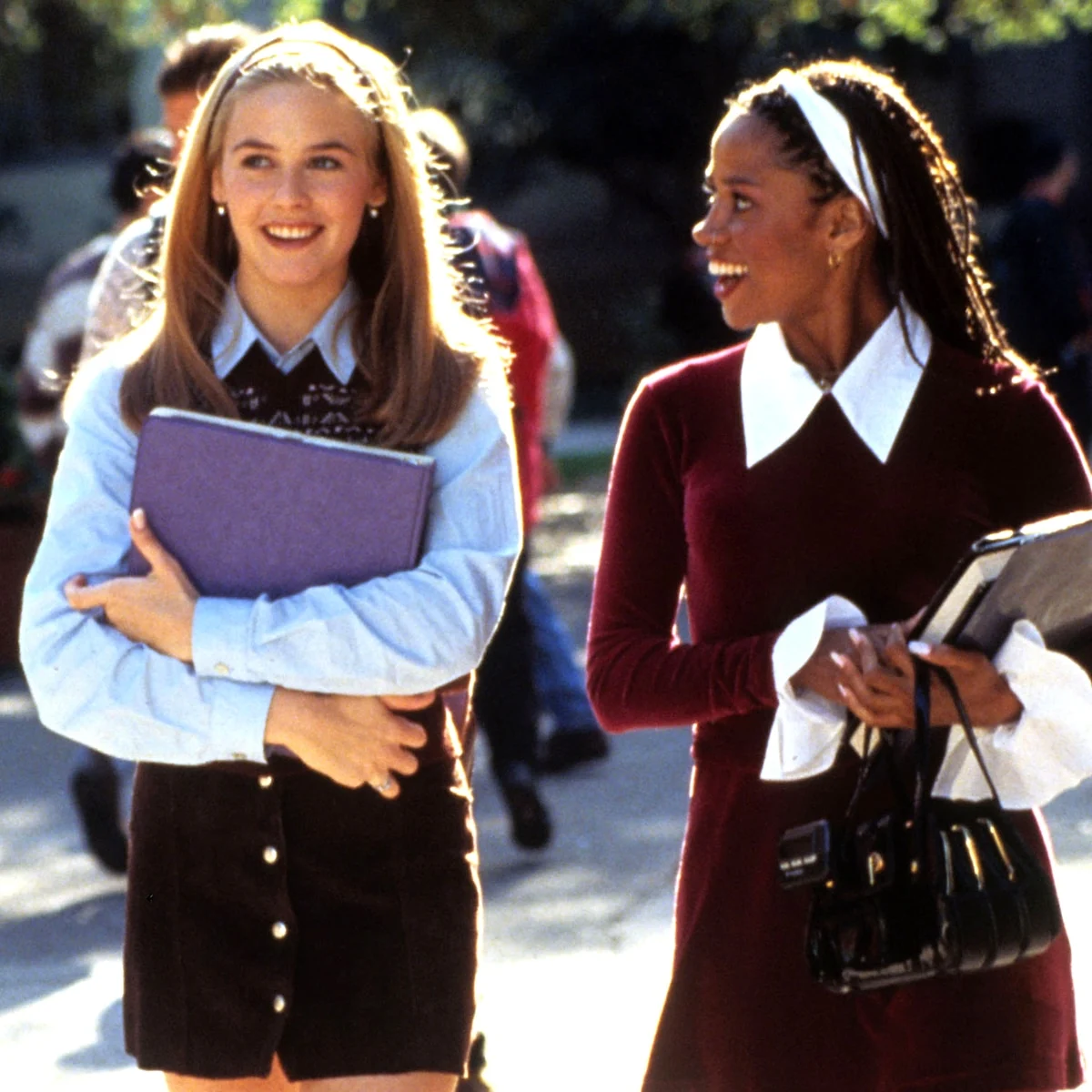
Nearly three decades after a yellow-plaid-clad teenager sauntered into the cinematic landscape, Clueless remains an paradigm-shifting touchstone of American youth culture. The film did more than introduce a new vernacular of "Bettys," "Barneys," and "total Monets" to the global lexicon; it revolutionized teen cinema, redefined Gen X fashion, and subverted patriarchal tropes by presenting a hyper-feminine protagonist who was both flawed and fiercely competent.
Recently, the film’s star, Alicia Silverstone, sparked a wave of nostalgia after reflecting on the deep personal ties she maintains to the 1995 classic. Silverstone grew visibly emotional when detailing a little-known production detail: a brief cameo by her late mother, Didi. For Silverstone, the film is not merely a career-defining milestone but a preservation of family history. This intersection of personal memory and public adoration serves as a poignant reminder of why Clueless continues to resonate across generations.
Main Facts: The Genesis and Cultural Impact of a ’90s Masterpiece
Clueless was born from a simple directive. In the early 1990s, Fox’s television department approached writer-director Amy Heckerling—already celebrated for her work on Fast Times at Ridgemont High (1982) and Look Who’s Talking (1989)—with a request to pitch a concept centered on the "cool kids" of high school. Heckerling, who had long felt a connection to Jane Austen’s 1815 novel Emma, envisioned a modern adaptation set in the affluent enclave of Beverly Hills.
+------------------------------------------------------------+
|                       CLUELESS (1995)                      |
|------------------------------------------------------------|
| Director/Writer: Amy Heckerling                            |
| Source Material: "Emma" by Jane Austen                     |
| Production Budget: ~$12 Million                            |
| Domestic Box Office Gross: $55+ Million                    |
| Legacy: Redefined teen vernacular, fashion, and cinema     |
+------------------------------------------------------------+
The resulting film follows Cher Horowitz (Alicia Silverstone), a well-meaning, fashion-obsessed high schooler who uses her social privilege to orchestrate match-making schemes and makeovers, notably targeting eccentric transfer student Tai Fraser (Brittany Murphy). Alongside her best friend Dionne Davenport (Stacey Dash) and her idealistic ex-stepbrother Josh (Paul Rudd), Cher navigates the superficialities of Beverly Hills while learning that true fulfillment comes from genuine empathy and self-improvement.
Upon its release on July 19, 1995, the film was a critical and commercial sleeper hit, grossing over $55 million domestically. Its legacy, however, far outstripped its box office receipts. It established Silverstone as a household name, launched the careers of Rudd, Murphy, and Donald Faison, and revolutionized the fashion industry by steering youth culture away from the prevailing grunge aesthetic of the early 1990s toward high-fashion prep.
Chronology: From Development to the 1994 Shoot
The journey of Clueless from a television pitch to a cinematic classic was marked by creative pivots, casting near-misses, and an intensely collaborative production cycle.
       1993: Fox TV pitches Heckerling -> Conceptualized as "Emma" adaptation
         |
    Early 1994: Film script finalized; Title shifts from "No Worries" to "Clueless"
         |
    Winter 1994: 40-Day principal photography begins in Los Angeles
         |
     July 1995: Theatrical release; grossed $55M, becoming a sleeper hit
1. Pre-Production and Development (1993–1994)
After Fox passed on the initial television concept, Heckerling retooled the script into a feature film. During development, the project underwent several working titles, including No Worries and I Was a Teenage Teenager, before settling on Clueless. The script eventually found a home at Paramount Pictures under the stewardship of studio head Sherry Lansing, who recognized the distinctiveness of Heckerling’s vision during an initial table read.
2. The Casting Crucible (Mid-1994)
Casting the ensemble was a meticulous process. While Heckerling had set her sights on Alicia Silverstone after seeing her in Aerosmith’s "Cryin’" music video, studio executives pushed for a wider search.
- The Search for Cher: High-profile actresses including Gwyneth Paltrow, Reese Witherspoon, Keri Russell, Alicia Witt, and Tiffani Thiessen were considered. Ultimately, a dinner meeting between Heckerling and Silverstone sealed the deal. Associate producer Twink Caplan recalled being charmed by Silverstone’s innocence when she leaned across the table to sip from a straw rather than moving the glass, cementing her as the perfect embodiment of Cher.
- The Supporting Ensemble:
- Paul Rudd underwent multiple auditions to secure the role of Josh, beating out rising talents Ben Affleck and Jeremy Renner.
- Lauryn Hill auditioned for the role of Dionne before Stacey Dash was cast.
- Terrence Howard was considered for Murray, while Seth Green and Owen Wilson were in the running for the lovable stoner Travis Birkenstock (played by Breckin Meyer).
- Sarah Michelle Gellar was offered the role of Cher’s stylistic rival Amber Mariens, but was forced to decline due to contract conflicts with the soap opera All My Children.
3. Principal Photography (Winter 1994)
Principal photography took place over a compressed 40-day schedule in Los Angeles during the winter of 1994. The production was characterized by a distinct division of experience between the supporting cast and its lead.
For the supporting actors, the shoot resembled a collaborative, high-energy retreat. Donald Faison and Breckin Meyer shared a trailer, removing the central divider to create a communal lounge where they, alongside Paul Rudd, spent their off-hours.
Conversely, the then-17-year-old Silverstone faced a grueling schedule. Appearing in virtually every scene and navigating dozens of costume changes, Silverstone recalled the shoot as exhausting labor, contrasting with the lighthearted experience of her peers.
Supporting Data: Box Office, Wardrobe, and Audition Insights
To understand the scale and precision of Clueless, one must examine the metrics behind its production and its meticulous world-building.
Wardrobe and Aesthetic Metrics
The film’s costume designer, Mona May, was tasked with creating a highly stylized, aspirational wardrobe on a modest budget.
- Cher’s Closet: Alicia Silverstone wore 64 distinct outfits over the course of the 100-minute film.
- The Fitting Process: Unlike standard productions which allocate two days for wardrobe fittings, the main cast underwent seven to ten days of fittings, lasting up to ten hours a day, to curate the film’s precise style profiles.
- The Iconography: The yellow plaid Dolce & Gabbana suit worn by Cher in the opening scenes became the defining silhouette of 1995 fashion, directly influencing retail trends for Gen X and subsequent generations.
+--------------------------------------------------------------+
|                     PRODUCTION BY THE NUMBERS                |
|--------------------------------------------------------------|
| Shoot Duration           | 40 Days                           |
| Cher's Costume Changes   | 64 Outfits                        |
| Wardrobe Fitting Time    | 7–10 Days (10 Hours/Day)          |
| Domestic Box Office Gross| $55,000,000                       |
+--------------------------------------------------------------+
Linguistic and Scripting Architecture
Heckerling acted as an amateur linguist while writing the screenplay, systematically compiling slang to construct the film’s distinct Beverly Hills dialect.
- "As if!": Heckerling adapted this phrase from the early-1990s LGBTQ+ community in Los Angeles, recognizing its utility as a multi-purpose, dismissive idiom.
- "Going Postal": This term, which entered the script after Heckerling surveyed teenagers during the audition process, became widely popularized by the film’s release.
- "Betty" and "Barney": Derived from The Flintstones characters, Heckerling used "Betty" (referencing the attractive Betty Rubble) to denote a beautiful woman, and "Barney" to describe an unattractive or undesirable man.
Official Responses: Reflections from Cast and Crew
Decades after the film’s release, the creative minds behind Clueless have frequently reflected on its production, offering insight into the elements that elevated the movie from a standard teen comedy to a cultural landmark.
Amy Heckerling on Creative Liberty and Spontaneity
Heckerling has consistently emphasized that the film’s best moments came from protecting the natural, unpolished instincts of her young cast. During the debate class scene, Silverstone genuinely mispronounced the word "Haitians" as "Haw-tians."
When crew members rushed to correct the young actress, Heckerling intervened:
"I had to stop them. It was much funnier the way she said it. That was Cher."
Regarding her favorite line in the film, Heckerling bypassed the more famous catchphrases in favor of Cher’s earnest debate logic:
"I guess, in a goofy way, I have always been proud of ‘It does not say RSVP on the Statue of Liberty.’"
Sherry Lansing on the Script’s "Genius"
Former Paramount Pictures studio head Sherry Lansing recalled her immediate, visceral reaction to the first screening of the film, noting how rare it was to encounter a project that required no executive adjustments:
"I just loved it. I’m not an easy laugh; you look at a movie and you’re constantly trying to make it better. But every once in a while, you see a movie, and the notepad you have is blank—and you just say, ‘This is genius.’"
The Cast on the Reality of the Set
For Wallace Shawn, who played the idealistic teacher Mr. Hall, the shoot felt uniquely innocent:
"Making the film felt like going to a rather innocent party where one of the games was, ‘Let’s Make a Movie.’ The cast were not necessarily people who even were planning to have careers, they were just doing something in itself that was entertaining and amusing and fun."
Donald Faison, whose character Murray delivered some of the film’s most memorable comedic beats, recalled the sheer excitement of his first on-screen romance with Stacey Dash. Faison admitted to being highly enthusiastic about their post-freeway-stress kiss:
"I was enamored by her… I remember telling my friends that I was going to be dating the girl from Mo’ Money and they were going crazy."
Implications: The Enduring Legacy and the Future of Cher Horowitz
The cultural footprint of Clueless extends far beyond nostalgia. It established a structural blueprint for the modern teen comedy, paving the way for late-90s and early-2000s classics such as 10 Things I Hate About You, Mean Girls, and Easy A. By blending literary sophistication (Austen’s Emma) with contemporary youth culture, Heckerling proved that teen movies could be intellectually sharp, stylistically revolutionary, and commercially viable.
+--------------------------------------------------------------+
|                     THE GENRE-REDEFINING LEGACY              |
|--------------------------------------------------------------|
| • Subverted the "dumb blonde" trope with an agent of change  |
| • Replaced early-90s grunge with high-fashion prep           |
| • Established literary adaptations as a teen comedy staple   |
| • Popularized LGBTQ+ and youth subculture slang globally      |
+--------------------------------------------------------------+
The Cher and Josh Dynamic
The film’s central romance between Cher and her former stepbrother, Josh, remains a subject of ongoing debate and analysis. Silverstone has defended the relationship, noting the lack of biological relation and the disparate household dynamics:
"It wasn’t like she was raised with him, for God’s sake… Her dad probably had so many different wives."
While Paul Rudd has jokingly remarked that the couple has likely parted ways, Silverstone maintains a more optimistic outlook for the characters, imagining Cher as a successful, organized professional:
"Hopefully she’s married to Paul Rudd and has children and works hard at something she loves a lot. Maybe she’s a professional organizer."
Cher as a Contemporary Progressive
Heckerling’s vision of a modern-day Cher Horowitz aligns with the character’s intrinsic desire to improve the world around her. Rather than remaining static in her 1990s bubble, Heckerling views Cher as a highly socially conscious figure in the modern era:
"She would be for equality, equal pay, immigration reform, prison reform—the environment and climate change and evil corporations poisoning our food supply and the air and the water. I mean, boy, where do you start?"
Ultimately, the enduring appeal of Clueless lies in this fundamental warmth. Beneath the designer labels, the cellular phones, and the sharp-witted sarcasm is a story about a young woman trying to become a better person. It is this core of genuine humanity—exemplified by Silverstone’s emotional connection to her mother’s brief appearance on screen—that keeps Clueless from fading into a relic of the 1990s, securing its place as an timeless piece of American cinema.
 Sagoh
Sagoh
 Siti Muinah
 Nana
Nana
