

With the October 9 theatrical release of The Social Reckoning rapidly approaching, the cinematic landscape is bracing for a return to the halls of Menlo Park. Directed by Aaron Sorkin, the film arrives fifteen years after his seminal work, The Social Network, redefined the modern biopic. Eschewing the traditional festival circuit, the production has remained shrouded in mystery, leaving audiences to rely on fragmented trailers and the occasional leak. However, a wide-ranging interview with The New York Times published this past Saturday has finally pulled back the curtain, offering a profound glimpse into the creative, legal, and performance-based challenges of tackling the Silicon Valley giant once more.
A Legacy Reimagined: Why It’s Not a Sequel
One of the most persistent rumors surrounding the project has been its status as a direct follow-up to the 2010 Academy Award-winning film. Sorkin has been quick to squash this narrative, citing his own past reticence to revisit the subject matter. "I’m not really sure you can call this a sequel," Sorkin clarified. "This is another movie about Facebook, written by the same writer who wrote The Social Network. And one of the characters from The Social Network is in this as well, but played by a different actor. It’s as if the character of Henry Hill [from Goodfellas] showed up in Casino."
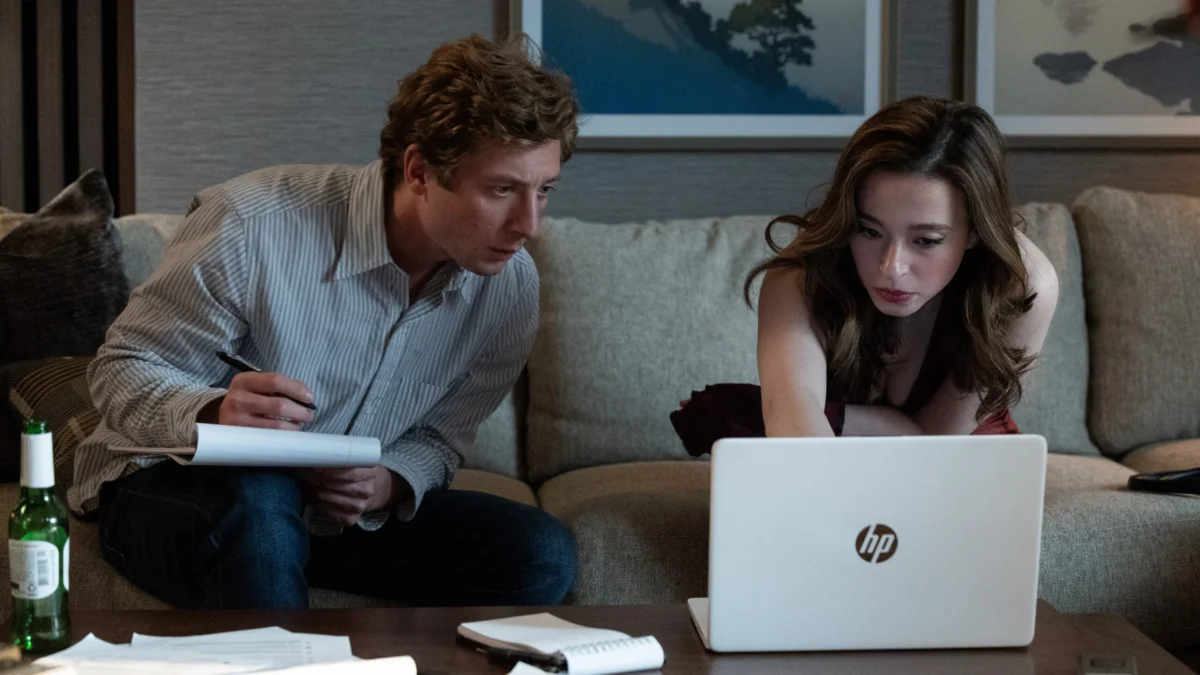
Sorkin’s apprehension about a direct sequel was grounded in a creative fear of redundancy. "I just didn’t want to be the writer of Jaws 2," he admitted. The catalyst that finally broke his hesitation was the discovery of a narrative arc centered on the collision between whistleblower Frances Haugen—portrayed by Mikey Madison—and investigative journalist Jeff Horwitz, played by Jeremy Allen White. For Sorkin, this provided the necessary human stakes to justify a return to the subject. "I found a good story to tell where you can eat popcorn and Milk Duds," he remarked, underscoring his intent to balance institutional critique with compelling, traditional cinema.
The Evolution of the Antihero: Portraying Mark Zuckerberg
Central to the discourse surrounding both films is the characterization of Mark Zuckerberg. In the public eye, Zuckerberg is a lightning rod for controversy, but Sorkin maintains a deliberate distance from moral absolutism. "I, as the writer, can’t judge that character," Sorkin insisted. "I write that character as if they’re making their case to God why they should get into heaven. I don’t want to pass judgment on real Mark. I’m not here for that."

This philosophical approach to character study has created a unique dynamic on set, particularly regarding the casting of Jeremy Strong as the Meta founder. Strong, known for his rigorous commitment to Method acting, adopted a protective stance toward his subject that surprised even his director. According to Sorkin, Strong was "constantly defending Mark" throughout production, not only during rehearsals but in late-night correspondence.
The contrast between Jesse Eisenberg’s portrayal in 2010 and Strong’s 2026 performance is expected to be a focal point for critics. Sorkin offered high praise for his lead, stating, "Jeremy Strong, who blows the doors off the place playing this part… it was like replacing Joe DiMaggio with Mickey Mantle."
The Method Behind the Mask
Perhaps the most intriguing revelation from the production is the extent to which Jeremy Strong submerged himself into the role. It was recently disclosed that Strong maintained direct communication with the real Mark Zuckerberg, a fact that caught Sorkin off guard. "I had no idea," Sorkin admitted. "Jeremy does a lot of his own work. He does a tremendous amount of work before he shows up on your set."
To maintain the psychological environment required for the role, Sorkin implemented strict boundaries on set. He warned the cast that Strong would not be engaging in typical social interactions between takes. "I told all the other actors in his scenes: ‘Guys, he’s not going to be hanging out with you at craft service. He’s not going to be yucking it up with you between takes. He’s probably not going to speak to you at all. He is going to treat you the way he imagines Mark treats the people around him.’" The result, according to Sorkin, was a palpable tension that translated directly onto the screen.

Navigating the Legal Labyrinth
The production of The Social Reckoning was not merely a creative endeavor; it was a high-stakes legal exercise. Given the litigious nature of tech conglomerates, Sony Pictures engaged external counsel to conduct a rigorous, almost obsessive, fact-checking process. Sorkin acknowledged that the studio was the recipient of several legal letters from Meta, though he kept the tone of his recounting light. "I do not think those letters said: ‘We’re wishing you all the luck in the world. Send us some tickets for opening night,’" he joked.
However, the reality of the process was, by Sorkin’s own admission, "agonizing." The screenwriter noted the profound irony of a film about a company criticized for its lack of transparency having to undergo such intense scrutiny to ensure its own accuracy. "The things that I wasn’t able to say or do are agonizing," Sorkin reflected. "The irony wasn’t lost on anybody that we were doing a thorough fact check of a movie about a company unwilling to do the same thing."
Implications and Thematic Resonance
As the release date nears, the question remains: what does Sorkin hope to achieve with this narrative? While The Social Network dealt with the origins and the betrayal inherent in the birth of a platform, The Social Reckoning appears to be concerned with the consequences of that platform’s maturity and its impact on global discourse.
The film does not attempt to offer a simple resolution to the problems posed by modern social media. Instead, it positions itself as an observation of a specific, pivotal moment in the digital age. "It ends on an optimistic note, but not a rose-colored one," Sorkin concluded. "It’s up front about what’s still wrong. It’s just that David threw a rock at Goliath and connected."

Industry Expectations and Cultural Impact
The industry is watching with bated breath. The combination of Sorkin’s dialogue-heavy, rhythmic screenplay and the intense, transformative performance of Jeremy Strong positions The Social Reckoning as a major contender for the upcoming awards season. Furthermore, by choosing to bypass the festival circuit, the studio is betting on the film’s intrinsic momentum and the cultural urgency of its subject matter to drive the conversation.
If the goal of the film is to force a reflection on the role of platforms in our lives, the inclusion of the Frances Haugen narrative is a strategic masterstroke. By rooting the film in the perspective of a whistleblower, Sorkin provides the audience with an anchor—a relatable human element amidst the cold, algorithmic complexity of the story.
Ultimately, The Social Reckoning serves as a mirror to the tech-centric society we have built over the last decade and a half. Whether it reaches the heights of its predecessor remains to be seen, but it is clear that Sorkin has once again crafted a project that demands to be seen, debated, and dissected. As the world prepares for the October 9 premiere, one thing is certain: the dialogue surrounding Facebook, the power of its architects, and the responsibility of the information age is far from over. Sorkin has simply ensured that, for the next few hours, all eyes will be back on the screen.
 Ammar Sabilarrohman
 Siti Muinah
