

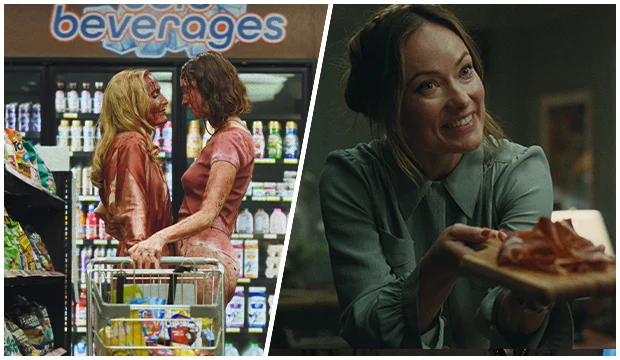
As the mercury rises and the global box office gears up for the typical onslaught of gargantuan studio tentpoles—including the highly anticipated Toy Story 5, the latest Spider-Man: Brand New Day, the animated juggernaut Minions & Monsters, and the sweeping epic The Odyssey—a quiet revolution is taking place in the margins. While multiplexes prepare for the thunderous roar of franchise spectacles, a strategic quartet of independent films is mounting a sophisticated counter-programming offensive.
By intentionally bypassing the traditional "prestige" glut of the fall film festival season, distributors Mubi, Neon, and A24 are making a bold bet: that audiences are hungry for a palate cleanser. This summer, the independent sector is not merely settling for the crumbs of the box office; it is actively positioning itself for a long-tail campaign that stretches from mid-summer ticket sales all the way to the glitter of the 2027 awards season.
The Strategy: Counter-Programming as an Art Form
The decision to release acclaimed films like Rosebush Pruning, The Invite, Her Private Hell, and Teenage Sex and Death at Camp Miasma during the heat of July and August is a calculated move. Traditionally, the summer months are reserved for the "popcorn movie"—high-concept, low-friction entertainment designed for mass consumption. However, these four films offer a distinct alternative: high-concept, provocative storytelling that targets the cinephile demographic often ignored by the summer blockbuster machine.
By securing early release dates, these distributors are avoiding the "awards season pile-up" that defines November and December, where dozens of films compete for a finite amount of critical oxygen and voter attention. Instead, they are using the summer window to build grassroots momentum, establish a brand identity, and secure early critical consensus that can be leveraged when the voting season begins in earnest.
The Vanguard: A Four-Film Breakdown
Rosebush Pruning (Mubi)
Rosebush Pruning emerged from the Berlin International Film Festival in February as one of the most polarizing and audacious titles of the year. Directed by Karim Aïnouz and featuring a razor-sharp script by Efthimis Filippou—known for his frequent, surreal collaborations with Yorgos Lanthimos—the film is a biting satirical saga. It tracks a wealthy, dysfunctional American family as they relocate to Spain, a premise that serves as a Trojan horse for deeper, darker commentary.
The film’s ensemble cast is arguably its greatest asset, featuring a lineup that feels curated for the modern zeitgeist: Callum Turner, Riley Keough, Elle Fanning, Lukas Gage, and Jamie Bell. The addition of Pamela Anderson in a surprising cameo, playing opposite the formidable Tracy Letts, has only amplified the film’s buzz.

Director Karim Aïnouz recently addressed the casting process, noting that the script’s transgressive nature was a hurdle. "When we started casting, I have to tell you that I did talk to other actors, and everybody was really excited. And then when they read the script, they were like, ‘Oh, I’m not sure,’" Aïnouz told Variety. "Ultimately, I was really interested in actors who were not judging these characters." Rosebush Pruning is poised to become a staple of the Independent Spirit Awards circuit.
The Invite (A24)
Perhaps the most significant challenger to the studio status quo is A24’s The Invite. Fresh off a rapturous reception at the Sundance Film Festival, the film marks the third directorial outing for Olivia Wilde. With a 95% "Certified Fresh" rating on Rotten Tomatoes and a Metacritic score of 81 indicating "universal acclaim," it is currently the darling of the 2027 awards conversation.
The film centers on a couple navigating a crumbling relationship, whose domestic turmoil is exacerbated by an invitation to a dinner party with their upstairs neighbors. The performances by Wilde, Seth Rogen, Penélope Cruz, and Edward Norton have been cited as the film’s backbone. With a screenplay penned by Rashida Jones and Will McCormack, The Invite is already appearing on midyear shortlists for Best Original Screenplay, with Cruz and Norton emerging as early favorites for supporting acting categories.
Her Private Hell (Neon)
Nicolas Winding Refn returns with Her Private Hell, a psychological thriller that has already cemented its status as a festival event. Following a high-octane premiere at Cannes that triggered a massive standing ovation, the film is set for a July 24 release.
Starring Sophie Thatcher as a young actress grappling with profound family trauma and a chilling, mysterious antagonist known as "The Leather Man," the film is a masterclass in atmospheric dread. Charles Melton, continuing his upward trajectory, plays an Army private embroiled in the central conflict. While Refn’s filmography—Drive, The Neon Demon—has historically been overlooked by the Academy, his status as a critical darling ensures that Her Private Hell will be a major player in the BAFTA and Critics Choice conversations.
Teenage Sex and Death at Camp Miasma (A24)
A24’s second major summer entry, Jane Schoenbrun’s Teenage Sex and Death at Camp Miasma, is already being hailed as the horror sensation of the year. Having won the Queer Palm at Cannes, the film boasts a perfect 100% score on Rotten Tomatoes.

The film follows an aspiring filmmaker (Hannah Einbinder) hired to helm a reboot of a slasher franchise, eventually tracking down the franchise’s reclusive original star (Gillian Anderson). It is a meta-commentary on the horror genre itself. While horror is often marginalized by awards bodies, Schoenbrun’s pedigree suggests that this film will be a significant contender at the Independent Spirit Awards and among major critics’ associations.
Supporting Data: Why the Shift Matters
The shift toward summer indie releases is supported by shifting audience demographics. Data from the first half of 2026 suggests that while blockbuster revenue remains stable, there is a "fatigue factor" setting in among younger, college-educated audiences who are increasingly seeking films with higher intellectual engagement.
- Audience Retention: Independent films released in the summer have historically shown better week-over-week retention rates than blockbusters, which often experience a "front-loaded" performance.
- Critical Saturation: By releasing in July/August, these films capture the attention of film critics who are otherwise starved for quality content during the "dog days" of summer, resulting in a higher volume of long-form reviews and analysis.
- Festival Synergies: The proximity between the spring festival circuit (Berlin, Sundance, Cannes) and the summer release window allows distributors to maintain the momentum generated during the premiere without the marketing costs associated with re-launching a film months later.
Official Responses and Industry Implications
Industry analysts are watching these four releases closely to see if they signal a permanent change in distribution models. "We are seeing a move away from the ‘all-or-nothing’ fall model," says Sarah Jenkins, a senior analyst at MediaTrack. "Distributors are realizing that a film like The Invite can breathe in July. It’s not competing with the five other ‘Oscar bait’ movies that drop on the same day in November."
For the directors involved, the move is as much about control as it is about strategy. By avoiding the noise of the winter season, these films are allowed to stand on their own merits. As Karim Aïnouz noted, the goal is to find audiences who don’t want to "judge the characters" but rather experience them. In an era of franchise fatigue, that may be exactly what the market needs.
Conclusion: A New Horizon for Independent Film
As the industry moves toward the latter half of the year, the success of these four films will serve as a bellwether for the future of mid-budget, high-concept cinema. If Rosebush Pruning, The Invite, Her Private Hell, and Teenage Sex and Death at Camp Miasma can sustain their momentum, they will effectively prove that the "summer blockbuster" is not the only viable path to success. For the cinephile, this summer offers a rare opportunity: the chance to see the awards contenders of tomorrow, today.
 Nana
Nana
 Asro
Asro
 Ammar Sabilarrohman
