

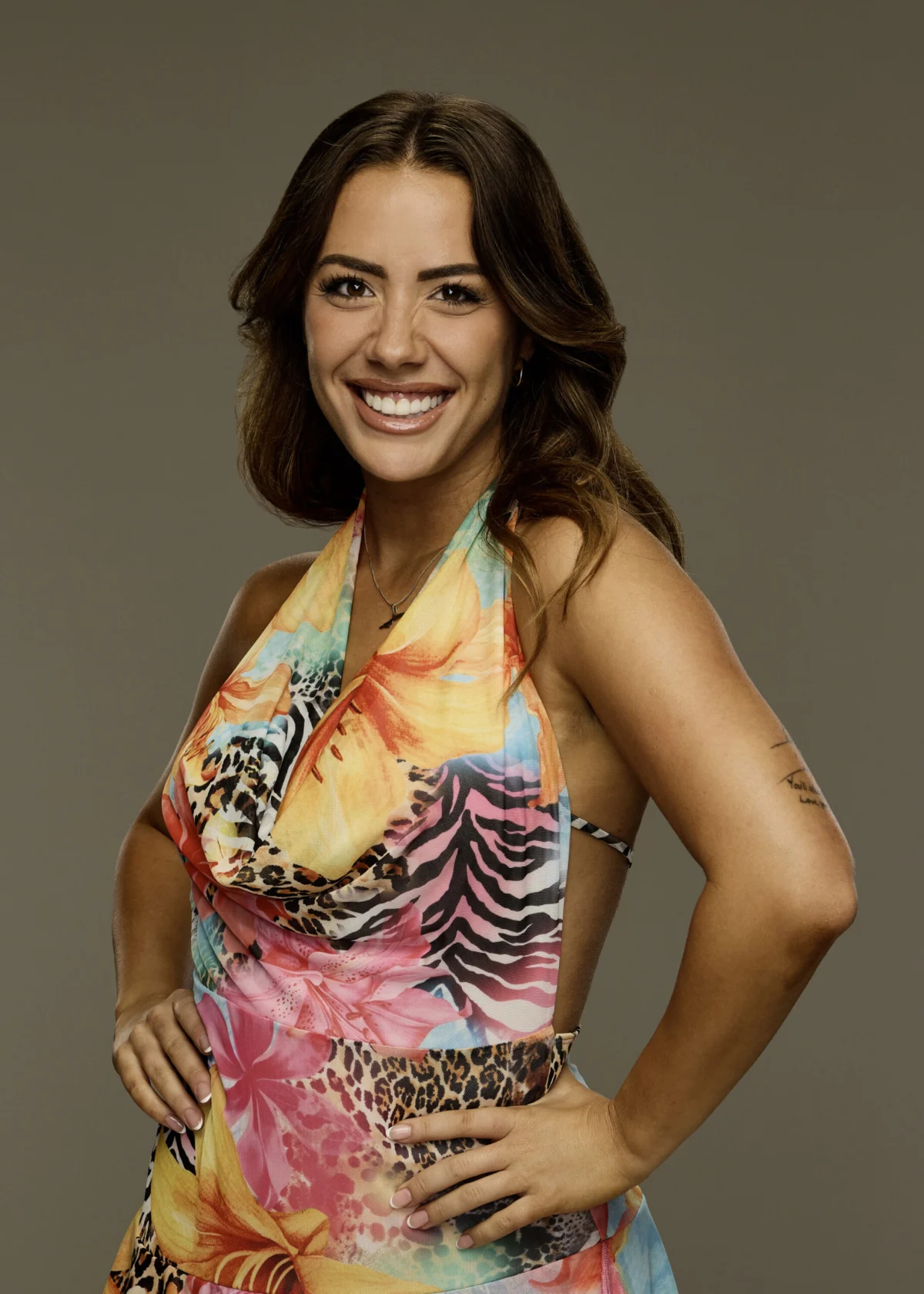
The Big Brother house has always been a hotbed for speculation, but Season 28 has reached a fever pitch of fan-driven "rigging" theories. As the show approaches its high-stakes finale, veteran Survivor star and Big Brother 28 standout Dee Valladares is finally pulling back the curtain on her experience, dismissing the swirling rumors that the season was engineered to favor returning reality icons.
In an exclusive sit-down following her dramatic fourth-place eviction, Valladares addressed the skepticism head-on. For months, social media has been ablaze with accusations that producers manipulated the game to protect legendary players. Critics pointed to the inaugural Head of Household (HOH) competition, which featured only Valladares, Rick Devens, and Angela Murray, as evidence of a "stacked deck."
"Coming in as a reality icon, I had an advantage because I’ve already played games before," Valladares admits. "But in many ways, it’s also a disadvantage. Once you are pinned, once somebody has a perspective of you, it’s very hard to not only manage that perspective, but have people change it."
The Anatomy of the Allegations
The accusations of favoritism stem from a series of events early in the season that skeptics argue paved an easy path for the returning veterans. When Dee, Rick, and Angela were the sole participants in the first HOH, the Big Brother community—known for its meticulous, eagle-eyed observation—cried foul.
However, industry insiders and seasoned fans note that such structures are standard for seasons incorporating returning players or specific "twist" formats. Furthermore, the special powers awarded during the season—specifically Dee’s "BB Bribe" and Devens’ "Diamond Power of Veto"—were explicitly driven by public voting mechanisms. As Valladares points out, those advantages were granted by America, not by the producers behind the scenes.

The reality, as Valladares explains, is far less clandestine than the internet would have viewers believe. The game, while multilayered, is defined by social dynamics and, occasionally, the luck of the draw.
Chronology of a High-Stakes Exit
Dee Valladares’ journey to the final four was anything but linear. After 80 days of intense, televised isolation, her game ended in a singular, crushing moment of gameplay.
Following a high-intensity Power of Veto (POV) competition, houseguest Drew Campbell secured the win. With the sole power to cast the eviction vote, Campbell chose to terminate Valladares’ run. This move effectively set the stage for the final three: Drew Campbell, Rick Devens, and Taylor Brown.
For 80 days, Valladares maneuvered through a field of competitors, balancing her "icon" status against the need to blend in. Her eviction marks the end of a pivotal arc in the season, leaving the remaining houseguests to face off for the $750,000 grand prize during next Thursday’s 90-minute live finale.
The Psychological Toll: ‘Survivor’ vs. ‘Big Brother’
One of the most compelling aspects of Valladares’ post-game analysis is her comparison of the two titans of reality television. Having survived the brutal, resource-deprived landscape of Survivor and the claustrophobic, high-pressure environment of the Big Brother house, she offers a unique perspective on which format is truly more challenging.

"Listen, they’re both highly challenging," she says. "But I will say Big Brother is just multilayered. On Survivor, you can blindside someone and you don’t have to worry about it. They’re gone; you do your little damage control. Big Brother? You’ve got to think three to five steps ahead. But I also will say there is more paranoia on Survivor."
The lack of basic human comforts—specifically food and sleep—remains the defining difficulty of Survivor for her. "When you’re not eating, not sleeping, and experiencing paranoia every single day, that in itself is more challenging," she explains.
Conversely, the Big Brother experience is defined by the relentless, invasive nature of the cameras and the lack of privacy. Even the act of showering is subject to observation. "On Big Brother, even though it is longer, at least you can eat. And at least, if your friend wins HOH, you’re good for the week, so you get to relax. On Survivor, there is never a moment where you relax."
The "Icon" Label: An Unexpected Burden
When asked about her perceived advantage, Valladares is candid about the frustration of the "icon" label. While the title suggests prestige, inside the house, it functioned as a target.
"I did not call myself that in my DR sessions. I didn’t even want to call myself an icon," she says with a laugh. "It felt very hard because you are immediately looked at like, ‘Oh my God, icon, we gotta get this person out.’ And they won Survivor, they already played games."

This target on her back created a paradox: the fear of being perceived as a threat forced her to play more aggressively, which in turn confirmed to other houseguests that she was a threat. "If I’m going to go home early because I am viewed as an icon, then I might as well play very hard and have no regrets."
Lack of Preparation: The "Build the Parachute" Strategy
In a surprising admission, Valladares reveals that she entered the Big Brother house with almost zero technical preparation. She viewed two seasons—Angela’s and Season 16—but confessed to skipping through the competitions.
"I am a people person. I love people. I love games. I always trusted in myself to figure it out along the way. That’s kind of what I do in life anyway. I put myself in hard situations and I build the parachute on the way down," she admits.
While she concedes that a deeper understanding of the show’s history—specifically the timeline of previous events—might have saved her at the final four, she remains satisfied with her approach. Her gameplay was rooted in instinct, social intelligence, and a willingness to embrace the absurdity of the format.
Life Inside the House: Lights, Cameras, and "Good Morn-ting"
The physical environment of the house proved to be one of her greatest adversaries. The lack of natural light and the constant presence of others tested her limits.

"When you’re stuck in that house for three to four days with no sunlight and the backyard is closed, those were the hardest moments. I need the outdoors, I need the sunshine, and that really messed with my head," she notes. The bright, artificial lighting led to chronic headaches, while the inability to find true solitude exacerbated the pressure of the game.
When asked about her personal annoyances, she points to LaTrice "Lala" Verrett. "Lala got under my skin a lot… she would come down her stairs in her robe and say, ‘Good morn-ting.’ Not even ‘Good morning.’ Lala, you say good morning all the time. You don’t say good morn-ting!" While she acknowledges Verrett as a "sweetheart," the friction served as a microcosm of the intense social friction inherent in the game.
The Road to the Finale
As the dust settles, Dee Valladares joins the jury of seven, which currently includes LaTrice "Lala" Verrett, Angela Murray, Barrett Pfeiffer, Yash Patel, and Melody Morris. These seven individuals will hold the power to determine who walks away with the $750,000 on October 1.
The legacy of Big Brother 28 remains subject to debate. While fans continue to dissect the influence of the "icons" and the validity of the game’s structure, the participants themselves seem to view the experience as a blend of high-level strategy and surreal, "silly" entertainment.
"I love Big Brother because it’s such a silly little game," says Valladares. "Angela would always say, ‘Dee, it’s just a silly little game.’ I never really understood it until I was in it. Yes, it’s a hard game and you’ve got to make decisions that suck, but it’s a silly little game. I got to embody that silly side of me."

Whether or not the show was "rigged," one thing is certain: the journey for these houseguests has been a transformative, exhausting, and undeniably public test of character that will be discussed for seasons to come. The final decision now rests in the hands of the jury, and as the finale approaches, the only thing guaranteed in Big Brother is that nothing is ever truly predictable.
 Ammar Sabilarrohman
 Siti Muinah
 Iffa Jayyana
