

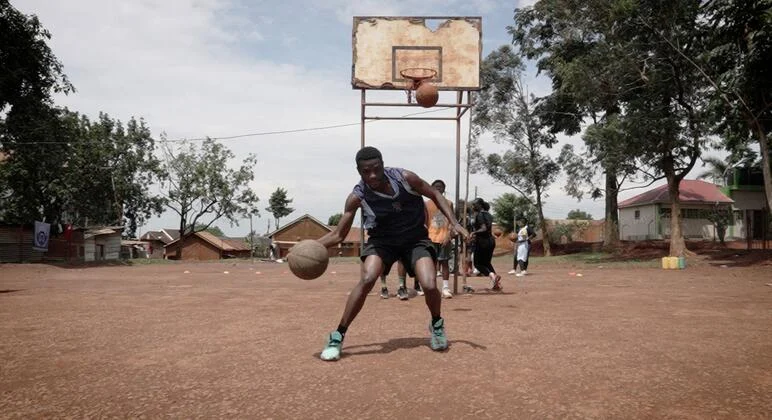
In the dusty, sun-drenched outskirts of Uganda’s settlements, a rhythmic sound echoes against the makeshift backboards of local courts: the sharp thwack-thwack of a basketball being dribbled with purpose. For Stephane Kulimushi, this sound is not merely the rhythm of a sport; it is the heartbeat of a movement. Having fled the instability of the Democratic Republic of the Congo (DRC) to seek refuge in Uganda, Kulimushi witnessed firsthand the debilitating limbo that defines the refugee experience. Today, he is transforming that narrative through the Refugee Basketball Academy (RBA), an organization that views the hardwood not just as a place for competition, but as a crucible for leadership and a bridge to a sustainable future.
Main Facts: The Genesis of a Movement
The Refugee Basketball Academy, founded by Kulimushi in 2020, operates on a simple yet profound premise: talent is universal, even when opportunity is restricted. The academy provides more than athletic training; it integrates sports with mentorship, educational advocacy, and vocational training. By leveraging the skills he acquired through entrepreneurship programs—specifically training provided by the Cosmo Foundation—Kulimushi has scaled the RBA from a grassroots idea into a structured initiative that has served over 100 young refugees.
The program functions on three pillars:
- Athletic Development: Professional-level coaching, organized tournaments, and physical conditioning.
- Academic Bridging: Utilizing video portfolios of players to showcase their talents to schools and universities, effectively turning athletic prowess into educational scholarships.
- Leadership Cultivation: Mentorship sessions designed to foster resilience, business acumen, and civic responsibility among youth who have been marginalized by displacement.
Chronology: From Displacement to Empowerment
The journey of the RBA is a testament to the resilience of the human spirit when paired with strategic action.
- Pre-2020: Kulimushi arrives in Uganda from the DRC. He observes a pervasive crisis among youth in the settlements: a lack of educational access, the psychological toll of inactivity, and the dangerous temptation of losing one’s sense of purpose while waiting for elusive resettlement opportunities.
- 2020: The official founding of the Refugee Basketball Academy. Despite the global uncertainty caused by the COVID-19 pandemic, Kulimushi identifies sports as a safe, socially distant, and mentally restorative outlet for displaced youth.
- 2021-2022: The RBA begins to see tangible success. Through partnerships and the application of entrepreneurial principles, the academy formalizes its coaching staff and begins recording player highlights to attract scouts and educational institutions.
- 2023-Present: The RBA gains momentum. Seven young players secure academic scholarships through the program. Kulimushi himself balances his role as a founder with his studies in management and entrepreneurship at Cavendish University, serving as a living model for his students.
Supporting Data: The Impact of Sports on Displacement
The efficacy of the RBA is supported by broader observations regarding youth development in humanitarian contexts. According to various reports from international aid agencies, displaced youth are statistically more likely to drop out of school and face mental health crises if they lack structured community engagement.
- Educational Success: With seven scholarships secured in just a few years, the "convertibility" of the basketball program is high. By marketing student-athletes rather than just players, the RBA bridges the gap between the informal settlement environment and formal academic institutions.
- The "Waiting" Crisis: Many refugees in Uganda face a resettlement process that can stretch into decades. The RBA addresses the psychological "dead time" of this waiting period. By providing a routine, the academy reduces the likelihood of youth involvement in high-risk activities.
- Scale and Reach: Having trained over 100 individuals, the academy has achieved a critical mass that allows for internal mentoring, where older, more experienced players guide younger arrivals, ensuring the sustainability of the program’s culture.
Official Responses and Perspectives
The RBA has received praise for its alignment with the United Nations’ 2030 Agenda for Sustainable Development, specifically regarding Goal 4 (Quality Education) and Goal 10 (Reduced Inequalities).
"We do not just build basketball players; we are building leaders," says Kulimushi. His perspective challenges the traditional humanitarian narrative, which often portrays refugees as passive recipients of aid. Instead, he emphasizes the "human capital" that refugees bring with them. "We are leaving houses," he often remarks, "but we are carrying talents with us."
Local educators and community leaders in Uganda have noted that the RBA participants show marked improvements in classroom attendance and behavioral metrics. By instilling a sense of discipline on the court, the academy has inadvertently created a "pipeline" of students who are more engaged, disciplined, and goal-oriented in their academic pursuits.
Implications: Redefining the Refugee Identity
The implications of Kulimushi’s work extend far beyond the basketball court. The RBA serves as a pilot for a new model of humanitarian aid—one that is decentralized, athlete-led, and focused on long-term human development rather than short-term survival.
Addressing the Psychological Toll
War and forced migration leave deep psychological scars. For many children in the RBA, the basketball court serves as one of the few places where they feel a sense of agency. "When we are here, we feel peace," Kulimushi notes. This "safe space" mechanism is essential for mitigating the long-term effects of trauma and displacement, providing a sense of normalcy that is often stripped away during conflict.
The Path Toward Expansion
Kulimushi’s ultimate vision is to scale the RBA to other refugee settlements throughout Uganda. The challenge, however, remains one of resources. Infrastructure—such as court surfaces, basketballs, and transportation—is limited. Yet, the RBA has proven that the "social technology" of the academy is highly replicable. By training trainers and fostering a network of alumni, the RBA is building a self-sustaining infrastructure that relies on community solidarity rather than volatile external funding.
Shifting the Narrative
Perhaps the most significant impact of the RBA is the shift in self-perception among the youth. By encouraging young refugees to see themselves as "leaders in waiting" rather than "victims in transit," the academy fundamentally alters the psychological trajectory of its participants. Ahead of World Refugee Day, the message is clear: displacement is a geographic event, not a definition of character.
Conclusion: A Future Built on the Hardwood
As Stephane Kulimushi continues to balance his university studies with the demands of coaching, his story serves as a profound reminder of the potential lying dormant in refugee communities worldwide. The Refugee Basketball Academy is more than an extracurricular program; it is a laboratory for social change.
In a world where millions of young people are waiting for their lives to "start" while in exile, the RBA demonstrates that the start they are looking for can be created through passion, education, and community. As the academy looks toward the future, its growth will likely continue to challenge the global community to rethink how we support the displaced—not by focusing on what they have lost, but by investing in the immense, untapped talent they carry with them.
The sound of the ball hitting the court in Uganda is not just a game; it is the sound of a new generation of leaders preparing to take the stage, proving that while a refugee may lose their home, they never have to lose their future.
 Lina Hope
 Asro
Asro
 Layla Zulfa
