

By Giovanni Colantonio
Published September 11, 2026
Main Facts: The 2026 Nintendo Direct and the Anatomy of a Strategy
For the video game industry, Nintendo’s September 2026 Direct showcases delivered a masterclass in contrasting fan expectations. On one hand, the back-to-back presentations leaned heavily into the company’s tried-and-true legacy catalog, headling with an extensive first look at The Legend of Zelda: Ocarina of Time remake for the upcoming successor console, the Switch 2. The footage immediately ignited internet discourse, drawing intense scrutiny over its polarizing art style and the unprecedented introduction of a dedicated jump button to the classic 1998 framework.
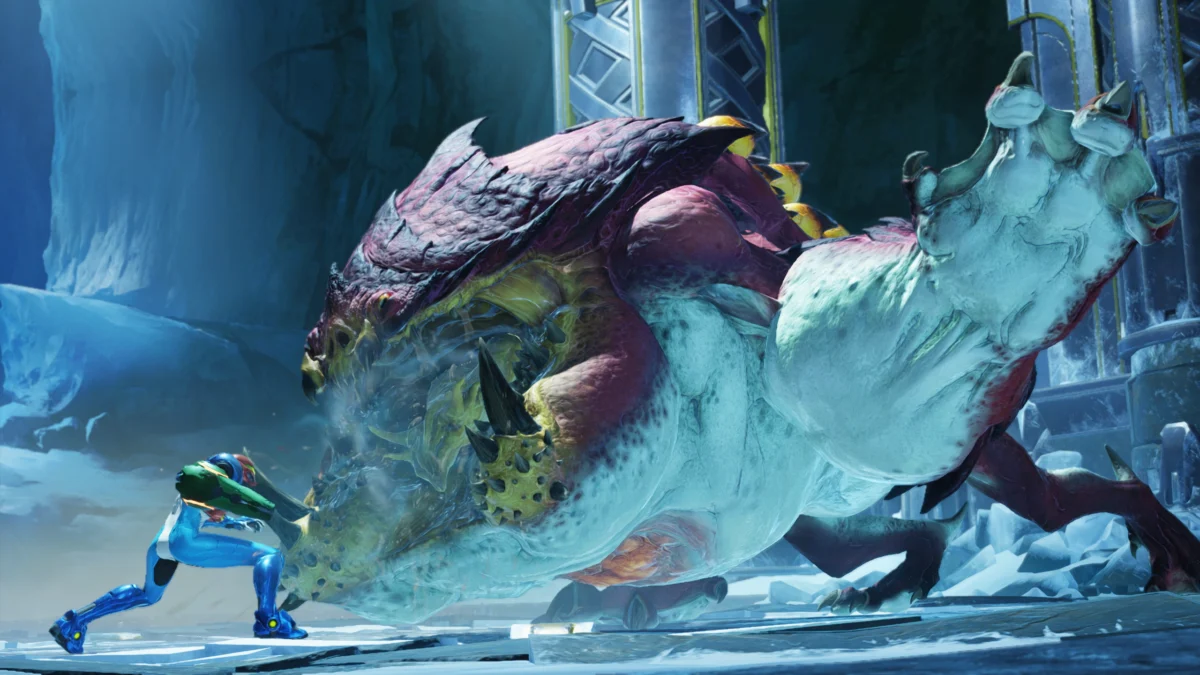
Yet, while Ocarina of Time is virtually guaranteed to dominate commercial charts as the definitive tentpole release of the early Switch 2 era, it was a different announcement that stole the creative spotlight: Metroid Ravenous. Slated to launch on January 28, 2027, as a premier 2D exclusive for the new hardware, Samus Aran’s latest outing immediately turned heads with a debut trailer introducing a visceral and shocking new mechanic—Samus consuming her enemies.
While Metroid Ravenous looks primed to follow in the footsteps of its Game of the Year-nominated predecessor, Metroid Dread, its existence underscores a broader, calculated corporate playbook. Nintendo has quietly weaponized the video game remake not merely as a low-risk cash grab or a nostalgia trap, but as a deliberate proving ground. By tasking external development studios with revitalizing classic intellectual property (IP), Nintendo establishes a pipeline of trust and technical mastery, ultimately granting those same studios the creative freedom to forge groundbreaking, original masterpieces.
Chronology: Tracing the Evolution of Nintendo’s External Partner Pipeline
To understand how Nintendo arrived at the announcement of Metroid Ravenous, one must trace the timeline of its modern external development strategy, which has systematically transformed how legacy franchises are handled.

1. The E3 2017 Turning Point: Metroid: Samus Returns
The modern iteration of this pipeline effectively kicked off at E3 2017, when Nintendo shocked the gaming world by announcing Metroid: Samus Returns, a full 2.5D reimagining of the Game Boy classic Metroid 2: Return of Samus for the Nintendo 3DS. The choice of developer raised eyebrows across the industry: MercurySteam, a studio based in Spain with no prior history working with Nintendo. However, MercurySteam boasted strong pedigree in the dark, action-platforming space, having developed 2010’s Castlevania: Lords of Shadow. Nintendo wagered that a studio intimately familiar with the Metroidvania genre could successfully decode and modernize Samus Aran’s early handheld adventures.
2. The Payoff: Metroid Dread (2021)
The gamble on MercurySteam paid dividends. Samus Returns earned critical acclaim and injected vital life into a dormant franchise. Rather than pigeonholing the studio into managing continuous remakes of titles like Super Metroid, Nintendo rewarded MercurySteam’s success with unprecedented autonomy. The developer was handed the reins to build the franchise’s first brand-new 2D adventure in nearly two decades. Everything learned during the development of Samus Returns—from melee counter-mechanics to fluid movement transitions—was funneled directly into Metroid Dread, a masterclass in tension and modern action-platforming design.
3. Expanding the Playbook: Grezzo and Echoes of Wisdom (2019–2024)
Nintendo replicated this exact developmental pipeline elsewhere. In 2019, external studio Grezzo—known primarily for porting and remastering classic games—was handed the task of remaking The Legend of Zelda: Link’s Awakening for the Nintendo Switch. Featuring a charming, diorama-like art style, the game proved Grezzo could faithfully handle Nintendo’s crown-jewel franchises. Having passed their audition, Grezzo was subsequently trusted with an unprecedented level of creative experimentation: developing The Legend of Zelda: Echoes of Wisdom (2024). This original top-down entry completely subverted franchise norms by casting Princess Zelda as the playable protagonist and utilizing a novel "echo" duplication system to revolutionize puzzle-solving.
4. The Present Era: Metroid Ravenous, Star Fox, and Beyond (2026)
As the industry transitions into the Switch 2 era, this blueprint has accelerated. The September 2026 Direct highlighted Metroid Ravenous, showcasing how MercurySteam has graduated from safe remakes to wild, experimental iterations on the formula. Simultaneously, other studios are working their way through the pipeline—such as Velan Studios handling a modernized Star Fox 64 reimagining, and ArtePiazza’s stewardship of legacy role-playing titles.
Supporting Data: The Commercial and Critical Impact of the Remake-to-Original Pipeline
| Studio | Remake Project (The "Audition") | Critical/Commercial Reception | Subsequent Original Project | Impact / Innovation |
|---|---|---|---|---|
| MercurySteam | Metroid: Samus Returns (3DS, 2017) | Revitalized a dormant IP; praised for modernizing 2D controls. | Metroid Dread (Switch, 2021) | Nominated for Game of the Year; pushed cinematic 2D action forward. |
| Grezzo | The Legend of Zelda: Link’s Awakening (Switch, 2019) | Commercial success; praised for its unique diorama aesthetic. | The Legend of Zelda: Echoes of Wisdom (Switch, 2024) | Shifted franchise focus to Zelda as protagonist; heavy systemic puzzle innovation. |
| Velan Studios | Star Fox Remake (Switch 2, 2026) | Tested technical handling of arcade space-shooter mechanics. | Future Unannounced Projects | Establishes baseline trust for potential new entries in a historically neglected franchise. |
| ArtePiazza | Super Mario RPG (Switch, 2023) | Delivered a faithful, respectful visual and audio update to a cult classic. | Ongoing Legacy Support | Maintains brand visibility and prepares ground for potential deeper system experimentation. |
Official Responses and Industry Perspectives
While Nintendo executives have traditionally remained tight-lipped regarding the granular mechanics of their internal studio assignments, developer interviews and corporate briefings over the past decade paint a clear picture of how these partnerships operate.

Industry analysts note that Nintendo’s conservative approach to its intellectual property has historically made the company deeply hesitant to outsource its marquee franchises. However, as the scale and cost of game development have ballooned—particularly entering the transition to the Switch 2 hardware generation—reliance on trusted external partners has become an operational necessity.
In past developer roundtables discussing the creation of Metroid Dread, MercurySteam producers emphasized that working within the established boundaries of Metroid II allowed the team to understand the psychological pacing and precise movement physics that fans demand from the series. Without the safety net of a pre-existing map layout and design document to study, building a game of Dread‘s caliber from scratch would have carried significantly higher financial and creative risks.
Similarly, external developers frequently express gratitude for the "incubation" period that remakes provide. It allows new engineering teams to synchronize with Nintendo’s rigorous quality assurance standards before attempting to innovate on decades-long legacy systems.
Implications: Why the Remake Fatigue is a Necessary Trade-Off
For the consumer, the modern video game landscape can often feel suffocatingly saturated with remakes, remasters, and touch-ups. Player fatigue is palpable; scrolling through digital storefronts or watching major showcase events frequently triggers exhaustion at seeing decades-old software repackaged for modern hardware at full price. The upcoming Ocarina of Time remake for the Switch 2 is a prime lightning rod for this criticism, with skeptics questioning the necessity of updating a masterpiece that many feel remains pristine in its original form.
However, the broader implication of Nintendo’s strategy is that these consumer-facing fatigue points are effectively the subsidized R&D costs for tomorrow’s masterpieces.
When a publisher tasks a secondary or tertiary studio with remaking a safe, well-documented classic, it accomplishes three vital things:
- Risk Mitigation: It finances the studio’s operational overhead while testing their technical competency and cultural understanding of a franchise.
- Engine and Toolset Refinement: It allows developers to build proprietary workflows, physics engines, and asset pipelines using a pre-determined blueprint.
- Creative Capital: It earns the studio the institutional trust required from Nintendo leadership to greenlight bold, risky, original concepts down the line.
Without Grezzo cutting its teeth on Link’s Awakening, the bold mechanics of Echoes of Wisdom might never have been approved. Without MercurySteam proving its mettle on Samus Returns, the high-octane terror and fluidity of Metroid Dread—and by extension, the radical new concepts seen in Metroid Ravenous—would not exist.
Conclusion
Discourse surrounding modern Nintendo Directs will always heavily favor the heavy-hitters—the shiny, nostalgia-fueled tentpoles like Ocarina of Time that capture the cultural zeitgeist. Yet, veteran observers of the industry know to look beneath the surface. The next time a seemingly redundant remake is announced, it helps to view it not as a final destination, but as a stepping stone. What feels tired, safe, or creatively bankrupt today is frequently laying the architectural groundwork for the most exciting, innovative video game announcements of five years from now.
 Basiran
 Nana Muazin
 Layla Zulfa
