

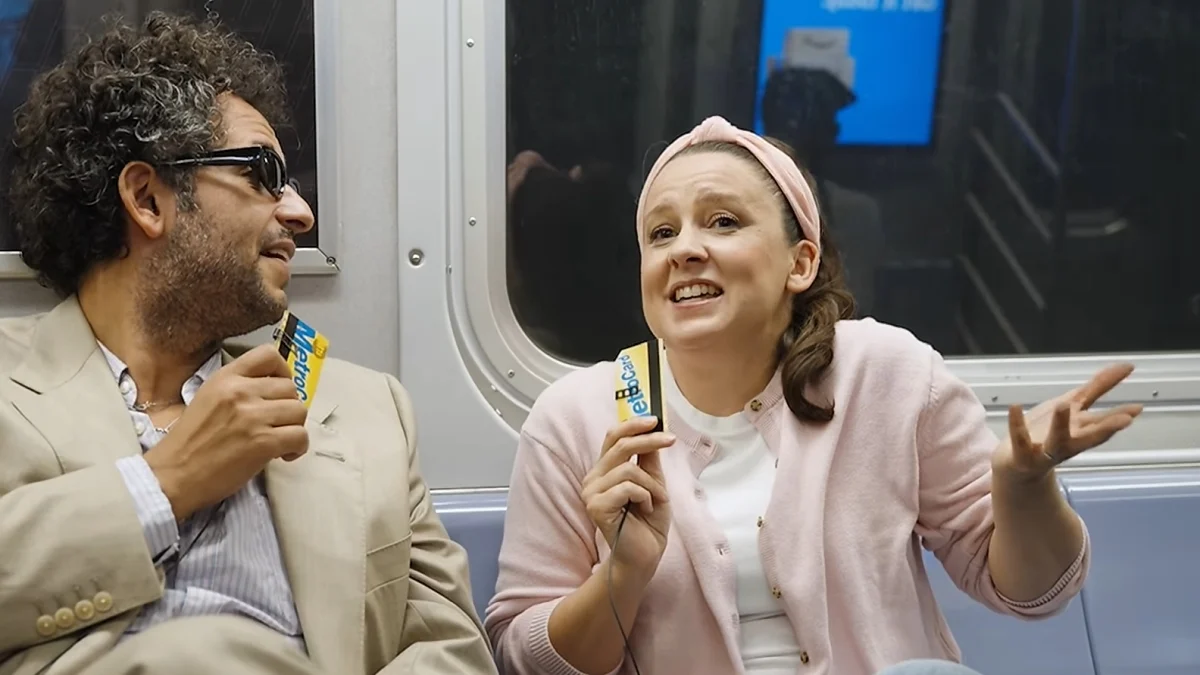
NEW YORK — In an era defined by polarized public discourse and performative social media outrage, beloved children’s educator Rachel Griffin Accurso—universally known as "Ms. Rachel"—has redefined what it means to be a public-facing figure for families. Often dubbed the "Mr. Rogers of today" or, colloquially by Gen Z producers, "the Taylor Swift for toddlers," Ms. Rachel recently stepped out of the interactive digital nursery and into the bustling, underground arena of Kareem Rahma’s internet talk show, SubwayTakes with Kareem Rahma.
What resulted was not merely a viral internet moment, but arguably the most substantive, emotionally resonant, and culturally piercing episode of the series to date. In her signature unfiltered style, Ms. Rachel laid out five distinct perspectives—or "takes"—that effortlessly bridged the gap between early childhood pedagogy, the political legacy of television icons, and a searing critique of global human rights crises.
Main Facts: A Masterclass in Compassion and Controversy
The uncut episode of SubwayTakes places Ms. Rachel at the center of cultural critique, blending lighthearted whimsy with profound moral clarity. While the premise of the show is designed to elicit playful, slightly provocative opinions from its guests, Ms. Rachel’s "controversial takes" proved jarring primarily because they were rooted in fundamental human decency, child welfare, and historical reality.
The core of her appearance addressed systemic issues often deemed too heavy for public-facing family entertainers: the urgent need to overhaul problematic children’s literature, the inherently political nature of children’s television history, the systemic abuse of children within immigration detention facilities, and the catastrophic humanitarian toll on children in active conflict zones, specifically Gaza. Interspersed with these heavy topics were whimsical interventions advocating for the urban pigeon and pitching a New York City coffee shop operated entirely by puppets.
Chronology: From Toddler Screens to the NYC Subway Platform
The trajectory that led Ms. Rachel to a subway platform with Kareem Rahma is a testament to her meteoric rise in modern media.
- The Digital Boom: Over the past several years, Ms. Rachel’s YouTube channel has become a digital sanctuary for parents and toddlers, focusing on speech development, emotional intelligence, and inclusive play.
- The Backlash and Activism: As her platform expanded, Ms. Rachel increasingly utilized her visibility to advocate for vulnerable children worldwide, drawing both immense praise from humanitarian organizations and targeted criticism from internet commentators who argued that a children’s educator should remain apolitical.
- The SubwayTakes Encounter: Entering this new cultural friction point, Rahma introduced Ms. Rachel to his younger production team, sparking a dialogue about her modern cultural footprint. The resulting conversation dismantled the notion that children’s media exists in a vacuum separate from the socio-political realities of the world.
Supporting Data: Examining the Claims and Context
Ms. Rachel’s arguments were heavily underscored by references to pediatric research, historical precedent, and international humanitarian reports.
1. The Erasure of Racist and Harmful Nursery Rhymes
Addressing the canon of early childhood songs, Ms. Rachel advocated for a two-pronged approach: updating outdated parental tropes and entirely retiring songs with racist origins.
- Updating Classics: She pointed to "Three Little Kittens," arguing that instead of denying the kittens pie as punishment for losing their mittens, modern media should model healthy problem-solving strategies, such as retracing steps together.
- Retiring Harmful Content: She explicitly called for the retirement of rhymes rooted in racial insensitivity or historical violence, such as "Jimmy Crack Corn," "Oh! Susanna," and "Eeny, meeny, miny, moe." She pushed back against critics asking what would replace them, noting the infinite capacity of contemporary society to generate fresh, enriching artistic content.
2. The Unapologetic Politics of Mr. Rogers
Pushing back against the narrative that historical icons like Fred Rogers avoided politics, Ms. Rachel provided historical context proving the opposite. She cited Mr. Rogers sharing a wading pool with Officer Clemmons—a profound integration statement during an era of intense racial hostility and segregation violence—as well as King Friday’s neighborhood narrative in Mister Rogers’ Neighborhood, which directly critiqued the nuclear arms race and wasteful government spending on military defense over community arts programs. Furthermore, she highlighted Fred Rogers’ iconic 1969 Senate testimony before Senator John Pastore, where he successfully defended PBS funding through sheer emotional authenticity, turning a skeptical politician into a champion for public broadcasting.
3. The Medical Neglect and Abuse of Detained and War-Zone Children
Perhaps the most harrowing segment of the interview involved Ms. Rachel’s advocacy for children trapped in immigration detention centers and the ongoing humanitarian disaster in Gaza.
- Immigration Detention: Citing the American Academy of Pediatrics and UN reports, she detailed severe medical neglect inside detention facilities, including prolonged lighting deprivation for autistic children and critical illnesses like RSV and COVID-19 going untreated.
- Gaza and Global Responsibility: Invoking James Baldwin’s dictum that "the children are always ours," she addressed the staggering statistics of children killed, maimed, or intentionally targeted in Gaza. She highlighted heartbreaking individual accounts of children dying from preventable conditions—such as celiac disease and severe allergies—due to the systematic blocking of food and medical supplies, while pushing back against bad-faith arguments that weaponized pre-existing medical conditions against starving youth.
4. Urban Ecology and Puppet-Run Enterprises
Balancing the heavy socio-political discourse, Ms. Rachel championed urban wildlife—pointing out that pigeons mate for life, share parenting duties equally, possess milk-producing capabilities for their young, and demonstrate counting abilities up to nine. She concluded her appearance with a whimsical proposal for an interactive New York City coffee shop operated entirely by puppets, noting that puppets offer a disarming, humorous way to navigate daily frustrations and social etiquette.
Official Responses and Public Reaction
The release of the SubwayTakes episode has ignited a wide-ranging conversation across traditional media and digital platforms.
- The Faction of Silence: Ms. Rachel expressed profound frustration over the transient nature of public outrage regarding children in conflict zones. Pointing to UN special reports detailing the intentional targeting of children, she lamented how public awareness frequently peaks for a brief 48-hour news cycle before reverting to pervasive apathy.
- The Backlash Over Advocacy: Her previous humanitarian fundraising and vocal stances on Gaza have routinely drawn coordinated internet pushback from critics demanding she stick strictly to entertainment. However, her appearance on Rahma’s platform has galvanized a massive wave of support from educators, parents, and mental health professionals who argue that true empathy cannot be compartmentalized.
Implications: Redefining the Role of the Modern Public Educator
Ms. Rachel’s appearance on SubwayTakes signals a fundamental shift in how society views creators who cater to youth. The historical model of the squeaky-clean, sequestered children’s entertainer—one who exists purely as a digital babysitter insulated from the harsh realities of the world—is increasingly obsolete.
By anchoring her philosophy in the legacy of Fred Rogers, Ms. Rachel has effectively argued that nurturing a child’s emotional well-being is inherently intertwined with fighting for a just, safe, and equitable world. Whether she is rewriting nursery rhymes to teach accountability, defending urban pigeons, or demanding medical freedom and basic human rights for children trapped in detention centers and war zones, Ms. Rachel proves that radical empathy is not a distraction from education—it is the very foundation of it.
 Pevita Pearce
 Asro
Asro
 Lina Irawan
