

By Jacob Kleinman
Published: October 25, 2026
Main Facts: The End of an Era and the Defining Quote of a Generation
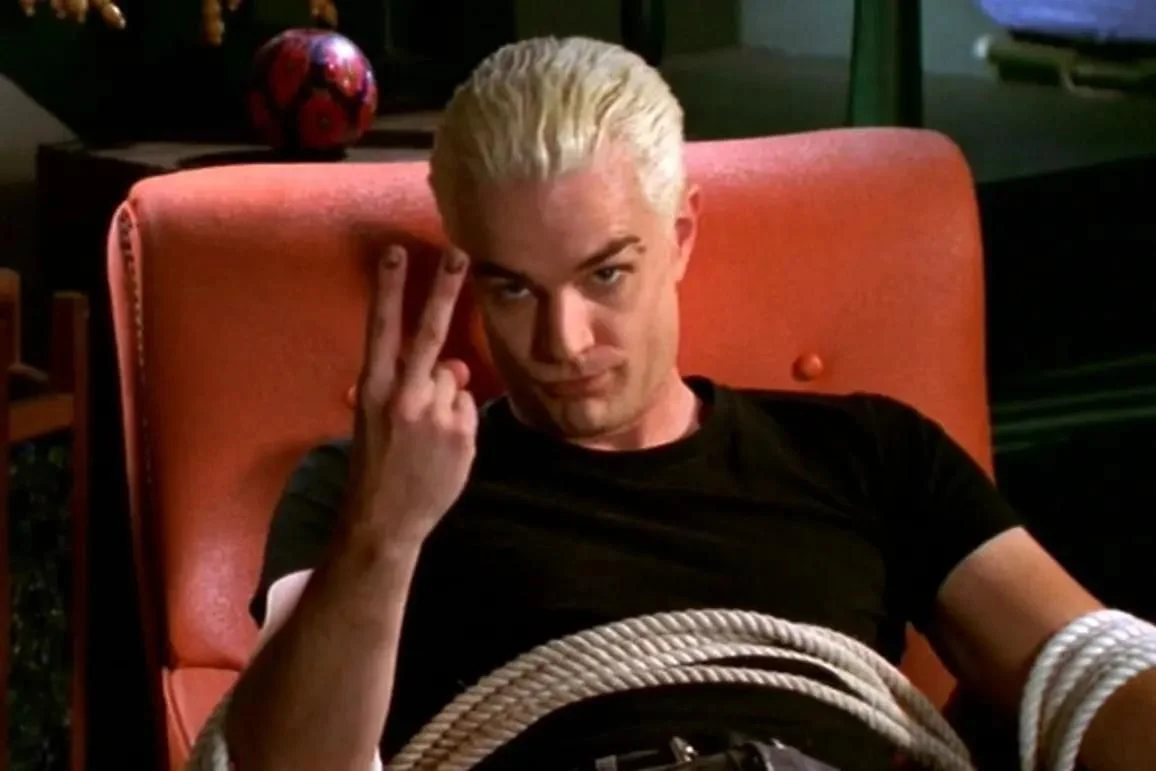
Decades after the gates of Sunnydale slammed shut for the final time, Joss Whedon’s watershed supernatural drama Buffy the Vampire Slayer continues to cast a long, influential shadow over television storytelling. While the series featured an ensemble cast of remarkably rich characters—including the titular Slayer Buffy Summers (Sarah Michelle Gellar), the powerful witch Willow Rosenberg (Alyson Hannigan), and the fiercely pragmatic Anya Jenkins (Emma Caulfield)—one figure stands completely apart: William the Bloody, better known as Spike.
Played with charismatic, swaggering precision by James Marsters, Spike evolved from a leather-clad punk villain in Season 2 into a reluctant ally, a deeply flawed lover, and ultimately, a tragic hero. While the series is overflowing with memorable pop-culture quips—from "Out. For. A. Walk. Bitch" to endless witty banter about apocalypses and high school trauma—it is Spike’s parting exchange with Buffy in the 2003 series finale, "Chosen," that solidifies his legacy.
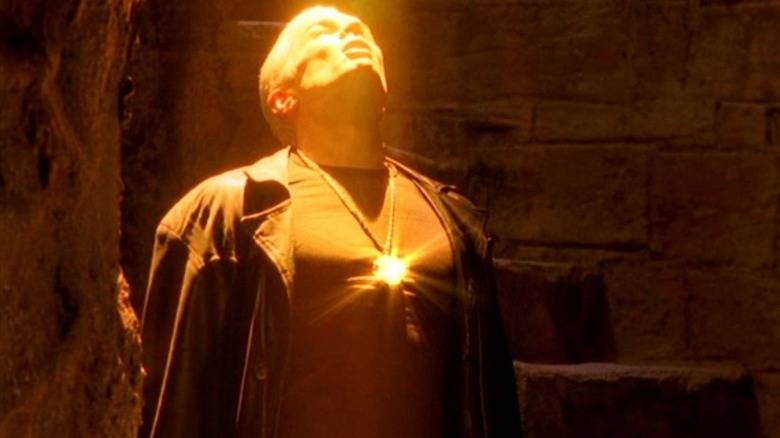
As the Hellmouth collapses beneath Sunnydale, Buffy reaches out, touches his hand, and delivers the words he had spent years trying to earn: "I love you."
Spike’s immediate, emotionally devastating response—"No, you don’t. But thanks for saying it"—remains one of the most honest, psychologically acute lines in television history. It is a masterclass in character writing, narrative closure, and the painful subversion of romantic tropes.

Chronology: From Punk Villain to Reluctant Savior
To fully grasp the weight of Spike’s final words, one must trace the winding, often harrowing timeline of his character arc across the series’ seven-season run.
1. The Arrival of William the Bloody (Season 2)
Spike burst onto the Sunnydale scene in Season 2 alongside his sire and lover, Drusilla (Juliet Landau). Eschewing the brooding, soul-tortured archetype embodied by Angel (David Boreanaz), Spike was vibrant, aggressive, and gleefully chaotic. He was a punk-rock vampire who openly mocked authority and treated slaying as a contact sport. Yet, even early on, his depth was evident; his devotion to the psychologically fragile Drusilla revealed a capacity for fierce, albeit destructive, loyalty.
2. The Chip and the Neutralization (Seasons 4–5)
When Spike returned in later seasons, the Initiative—a shadowy military organization—implanted a behavior-modification microchip in his brain, preventing him from harming humans. Stripped of his ability to feed or kill without experiencing agonizing pain, Spike was forced into an uneasy alliance with the Scooby Gang. This era birthed some of the show’s sharpest comedic beats, as the terrifying vampire was reduced to crashing on Xander’s couch, drinking bloomin’ onion appetizers, and nursing a confusing, unrequited obsession with Buffy herself.
3. The Darkness and Rock Bottom (Season 6)
Spike’s trajectory was never a straight line toward righteousness. Season 6 pushed the character—and the audience’s willingness to sympathize with him—to its absolute limit. In the infamous episode "Seeing Red," Spike attempts to assault Buffy. The narrative did not gloss over the act; it was treated as a despicable violation that forced Spike to recognize the monster he still was beneath his human affections. Horrified by his own actions, Spike fled Sunnydale on a brutal odyssey to Africa, seeking out a demon trial to restore his soul.
4. Redemption and the Soul (Season 7)
Spike returned in Season 7 physically and mentally altered, burdened with a soul that made him acutely aware of every atrocity he had committed over the past century. While the rest of the Scooby Gang viewed him with intense, justified suspicion, Buffy chose to protect and trust him. This dynamic set the stage for a unique bond: two warriors battered by their respective duties, finding solace not in a fairy-tale romance, but in mutual understanding.

Supporting Data: The Anatomy of a Sacrifice
The climax of "Chosen" is not merely an emotional beat; it is a meticulously engineered mechanical and narrative turning point that resolves multiple multi-season arcs simultaneously.
- The Amulet: Spike is equipped with a mystical amulet sent by the powers-that-be (via Angel). Wielded in the heart of the Hellmouth, the amulet channels the raw energy of the First Evil’s army, acting as a solar furnace that incinerates the subterranean demon horde.
- The Structural Collapse: As Sunnydale caves in on itself, the escape tunnels fill with fleeing potentials, Scoobies, and civilians. Spike’s presence is mathematically and narratively required to hold the line; if he leaves, the portal remains open, and humanity falls.
- The Rating and Reception: Upon airing on May 20, 2003, "Chosen" drew massive viewership, cementing UPN’s ratings for the evening. Decades later, retrospective polls by outlets like TV Guide, Rolling Stone, and Polygon consistently rank Spike’s death scene and final quote among the top television send-offs of all time.
Official Responses: Behind the Scenes of "Chosen"
The creation of Spike’s final moment was the result of close collaboration between series creator Joss Whedon, writer-producer Douglas Petrie, and actor James Marsters.
In retrospective interviews, Marsters has frequently discussed the tightrope walk of playing a soulless creature learning to love, and how the writers deliberately avoided a cliché Hollywood redemption.
"Spike didn’t want a trophy," Marsters noted in past panel discussions about the finale. "He spent years lying to himself about what Buffy felt for him. When she finally says those words, he is smart enough—and selfless enough—to realize she is saying them out of pity, gratitude, and profound trauma. To accept them as true love would cheapen everything they had both fought through."
Whedon and the writers consciously crafted the line to subvert expectations. In standard television convention, the reformed bad boy sacrifices himself, hears the heroine declare her undying love, and dies smiling in a romantic haze. By having Spike gently reject the comfort of that lie, the creative team elevated the moment from standard melodrama into a profound commentary on emotional maturity.
Implications: How Spike Redefined the "Bad Boy" Trope in Modern TV
Spike’s legacy extends far beyond the cult status of Buffy the Vampire Slayer. He fundamentally altered how television writers construct antiheroes and romantic subplots across the fantasy and sci-fi genres.
1. Dismantling the "Redemption Equals Romance" Trope
Before Spike, television frequently operated on the assumption that a villain’s moral redemption must be rewarded with the affections of the female lead. Spike’s storyline broke this mold. His possession of a soul did not magically erase his past abuses, nor did it automatically entitle him to Buffy’s heart. By having Spike acknowledge that Buffy’s love was performative or born of grief, the show established a mature boundary: love cannot be extorted through sacrifice.
2. The Blueprint for the Modern Antihero
The success of Spike paved the way for a generation of morally gray, sharp-tongued, deeply vulnerable male characters in prestige television. Shows ranging from The Vampire Diaries to Supernatural and True Blood borrowed heavily from the "Spike playbook"—blending dark humor, intense physical violence, genuine capacity for change, and a profound, underlying vulnerability.
3. Enduring Cultural Impact
Even though Spike made a brief ghost-like appearance in the final season of the spinoff series Angel, purists often argue that his story effectively concluded in the dust and sunlight of Sunnydale’s destruction. His willingness to burn for a world that never fully trusted him, combined with his refusal to accept a false emotional reward, ensures that his final words will echo through television history for decades to come.
As Buffy the Vampire Slayer continues to find new audiences on streaming platforms like Hulu, modern viewers continue to grapple with the complexities of William the Bloody—proving that great character writing never truly goes out of style.
 Muslim
 Ali Ikhwan
 Reynand Wu
