

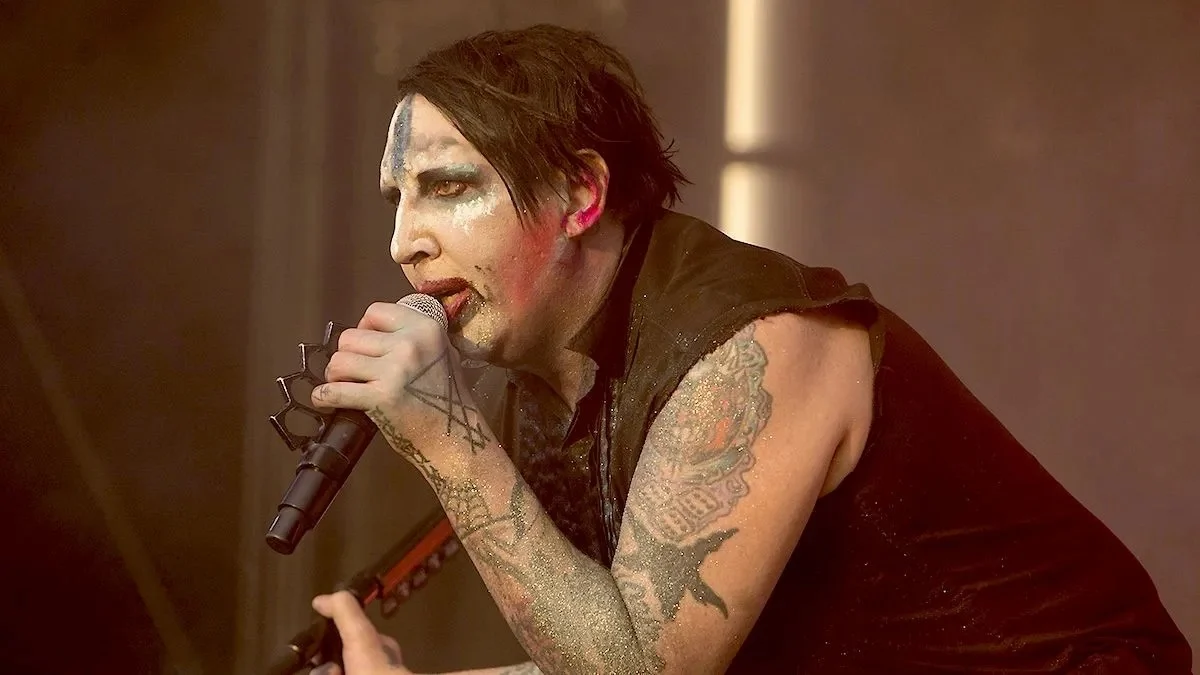
SÃO PAULO — Organizers of Brazil’s prominent music festival, The Town, are standing by their decision to include shock rocker Marilyn Manson in the lineup for their upcoming 2027 edition. The booking, which pairs Manson with Slipknot for the festival’s September 4th opening day in São Paulo, has reignited intense global debate regarding the ethics of booking artists facing severe, non-convicted allegations of abuse.
The controversy highlights a recurring ethical dilemma within the modern live-entertainment industry: how major festival promoters balance consumer advocacy, moral responsibility, and the legal principle of the presumption of innocence. As Manson attempts a measured, international career comeback, his appearance at The Town underscores the deep polarization that continues to follow his every move.
Main Facts: The 2027 Lineup and Festival Defense
Marilyn Manson’s inclusion in The Town’s 2027 roster was revealed alongside metal heavyweights Slipknot, as part of the latter’s newly announced "(Sic)est Stadium Tour." The tour will stretch across South America, bringing both acts to major stadium shows in Argentina and Chile before hitting the festival circuit in Brazil.
For Brazilian fans, the performance will mark Manson’s first live appearance in the country in a decade. However, the announcement was immediately met with backlash from advocacy groups, fans, and cultural critics pointing to the numerous allegations of sexual, physical, and psychological abuse leveled against the singer over the past several years.
Addressing the controversy in an interview with Brazil’s prominent daily newspaper Folha de S.Paulo, Zé Ricardo, the artistic vice president of festival promoter Rock World (the entity behind both The Town and its sister festival, Rock in Rio), vigorously defended the booking.
According to Ricardo, Manson was integrated into the festival as part of Slipknot’s touring package. Emphasizing the legal standing of the shock rocker, Ricardo stated:
"He’s someone who hasn’t been convicted; there’s nothing that has been proven. These are stories that absolutely do not reflect anything we believe in, but at this moment he is an artist who will be touring around the world."
Ricardo further elaborated that Rock World monitors artist conduct and has previously vetoed acts when faced with "concrete cases" of documented wrongdoing. However, he drew a sharp line between verified legal judgments and unproven public accusations, asserting, "We also can’t condemn someone without evidence."
Chronology of Allegations and Legal Proceedings
The scrutiny surrounding Marilyn Manson—born Brian Warner—did not materialize overnight. It represents the culmination of years of mounting public accusations, civil lawsuits, and shifting legal landscapes.
Early 2021: The Public Reckoning
The floodgates opened in February 2021 when actor Evan Rachel Wood, Manson’s former fiancée, publicly named him for the first time in an Instagram post, alleging he had "horrifically abused" her for years. Shortly after Wood’s statement, multiple other women—including artist Esmé Bianco and several former assistants and fans—came forward with detailed accounts of physical violence, sexual assault, psychological coercion, and confinement.
Manson consistently denied all allegations via social media and through statements issued by his legal representatives, characterizing the claims as a coordinated smear campaign by disgruntled former partners.
2021–2024: Civil Litigation and Police Investigations
In the wake of the public accusations, law enforcement agencies launched comprehensive investigations. Concurrently, several accusers filed civil lawsuits against Warner in Los Angeles Superior Court, alleging sexual battery, intentional infliction of emotional distress, and human trafficking.
While some civil suits were dismissed or settled out of court over the subsequent years, others weathered intense legal battles over statutes of limitations and jurisdictional rules. Notably, a civil lawsuit filed by Manson’s former assistant, Ashley Walters, survived numerous procedural challenges and was slated for a high-stakes jury trial.
January 2025: The Criminal Investigation Closes
A major legal milestone occurred in January 2025, when the Los Angeles County District Attorney’s office officially announced it would not pursue criminal charges against Manson following a rigorous four-year investigation.
Prosecutors cited two primary obstacles to filing criminal charges: the expiration of the statute of limitations regarding domestic violence incidents from the timeframe in question, and a lack of sufficient evidence to prove the sexual assault allegations beyond a reasonable doubt—the stringent legal threshold required for a criminal conviction. While the decision shielded Manson from criminal imprisonment, it did not clear his name in the court of public opinion, nor did it halt ongoing civil proceedings.
Late 2025 to Present: The Global Rebuilding Effort
Bolstered by the absence of criminal charges, Manson began attempting to rebuild his touring career. In August 2025, his performance at Mexico’s Feria Nacional Potosina drew sharp local criticism and calls for cancellation. Defending that decision, San Luis Potosí Governor Ricardo Gallardo defended the booking under the banner of "cultural justice," allowing the show to proceed.
Now, with the announcement of the 2027 South American stadium tour and The Town festival appearance, Manson’s team is actively testing the waters of major, mainstream international festival markets. Meanwhile, civil dockets continue to loom large; Ashley Walters’ sexual assault lawsuit remains scheduled for trial in late 2027.
Supporting Data and Industry Context
The music industry’s handling of artists accused of misconduct has grown increasingly fractured. While some promoters maintain zero-tolerance policies that preemptively drop artists at the first sign of controversy, others adopt a strict legalistic framework—waiting for formal indictments or criminal convictions before taking punitive action.
Rock World’s stance aligns with the latter philosophy. By emphasizing that Manson has "not been convicted," the festival organizers are placing the burden of moral arbitration onto the judicial system rather than executive boardrooms. This approach protects promoters from immediate breach-of-contract liabilities and defamation claims, but it frequently alienates segments of the audience who view legal exoneration (or the absence of criminal prosecution) as an inadequate measure of accountability, particularly in cases involving sexual assault and domestic abuse, where reporting rates and conviction statistics are notoriously low.
Furthermore, the economic realities of modern touring play a significant role. By booking Manson as part of a package deal tied directly to Slipknot—one of the biggest touring acts in heavy metal—The Town minimizes individual promotional risk while securing a high-profile draw that guarantees heavy ticket interest across Latin America.
Official Responses and Stakeholder Perspectives
The debate surrounding Marilyn Manson’s festival inclusion exposes deep fault lines between festival executives, legal advocates, and survivors’ support networks.
- Rock World (Zé Ricardo): Promoters maintain that while they firmly disavow the behavior detailed in the allegations, they cannot act as a shadow court system. They argue that as long as an artist is legally permitted to travel, perform, and participate in the global marketplace without a criminal record, refusing to book them constitutes an arbitrary pre-judgment.
- Accusers and Advocacy Groups: Representatives for survivors and independent human rights watchdogs argue that waiting for a criminal conviction sets an impossible standard. They point out that legal systems historically fail victims of sexual and domestic violence due to restrictive statutes of limitations, stringent evidence laws, and the immense psychological trauma of participating in criminal trials. Consequently, advocates argue that booking such artists implicitly signals endorsement or indifference to the safety of festival-goers and staff.
- Touring Partners (Slipknot): While Slipknot has not publicly issued a detailed statement addressing the specific backlash regarding their tour mate, their decision to bring Manson along on a massive international stadium trek provides him with the institutional scaffolding necessary to return to major global venues.
Broader Implications for the Live Music Industry
The Town’s defense of the Marilyn Manson booking serves as a case study for the future of festival curation in the post-#MeToo era.
As promoters navigate the fine line between accountability and free expression, the live entertainment sector remains split. Festivals in North America and Western Europe have occasionally shown a willingness to completely scrub controversial acts from lineups, fearing severe backlash from corporate sponsors and ticket-holders. However, international markets—particularly in Latin America and parts of Europe and Asia—often evaluate talent through a strictly legalistic lens, where the absence of a formal criminal conviction holds supreme weight.
Whether boycotts and public outcry will impact ticket sales for The Town’s opening day remains to be seen. What is clear, however, is that as long as artists facing severe unproven or civilly litigated allegations continue to find platforms on major international stages, the tension between legal innocence and ethical responsibility will remain one of the most volatile issues in contemporary entertainment.
 Asro
Asro
 Lina Irawan
 rifanmuazin
