

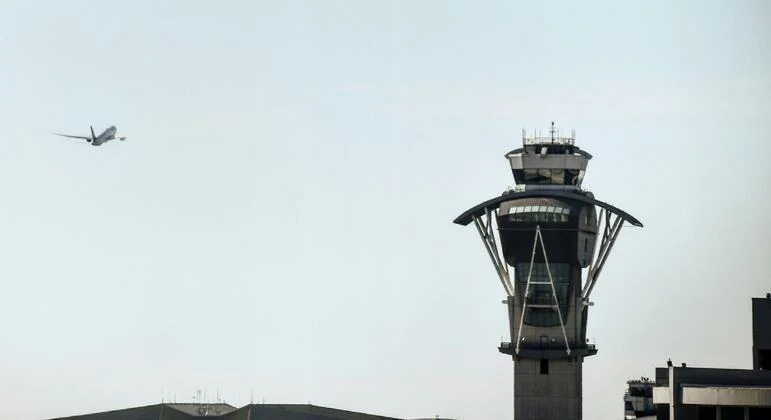
For the millions of passengers who traverse the globe each year, the frustration of the "holding pattern" is a familiar, if infuriating, ritual. The aircraft begins its descent, the cabin lights dim, and travelers brace for landing—only to bank sharply and settle into a circular orbit above the clouds.
While passengers often assume these delays are the result of sudden storms or mechanical hiccups, the reality is far more systemic. This maneuver is a symptom of an increasingly congested global airspace, where a minor disruption in one hemisphere can trigger a cascade of delays thousands of kilometers away. With the International Civil Aviation Organization (ICAO) projecting that air travel could swell to 12.4 billion passengers by 2050, the current "siloed" approach to air traffic management is no longer sustainable.
The Cost of Chaos: Why Our Skies Are Gridlocked
The financial and environmental toll of current aviation mismanagement is staggering. According to EUROCONTROL, the continent’s air navigation body, air traffic management delays in Europe alone cost an estimated $2.3 billion in 2025. This figure represents not just the cost of fuel burned while circling, but the ripple effect of missed connections, ground crew overtime, and the economic stagnation caused by a sluggish transport network.
The problem is analogous to urban traffic. Imagine a city where every traffic light operates on a completely independent timer. A car gets a green light at one intersection, only to be trapped in a gridlocked pileup at the next. In aviation, when airports and regional control centers operate without a shared, synchronized vision, the result is the same: unnecessary congestion, massive fuel wastage, and the "snowball effect" where a single hour-long delay at a hub airport disrupts flight schedules for the entire day.
Chronology of a Global Initiative
The movement toward a unified global traffic management system has been years in the making, but it reached a pivotal turning point following a high-level summit in Montreal.
- The Pilot Phase (2024-2025): Several nations, including Brazil and Colombia, successfully demonstrated the efficacy of national-level Air Traffic Flow Management (ATFM) systems. These trials provided the proof of concept: by sharing data between airlines, airports, and weather services, countries could hold planes on the ground rather than in the air, saving significant fuel.
- The Montreal Accord (2026): After five days of intense negotiations in Montreal, ICAO convened member states to address the "missing link"—the inability of these national systems to talk to one another. Governments and industry leaders formally backed a mandate for a faster, cross-border rollout of collaborative traffic management.
- The Roadmap to 2030: ICAO has scheduled a series of regional workshops for 2027 to assist developing nations in upgrading their technological infrastructure. The final, binding international standards for global air traffic flow management are slated for implementation in November 2030.
Supporting Data: The Measurable Gains of Collaboration
The data backing the ICAO’s push for a synchronized system is compelling. Collaborative trials conducted in the Americas during 2026 serve as a blueprint for the global rollout. In that year alone, these coordinated efforts saved more than 265,000 minutes of flight time—approximately 4,400 hours—and over $38.9 million in operational costs.
Beyond the financial ledger, the environmental impact is perhaps the most significant victory. The 2026 trials resulted in a reduction of 13,330 tonnes of fuel consumption, which prevented 42,160 tonnes of carbon dioxide from entering the atmosphere. As the aviation industry faces mounting pressure to reach net-zero carbon emissions by 2050, these efficiency gains represent a critical, low-cost path to reducing the industry’s carbon footprint.
European data further underscores these benefits. A EUROCONTROL program focused on predictive congestion modeling prevented 3.1 million minutes of delay between May and August 2026. This initiative not only saved $448 million but also improved the stability of the entire European air network by 14 percent during peak travel periods.
Official Responses: Breaking Down the "Silo" Mentality
ICAO Secretary General Juan Carlos Salazar has been the primary architect of this global push. In an exclusive interview with UN News, he emphasized that the solution lies not just in new technology, but in a radical shift in geopolitical cooperation.
"If the traffic lights work independently, traffic becomes chaos and there are jams on every corner," Salazar explained. "If you get a green light on one street and are stopped at the next, the backlog builds immediately. The same happens with air traffic across the world’s airspace."
Salazar notes that the greatest hurdle is not hardware, but the "will to share." Currently, a flight traveling from Europe to Australia may pass through four or five distinct geopolitical regions. Each region often utilizes different proprietary software and maintains rigid protocols regarding data privacy and airspace control.
"Technology alone is not the answer," Salazar admitted. "Information has to be shared, and often it isn’t—sometimes for lack of will, sometimes for lack of the means to transmit it in real time. No country or region acting alone can manage that."
To overcome this, ICAO is leveraging its position as the UN agency responsible for global aviation standards. With 193 member states, ICAO is providing the technical assistance necessary to ensure that even nations with limited resources can plug into a global data-sharing network.
Implications: A New Era for Passengers and Industry
For the average traveler, the shift toward a unified system promises a fundamental change in the passenger experience. The current model often leaves travelers sitting on a tarmac or waiting at a gate with little to no information, as airlines struggle to recalculate schedules in the wake of a disruption.
Enhanced Passenger Communication
The integration of data means that when a delay occurs, it is identified earlier. If an airport knows it cannot accept arrivals for the next two hours, it can notify the departure airport before the plane even pushes back from the gate. This allows passengers to wait in the terminal rather than inside a cramped aircraft, and it allows airlines to provide more accurate, real-time updates to their customers.
Navigating a Busier, More Complex Sky
The urgency of this initiative is amplified by the changing nature of the skies. The aviation landscape is no longer limited to commercial airliners. The industry is currently contending with a rapidly increasing number of drones, commercial spaceflight/rocket launches, and the unplanned re-entry of orbital debris. Furthermore, geopolitical conflicts continue to force airlines to reroute long-haul flights around danger zones, creating unpredictable bottlenecks that require real-time, global coordination.
The Path to Net-Zero
While sustainable aviation fuels (SAF) and electric aircraft often dominate the headlines regarding green aviation, the ICAO’s "digital synchronization" approach offers immediate, tangible reductions in emissions. By reducing the time aircraft spend idling on runways or burning fuel in holding patterns, the aviation industry can make a substantial down payment on its 2050 climate goals without waiting for the development of entirely new engine technologies.
Conclusion: Connecting the World
The vision laid out by ICAO is not merely about punctuality or fuel efficiency; it is about the fundamental human right to movement. In an era where global connectivity defines economic opportunity, a fragmented aviation system is a barrier to progress.
"My goal is simple," says Salazar. "An air transport system that reaches every person in the world, so that everyone sees the benefits of being connected."
As the world looks toward 2030 and beyond, the success of this UN-backed initiative will depend on whether nations can transcend domestic interests to view the sky as a singular, shared resource. If they succeed, the days of the aimless, fuel-wasting holding pattern may finally be grounded, replaced by a sophisticated, synchronized ballet of global travel.
 Nana Wu
 Nana
 Evan Lee Salim
