

By [Journalist Name]
September 2026
Main Facts
Two decades have passed since Atlanta’s progressive metal titans, Mastodon, released their seismic third studio album, Blood Mountain. Arriving on September 12th, 2006, the record served as a critical turning point not only for the band, but for the trajectory of 21st-century heavy metal as a whole. As their first major-label release under Warner Bros. and Reprise Records, Blood Mountain proved that extreme music could retain its abrasive, complex edge while commanding the attention of the mainstream music industry.
Anchored by powerhouse tracks such as “The Wolf Is Loose,” “Colony of Birchmen,” and “Crystal Skull,” the album achieved widespread critical acclaim upon release. It blended relentless thrash energy, intricate math-metal time signatures, and cosmic sludge into a cohesive narrative conceptualized around a weary protagonist climbing a treacherous mountain in search of mystical salvation.
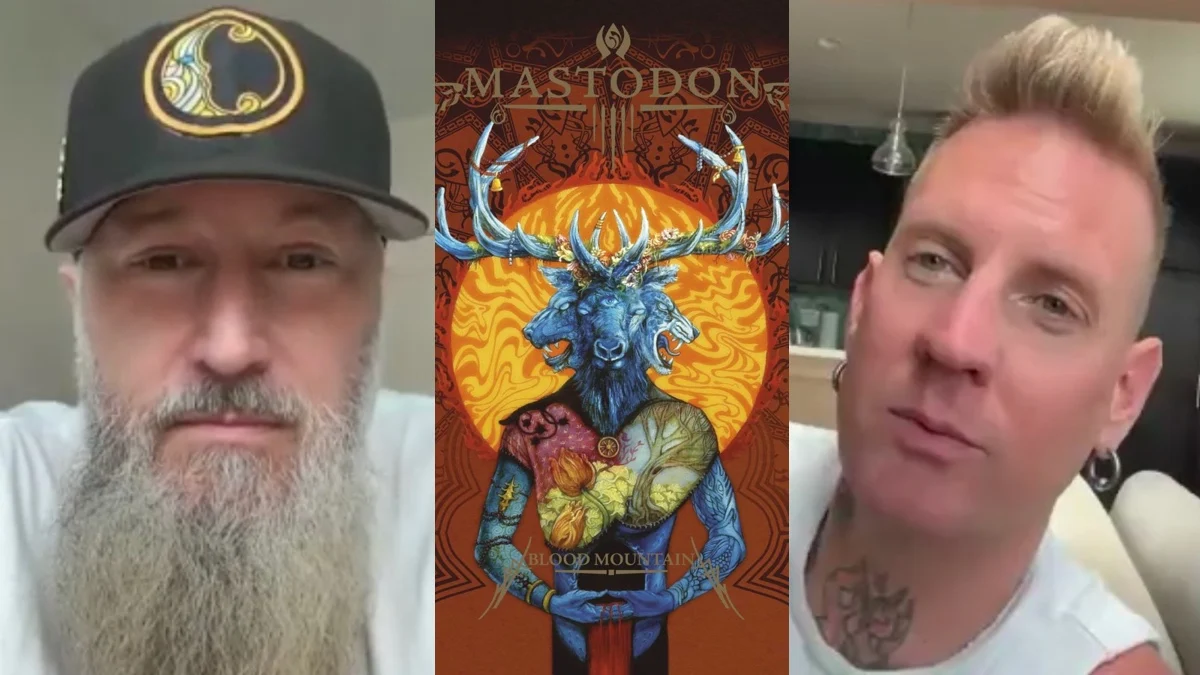
To commemorate the 20th anniversary of this landmark release, founding members Troy Sanders (bassist/vocalist) and Brann Dailor (drummer/vocalist) sat down for an exclusive retrospective interview with Consequence. Looking back on the whirlwind era, the duo reflected on the creative combustion, the high-stakes pressure of a major-label debut, and the sheer audacity of an album that Dailor aptly describes today as "wildly adventurous, like an album about a mountain should be."
The anniversary arrives at a bustling time for the quartet. Mastodon is currently preparing for a major headlining North American tour this fall—featuring support from Deafheaven and Alcest—in direct support of their acclaimed newest studio album, Marrow Deep. Yet, even with a deep and continually expanding catalog, Blood Mountain remains a towering monument in the band’s storied history.
Chronology: The Road to Blood Mountain
To fully appreciate the cultural impact of Blood Mountain, one must trace the rapid, compounding momentum that carried Mastodon from the underground sludge scenes of Georgia to the global stage.
2000–2003: The Foundation and Early Breakthroughs
Formed in Atlanta in 2000 by guitarists Brent Hinds and Bill Kelliher, drummer Brann Dailor, and bassist Troy Sanders, Mastodon quickly established themselves as a formidable force through relentless touring and a unique musical vocabulary. Their 2002 debut full-length, Remission, released via Relapse Records, sent shockwaves through the metal underground. It was heavy, uncompromising, and drenched in elements of hardcore punk, sludge, and technical death metal.
Hot on its heels came 2004’s Leviathan, a conceptual masterpiece loosely based on Herman Melville’s Moby-Dick. Leviathan was a critical darling, earning Album of the Year honors from numerous prominent music publications. It established a pattern for the band: framing intense, progressive heavy metal around dense, thematic, element-based narratives. Earth (Remission) and Water (Leviathan) had been conquered. Next came Fire—and with it, the mountain.
2005–2006: The Major-Label Leap and the Seattle Sessions
Riding the critical wave of Leviathan, Mastodon caught the eye of major-label executives. Inking a deal with Warner Bros./Reprise Records marked a massive shift in scale. For a band rooted in the independent underground, signing to a major label carried both validation and underlying anxiety.
The band headed to Seattle to record with producer Matt Bayles, who had helmed Remission and Leviathan. Moving away from their Southern roots to the gray, damp Pacific Northwest backdrop set a stark stage for the creative explosion that followed.
"I remember having too much of a good time with my bandmates," Sanders recalled in his interview with Consequence. "I remember being nervous that this was a major label debut with Warner Bros… Brann was playing drums like a madman. Brent was writing some of the most bizarre and awesome music ever written. Bill’s crushing it. I was like, ‘Wow, this is really cool.’"
September 12, 2006: Release and Commercial Impact
Blood Mountain hit shelves on September 12, 2006. It debuted at No. 32 on the Billboard 200, a massive commercial feat for a progressive metal band of their caliber at the time. The album generated extensive MTV and radio play for singles like "Colony of Birchmen" (which featured guest vocals from Queens of the Stone Age’s Josh Homme) and earned a Grammy nomination for Best Metal Performance for "Colony of Birchmen" in 2007.
Supporting Data and Production Lore
The making of Blood Mountain was defined by a mixture of intense technical precision and legendary rock-and-roll hedonism. While the band members pushed themselves to the absolute brink of their musical abilities, their off-hours in Seattle were characterized by a very different kind of endurance test.
Brann Dailor fondly recounted the studio’s local watering hole during the sessions:
"Recording in Seattle was so awesome… but this time behind the studio they had recently opened a Belgian beer bar, and they had over 100 beers on tap. And I remember Brent being like, ‘We’re gonna try every single one of the beers on tap, all 100…’ and by God, we did it. We were a little bit Mötley Crüe ’82 back then."
This balance of raw indulgence and high-art execution manifested in the music itself. Blood Mountain is structurally dizzying. Guitarists Brent Hinds and Bill Kelliher layered complex polyrhythms and harmonized lead lines that defied standard verse-chorus song structures. Meanwhile, Dailor’s drumming treated the kit not merely as a timekeeping instrument, but as a lead voice, utilizing intricate ghost notes, blazing double-bass patterns, and lightning-fast fills.
Guest appearances further elevated the album’s pedigree. Aside from Josh Homme’s memorable vocal contributions on "Colony of Birchmen," the album featured guest spots from Cedric Bixler-Zavala of The Mars Volta ("Siberian Divide") and Josh Graham of Neurosis. These collaborations underscored Mastodon’s unique positioning at the crossroads of metal, art-rock, and psychedelia.
Official Responses and Reflections
Two decades removed from the Seattle recording sessions, the members of Mastodon view Blood Mountain with a mixture of nostalgia, awe, and pride. The album represents a distinct snapshot of a band firing on all cylinders, blissfully unaware of how enduring their artistic risks would prove to be.
Troy Sanders emphasized the sheer collaborative synergy that drove the project forward. Entering the major-label ecosystem could have easily fractured a band prone to unconventional songwriting, but Sanders notes that the pressure only fueled their fire. Every member was contributing at the absolute peak of their creative powers, resulting in a dense, multifaceted tapestry of sound that still feels fresh 20 years later.
Brann Dailor’s reflections highlight the adventurous spirit that has come to define Mastodon’s entire career. By refusing to rest on the formula that made Leviathan a success, the band deliberately chose a more erratic, kaleidoscopic path.
"I still love Blood Mountain to this day," Dailor stated. "I think it’s wildly adventurous, like an album about a mountain should be."
That sense of adventure has remained the North Star for Mastodon. From Blood Mountain through later masterworks like Crack the Skye and Emperor of Sand, the band has continuously redefined what modern metal can achieve, never content to climb the same peak twice.
Implications: The Enduring Legacy of Blood Mountain
As Blood Mountain celebrates its 20th anniversary, its ripple effects across the heavy music landscape are impossible to ignore. In 2006, the heavy metal genre was navigating a transitional phase, struggling to find its footing between fading nu-metal trends and the burgeoning, localized rise of metalcore. Mastodon, alongside peers like Gojira and Converge, proved that extreme music could be cerebral, literary, and progressive without losing its visceral impact.
Furthermore, Blood Mountain proved that a band could partner with a major label without sanitizing its artistic vision. Warner Bros. allowed Mastodon the creative freedom to write songs about crystal skulls, hungry wolves, and mythical mountains—and the gamble paid off, opening doors for a more adventurous, genre-bending wave of heavy music to infiltrate the mainstream consciousness.
Today, as Mastodon looks toward the future with their latest album, Marrow Deep, and an upcoming fall headlining North American tour alongside Deafheaven and Alcest, the shadow of Blood Mountain looms large. It remains a masterclass in heavy music composition—a jagged, snow-capped peak that challenged its creators, captivated its audience, and forever altered the landscape of progressive metal.
 Asro
Asro
 Lina Irawan
 rifanmuazin
