

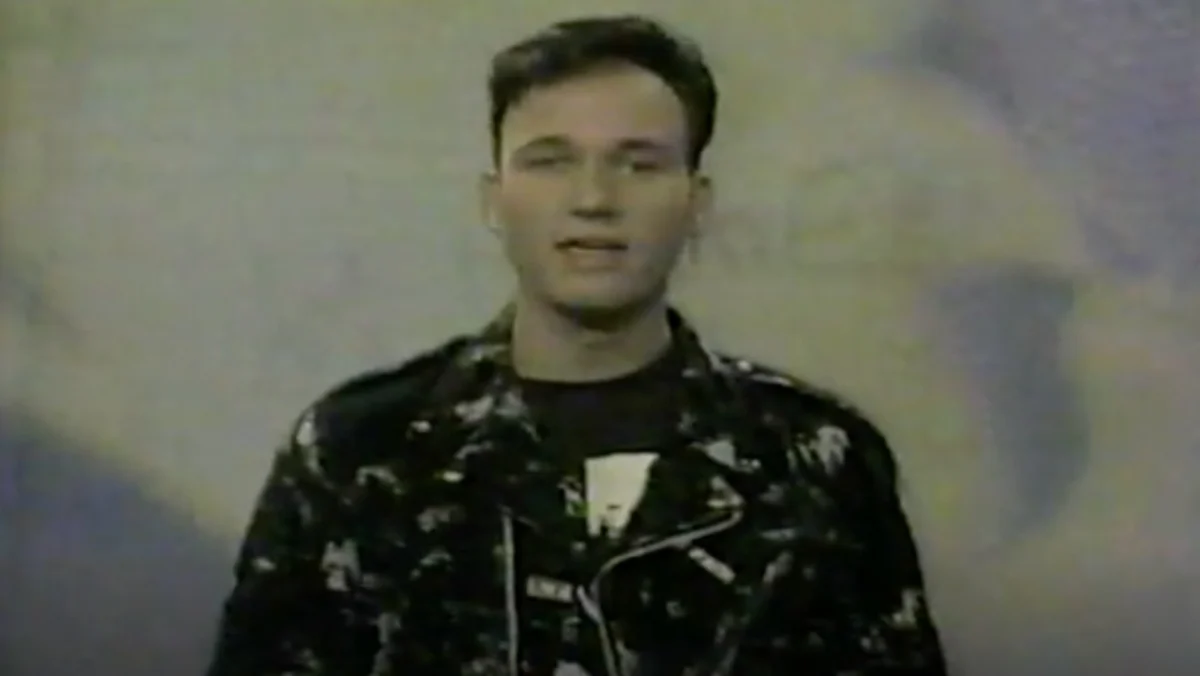
The landscape of modern music discovery is often attributed to algorithms, streaming platforms, and social media influencers. Yet, long before the digital age democratized the airwaves, a singular vision—cultivated by a British-born producer named Dave Kendall—reshaped the sonic identity of a generation. Kendall, the visionary creator and foundational host of MTV’s seminal program 120 Minutes, has passed away, leaving behind a legacy that served as the primary bridge between the underground fringe and the global mainstream.
The news was confirmed on Tuesday by fellow MTV veteran and successor host Matt Pinfield, who eulogized Kendall not merely as a broadcaster, but as a vital conduit for musical evolution. His death marks the end of an era for millions of viewers who, for years, relied on the flickering glow of their television sets to find the next great post-punk anthem or synth-pop masterpiece.
The Genesis of an Underground Institution
To understand the cultural weight of Dave Kendall’s death, one must understand the radio climate of the mid-1980s. Corporate rock radio was then a strictly curated monolith, dominated by the heavy metal and arena rock acts that defined the era’s commercial output. For the listener interested in the jagged edges of post-punk, the brooding atmosphere of gothic rock, or the experimental nature of early electronic music, the options were virtually nonexistent.
Kendall, an astute observer of the emerging scene, joined MTV as a producer with a singular goal: to challenge the network’s homogenized programming. He pitched a concept that would later become a cornerstone of music television history: 120 Minutes. The program was designed to be a refuge for the disenfranchised sounds that were being ignored by mainstream outlets.
When the show debuted on March 10, 1986, it was an immediate anomaly. It was a late-night bastion of independence, a space where the likes of The Cure, New Order, The Smiths, and Sonic Youth could find a national audience. Kendall’s influence was not just in the selection of the music, but in the curation of an aesthetic—a late-night, low-fidelity vibe that felt as raw and authentic as the records being played.
Chronology: A Life in Music and Media
Dave Kendall’s career was marked by a restlessness that saw him constantly seeking out the next cultural shift. His path, while rooted in the birth of 120 Minutes, spanned continents and decades of media innovation.
- 1986: 120 Minutes premieres on MTV, immediately disrupting the status quo of music broadcasting.
- 1989–1992: Kendall transitions from behind the scenes to the role of primary host, becoming the face of the alternative music movement for millions of teenagers.
- Post-1992: Following his tenure at MTV, Kendall continued to operate within the spheres of music journalism and broadcasting, never losing his touch for identifying burgeoning subcultures.
- The SiriusXM Years: Kendall brought his distinct voice and encyclopedic knowledge of music to SiriusXM’s "First Wave" channel, introducing the sounds of the 80s underground to a new generation of listeners via satellite radio.
- Thailand Transition: In the later stages of his life, Kendall relocated to Thailand, where he pivoted toward print journalism as a correspondent for the Bangkok Post, proving that his curiosity for the world was as potent as his passion for music.
The Philosophy of the Gatekeeper
In a 2016 interview with Consequence, Kendall reflected on the unique position 120 Minutes held in the cultural ecosystem. He described the show as a "distribution channel for organic musical produce."
"The only other outlet for non-mainstream music at the time was a few local college radio stations," Kendall noted. His philosophy was rooted in a deep-seated respect for the listener. He did not view his audience as passive consumers of pop music; he viewed them as active participants in a movement. By providing a platform for music that was "difficult," "strange," or "unpolished," Kendall essentially validated the tastes of the alienated youth.
This sentiment was echoed by Matt Pinfield in his recent tribute. "Dave was one of the true believers," Pinfield wrote. "He didn’t just host a show. He gave a home to music that deserved to be heard. He loved the music, respected the artists, and connected with fans in a way that always felt authentic. That’s a rare gift."
The Impact on Global Music Culture
The implications of Kendall’s work on 120 Minutes cannot be overstated. By bringing alternative music into the living rooms of suburban America, he inadvertently laid the groundwork for the alternative rock explosion of the 1990s. When bands like Nirvana or R.E.M. eventually broke into the mainstream, they were not entering a vacuum; they were stepping into a cultural environment that Kendall had spent years preparing.
Kendall’s influence created a ripple effect. He was not just broadcasting videos; he was fostering a community. For many, 120 Minutes was the first time they felt that their specific taste in music was part of a broader, global identity. It turned the solitary act of listening to records in one’s bedroom into a communal experience, connected by the shared thread of the show’s unique programming.
Official Responses and Tributes
The music industry has been swift to pay its respects to a man who, despite his immense influence, often maintained a humble, behind-the-scenes demeanor. Beyond Matt Pinfield’s public remembrance, social media has been flooded with tributes from musicians who credit the show—and by extension, Kendall—with their early careers.
"Dave Kendall was the gatekeeper we actually needed," wrote one former collaborator. "He didn’t care about chart positions. He cared about whether a song moved him, or whether it had something to say. That integrity is why the show is still cited as a holy grail for music fans today."
For the staff at MTV, Kendall represented a period when the network was at its most experimental. His departure from the show in 1992 was seen by many as the end of the "classic" era of 120 Minutes, yet his impact was so profound that the show survived in various iterations for years afterward.
Implications for Modern Media
As we reflect on Kendall’s life, it is impossible not to compare his work to the contemporary media landscape. In an era where "alternative" is often just another brand category on a streaming service, the intentional, human-led curation that Kendall championed feels increasingly rare.
Kendall’s legacy challenges us to consider what we lose when we remove the human element from music discovery. His success was not based on data points or predictive algorithms; it was based on taste, intuition, and an unwavering commitment to the artists he believed in. He proved that if you provide a platform for genuine art, an audience will find it—and they will remain loyal to it for decades.
A Lasting Legacy
Dave Kendall’s death is a profound loss for the music world, but his influence remains embedded in the DNA of alternative culture. From the college radio stations he championed to the digital archives where 120 Minutes clips are still watched and shared by new fans, his fingerprints are everywhere.
He was a man who understood that music is more than just audio; it is an identity, a community, and a lifeline. As Matt Pinfield so aptly put it, Kendall was a "true believer." In a world that is often cynical about the power of media, Dave Kendall stood as a reminder that a single, passionate voice—and a willingness to share the music that matters—can change the world, one broadcast at a time.
He lived his life in pursuit of the sounds that define us, and in doing so, he gave a voice to the silent millions who were just waiting to hear something that sounded like them. His broadcast may have ended, but the signal he sent out into the world continues to resonate.
 Asro
Asro
 Lina Irawan
 rifanmuazin
