

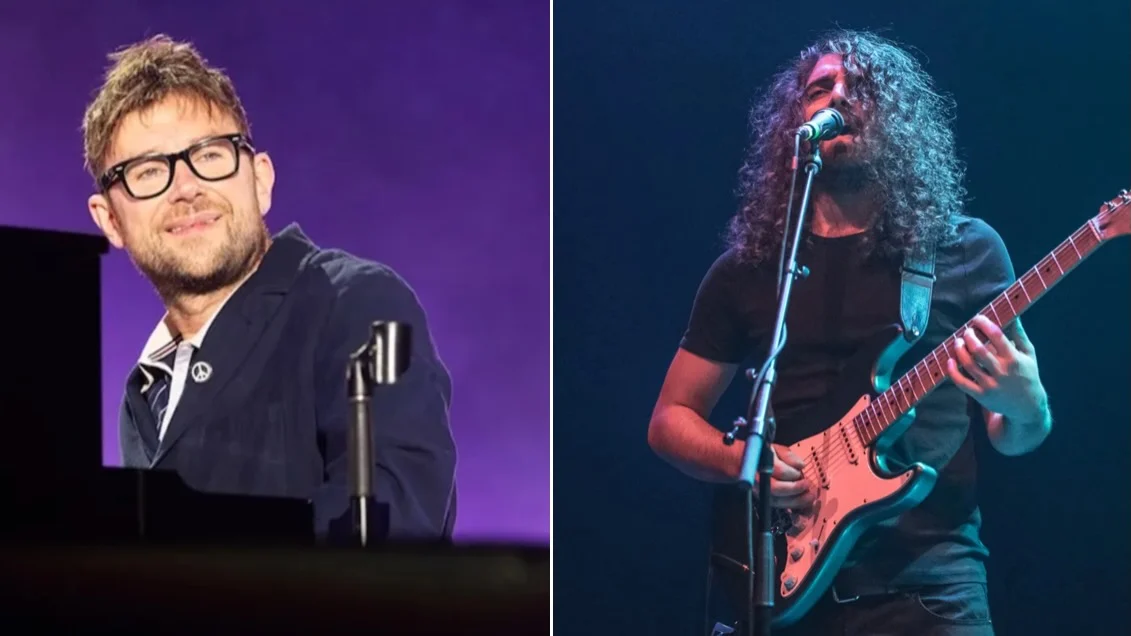
The world of live music is built upon a precarious balance of logistics, sound engineering, and the delicate egos of those who command the stage. Rarely, however, does that balance collapse as publicly or as acrimoniously as it did at this year’s Roskilde Festival. On Thursday, July 2nd, the prestigious Danish music event became the site of a high-profile standoff between the legendary virtual act Gorillaz and the UK-based psych-doom purveyors Uncle Acid & the Deadbeats. The result was not just a truncated setlist for the latter, but an explosive public relations war that has divided fan bases and raised questions about the realities of headliner politics in the modern festival circuit.
The Chronology of a Conflict
The tension originated from the scheduling of two high-profile performances on the festival’s second night. Gorillaz were slated to command the iconic Orange Stage at 10:00 p.m., while Uncle Acid & the Deadbeats were booked for the Lagune stage—a separate, though proximate, performance space—beginning at 10:15 p.m.
What should have been a standard night of multi-stage entertainment quickly descended into chaos. According to multiple reports and subsequent social media statements, Damon Albarn, the mastermind behind Gorillaz, grew visibly agitated as the sound from the Lagune stage began to bleed into the Orange Stage’s audio mix.
Footage captured during the Gorillaz set shows a frustrated Albarn addressing the audience, questioning the structural integrity of the festival’s sound design. "Is it supposed to be possible for me to hear the other music so clearly?" he asked, before offering an ultimatum to his own fans: "We can just stop playing and listen to the other thing instead, that’s fine with me."
Shortly thereafter, the performance of Uncle Acid & the Deadbeats was abruptly halted. The band, having played for only 25 minutes, was informed by festival staff that their set was over. This led to a immediate backlash, with the band taking to Instagram to decry the "pop diva" antics of Albarn and the perceived lack of professionalism from the Gorillaz camp.
The Allegations: "Too Loud" vs. "Soft as Shit"
The fallout was swift and scathing. In an official statement, Uncle Acid & the Deadbeats provided a detailed, if fiery, account of the events. They claimed that Albarn threatened to walk off stage entirely unless the competing set was silenced.
"Unfortunately, we only managed 25 minutes of assaulting his precious ears from our stage half a mile away before his goons came over and pulled the plug," the band wrote. They emphasized that they were operating well within the festival’s mandated decibel limits and that their sound engineer had even offered to lower the Front of House (FOH) levels to accommodate the situation, an offer they allege was rejected.
The band’s drummer, Jon Rice, later took to his Instagram Story to provide a more pointed critique. He explicitly contrasted the behavior of Gorillaz with that of The Cure, who had headlined a previous night on the same bill. "Funnily enough, The Cure played at the same time as Monolord and could faintly hear the sound from the same stage we played on, but powered through like professionals," Rice noted.
Rice’s commentary escalated the conflict beyond mere professional frustration, characterizing the Gorillaz team as "soft as baby shit" and accusing them of holding the festival’s organizational staff hostage to their demands, effectively forcing them to choose between their headliner’s whims and the contractual obligations owed to the other artists on the bill.
Official Responses and the Weather Variable
The Roskilde Festival organization found itself in the difficult position of mediator. In an official statement issued following the controversy, the festival organizers attempted to depersonalize the incident, citing environmental factors rather than internal conflict as the primary cause for the disruption.
"The interruption was caused by a combination of wind conditions and technical factors that affected the sound production," the statement read. "When hosting a large outdoor live event, changing weather conditions can sometimes create operational challenges."
This explanation, however, was met with skepticism from both the affected artists and the concert-going public. By attributing the incident to "weather," the organizers avoided addressing the allegations of professional coercion leveled against the Gorillaz camp. For many, the timing of the "technical difficulties"—which coincided perfectly with Albarn’s onstage outburst—felt too convenient to be purely meteorological. The discrepancy between the official narrative and the eyewitness accounts from the performers themselves has left a cloud of distrust over the management of the festival’s sound logistics.
The Implications for Festival Politics
This incident serves as a case study in the power dynamics of the modern touring industry. Headliners often hold significant leverage, not only because of their ticket-selling power but because of the contractual clauses that protect their performance environments. However, when those demands start to impinge on the rights of other artists—many of whom are working with significantly smaller budgets and less leverage—the optics can be disastrous.
The "SHAME ON YOU" chant that reportedly erupted from the crowd upon the announcement of the cancellation is a testament to the audience’s awareness of the situation. Fans, having paid for a full experience, are increasingly intolerant of "diva" behavior that deprives them of the performances they came to see.
For Gorillaz, the incident presents a challenge to their carefully cultivated image as a collaborative, experimental, and inclusive project. To be painted as a "pop diva" by a touring peer is a narrative that contradicts the band’s history of working with a wide range of collaborators and respecting the artistic process.
For Uncle Acid & the Deadbeats, while they have lost a significant platform, they have gained a degree of notoriety. By positioning themselves as the "victims" of industry heavyweights, they have galvanized a segment of the rock community that views them as the last line of defense against the sanitization of the live music experience.
Looking Forward: A Fractured Summer
As both acts move forward with their respective schedules, the fallout from Roskilde continues to ripple through the industry. Gorillaz remain focused on their ongoing support of their latest work, The Mountain, with a major North American tour and a series of international art exhibitions on the horizon. The band’s ability to move past this incident will likely depend on whether more details emerge regarding the specific sound-bleeding issues or if the story fades into the background of a busy summer touring season.
Meanwhile, Uncle Acid & the Deadbeats are continuing their own extensive tour, now carrying the badge of "the band that stood up to the headliners." The incident has provided them with a unique narrative thread that will undoubtedly be mentioned in every review and interview for the remainder of their tour.
The conflict at Roskilde is a stark reminder that the stage is not just a place for music; it is a battleground of ego, logistics, and professional ethics. When those elements fall out of alignment, the music stops—and the ensuing silence is often filled with the noise of a very public, very bitter dispute. Whether this marks a shift in how festivals handle sound-bleed or simply stands as an isolated moment of rock-and-roll infighting remains to be seen, but for the fans caught in the middle, the message was clear: the show, in this instance, was far from "good."
 Pevita Pearce
 Asro
Asro
 Lina Irawan
