

Main Facts
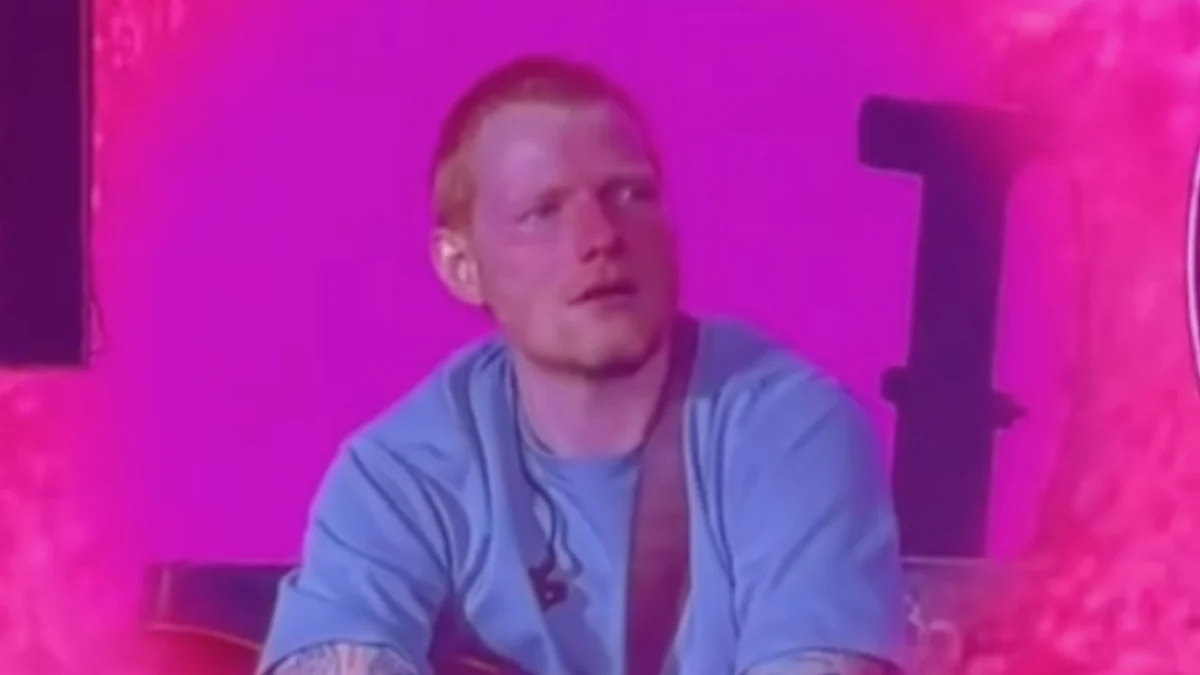
Pop superstar Ed Sheeran stood alone on the massive stage at Philadelphia’s Lincoln Financial Field on Saturday night, delivering an emotional address that laid bare one of the most turbulent weeks of his professional and personal life. Following a firestorm of controversy surrounding the removal of supporting act Macklemore from his "LOOP" US tour, Sheeran admitted that he seriously considered pulling the plug on the remainder of his concerts.
The crisis escalated rapidly after several major stadium operators, spearheaded by New England Patriots owner Robert Kraft, objected to Macklemore’s prior public remarks supporting Palestine. Under the threat of being blocked from performing at various venues, Macklemore was removed from the tour lineup. In a swift display of solidarity with the Seattle rapper and the Palestinian cause, the remaining opening acts—FINNEAS, Lukas Graham, and Aaron Rowe—alongside Sheeran’s live backing band, Beoga, withdrew from the bill.
Left isolated and facing mounting pressure from multiple directions, Sheeran confessed that he questioned whether he even wanted to continue his career as a recording and touring artist. Security concerns added to the anxiety, prompting the singer to scrap his signature B-stage—traditionally placed in the middle of the audience—out of fear for his safety and the safety of his fans. Yet, buoyed by resilient ticket sales and a packed stadium of 50,000 attendees who refused to walk away, Sheeran ultimately chose to take the stage.
Chronology of a Crisis: From Tour Dispute to Philadelphia Showdown
To understand the weight of Ed Sheeran’s Saturday night speech, it is vital to trace the rapid unraveling of events that transformed the "LOOP" US tour from a standard summer trek into a lightning rod for geopolitical and artistic debate.
Early September 2026: The Macklemore Contretemps
The friction began brewing behind the scenes as the tour moved through major American markets. Macklemore, known for his outspoken political views, had previously made statements in support of Palestine. These comments drew sharp criticism from prominent venue stakeholders and investors, most notably billionaire Robert Kraft. According to reports, stadium operators pressured tour management, issuing ultimatums that Macklemore must be removed or face venue lockouts.
Mid-September 2026: The Domino Effect of Boycotts
Upon Macklemore’s formal removal from the tour, the ripple effect was immediate. Rather than weathering the storm quietly, the remaining support acts—FINNEAS, Lukas Graham, and Aaron Rowe—announced they were dropping out in solidarity. Sheeran’s longtime live backing band, Beoga, also stepped back. In the span of just a few days, a massive stadium tour lost its entire supporting roster, leaving Sheeran isolated at the helm of a logistical and public relations nightmare.
Saturday, September 20, 2026: The Philadelphia Turning Point
Arriving at Lincoln Financial Field, Sheeran faced a barrage of conflicting advice. While longtime friends, industry advisors, and associates reportedly urged him to cancel the tour outright over safety and backlash concerns, the box office told a different story. Ticket sales held steady, and thousands of fans prepared to fill the venue. Choosing perseverance over cancellation, Sheeran opened the night by addressing the controversy head-on before closing the evening with a deeply personal, unvarnished reflection on the state of his career and the meaning of live music.
Supporting Data and Behind-the-Scenes Pressures
The logistical and emotional toll of the past week cannot be overstated. When artists of Sheeran’s magnitude tour, the machinery involved requires absolute synchronization. The sudden defection of his opening acts and backing band meant the entire production had to be reimagined overnight.
Furthermore, the psychological toll on the Grammy-winning artist was immense. In his speeches, Sheeran detailed a profound sense of isolation, noting that people he had known for decades began distancing themselves as the controversy peaked.
Security Realities
The anxiety surrounding the concerts was not merely emotional; it was physical. Anticipating potential protests, heckling, or physical disruptions, tour security protocols were radically tightened. The decision to scrap the B-stage—a staple of Sheeran’s immersive live performances that places him directly inside the crowd—demonstrated how volatile organizers and management believed the environment could be.
Economic and Fan Investment
Despite the high-stakes drama backstage, the audience response served as Sheeran’s primary anchor. As he noted during his closing speech, attending a stadium concert is no minor undertaking for fans:
"It’s not just a ticket that you buy. It’s hotels, it’s flights, it’s buses, it’s babysitters, it’s restaurants that you’ve booked in town… It’s a hell of a lot of effort."
The presence of 50,000 fans in Philadelphia—who chose to show up rather than cash in their tickets—provided the empirical proof Sheeran needed to justify pressing forward with the tour.
Official Responses and Statements
While the stakeholders involved—including stadium ownership groups and the departed supporting acts—have largely relied on brief statements regarding artistic expression and venue policies, Ed Sheeran’s own words stand as the definitive commentary on the situation.
Rather than hiding behind public relations representatives, Sheeran took direct ownership of the discourse, utilizing his platform to address the audience directly, despite apologizing for spending time talking rather than strictly playing music during the opening segment.
Below is an excerpt from Ed Sheeran’s emotional closing speech in Philadelphia:
"The last week of my life has been one of the worst weeks of my life. Today has been one of the weirdest days of my life. Tonight has been honestly the best show of my life—the best show.
I really didn’t know whether this tour would be carrying on. I really didn’t know whether I’d even be getting on stage again, whether I even wanted to be an artist at all. In these situations, you really find out who your friends are, and it’s been a weird week. I just feel like it happened very quickly. And the whole time, I had so many people telling me to cancel this tour, and so many people coming out of my life that I’ve known for years and years and years just kind of backing away.
And in the back of my mind, I saw the ticket sales for this gig. I didn’t see cancellations—I saw people buying tickets for this gig… And I look at the end of the week, and I see 50,000 people who haven’t abandoned me.
People will say what they want, but I am doing this for you. I love you. I love this. I love what this concert brings. I love bringing people together from all backgrounds, all races, all religions, all political ideas… If this tour ends, love doesn’t win. Love doesn’t win."
Broader Implications for Live Entertainment and Artist Advocacy
The events surrounding Ed Sheeran’s Philadelphia concert highlight a growing, complex intersection between live music, corporate venue ownership, and global politics. As stadiums become increasingly centralized under major corporate umbrellas and high-profile investors—such as Robert Kraft’s involvement—the autonomy of touring artists and their support acts faces unprecedented scrutiny.
1. The Chilling Effect on Free Expression
The forced removal of Macklemore and the subsequent walkout of FINNEAS, Lukas Graham, Aaron Rowe, and Beoga signal a tense new reality for touring musicians. When venue operators can successfully lobby to remove artists based on political viewpoints expressed outside the concert hall, it establishes a precarious precedent for censorship within the live entertainment industry.
2. The Resilience of Fan Communities
Conversely, Sheeran’s experience underscores the enduring bond between artists and their audiences. In an era where social media storms and corporate pressure can threaten to derail multimillion-dollar tours overnight, the ultimate arbiter remains the ticket-buying public. The decision of 50,000 fans to fill Lincoln Financial Field proved that grassroots fan loyalty can sometimes outweigh industry-level controversies.
3. The Future of the "LOOP" Tour
As Ed Sheeran looks ahead to the remaining dates of his US itinerary, he does so as a changed performer. Operating without a traditional support lineup and navigating heightened security measures, Sheeran has reframed his tour not merely as a commercial enterprise, but as an act of resilience. Whether other venues will attempt similar interventions remains to be seen, but one thing is certain: the pop star has drawn a hard line, anchored by the conviction that live music must remain a space for unity, empathy, and human connection.
 Asro
Asro
 Lina Irawan
 rifanmuazin
