

While soccer may currently hold the title of the world’s “sexiest” sport, and basketball possesses an undeniable cultural cool, golf has long occupied a different, more staid space in the public imagination. It is a sport defined by quiet murmurs, rigid dress codes, and the image of men in khakis diligently navigating manicured greens. Yet, as Hollywood has proven time and again—from the slapstick anarchy of Caddyshack to the underdog triumph of Happy Gilmore—there is something inherently hilarious about the solemnity of the sport.
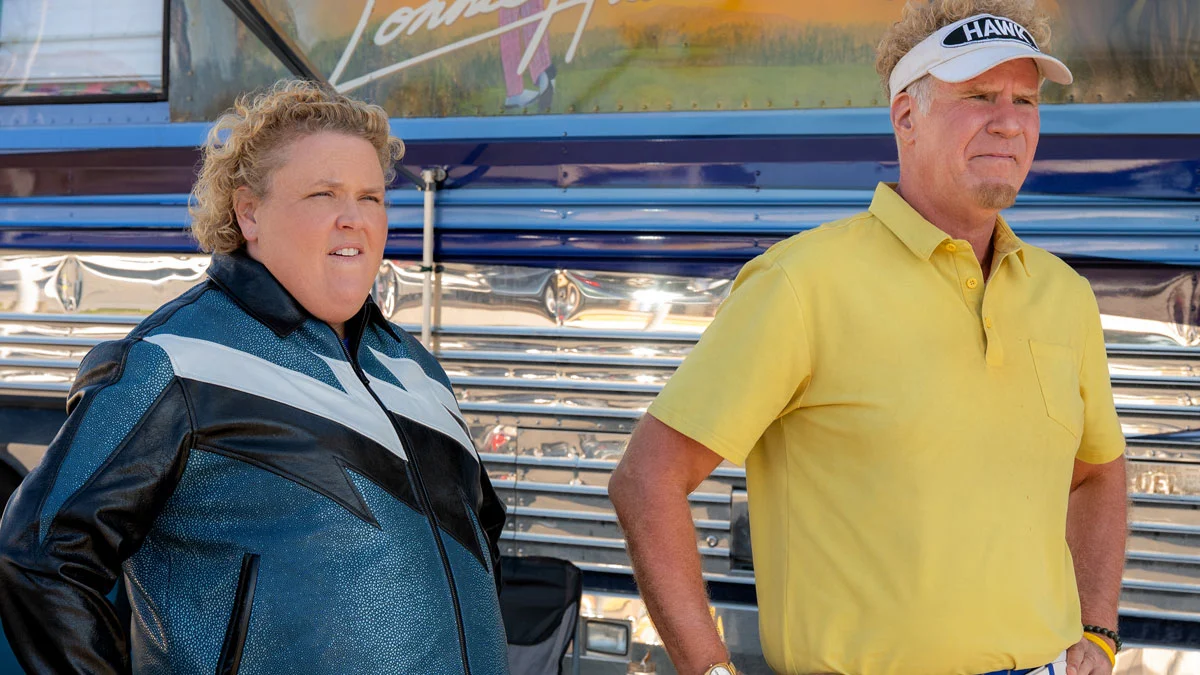
Enter Netflix’s new 10-episode comedy series, The Hawk. Co-created by and starring comedic icon Will Ferrell, the series marks a significant return for the actor to the sports-comedy sandbox—a genre he once defined with classics like Talladega Nights: The Ballad of Ricky Bobby and Blades of Glory. In The Hawk, Ferrell trades the NASCAR track for the PGA Tour, portraying Lonnie “The Hawk” Hawkins, a former champion attempting a desperate, late-career scramble back to relevance.
Main Facts: The Premise of a Legend in Decline
The series centers on the titular character, Lonnie Hawkins, a man whose glory days are firmly in the rearview mirror. Unlike the manic energy of some of Ferrell’s earlier cinematic creations, Lonnie is a character built on a foundation of unearned confidence, a penchant for expensive white wine, and a bizarre, one-sided conversational relationship with his golf balls.
The central conflict is familial and professional: Lonnie’s primary rival on the tour is his own son, Lance (played with frantic energy by Jimmy Tatro). Adding to the tension is Lonnie’s estranged wife, Stacy (the formidable Molly Shannon), who acts as a bitter, micromanaging force behind Lance’s career.
Lonnie’s only lifeline is Sam, a new caddy and driver played by Fortune Feimster. Sam is a golf novice, a fact that serves as the perfect foil for Lonnie’s seasoned, albeit stagnant, expertise. Together, the pair embarks on a journey of redemption, navigating the cutthroat world of professional golf with a mix of incompetence, heart, and accidental success.
Chronology: The Evolution of Ferrell’s Sports Comedy
To understand the significance of The Hawk, one must look at the trajectory of Will Ferrell’s career. Between 2004 and 2008, Ferrell was the undisputed king of the sports spoof. His filmography during this period included:
- 2005 – Kicking & Screaming: A foray into youth soccer coaching.
- 2007 – Blades of Glory: A satirical look at competitive figure skating.
- 2008 – Semi-Pro: A dive into the absurdity of the ABA.
- 2006 – Talladega Nights: The Ballad of Ricky Bobby: Arguably the pinnacle of the genre, cementing the formula of the ego-driven, dim-witted athlete.
Following this era, Ferrell transitioned into more nuanced roles, producing and starring in projects that challenged his persona, such as Stranger than Fiction and his recent, deeply personal documentary with Harper Steele, Will & Harper.
The Hawk is a departure from his recent work in that it marks his return to a series regular role—a first since his tenure on Saturday Night Live. The show’s development, however, signals a matured approach to the genre. By opting for a 10-episode limited series format rather than a feature film, the production allows for a deeper exploration of character arcs, trading the rapid-fire gags of a 90-minute movie for a more sustained, narrative-driven comedy.
Supporting Data: The Creative Engine Behind the Green
The production pedigree behind The Hawk is substantial, explaining the series’ ability to balance farce with genuine human connection. The show is an officially sanctioned PGA Tour Studios production, lending an air of authenticity to the setting, even if the content remains irreverent.
Key creative contributors include:
- David Gordon Green: Directing the series premiere and several subsequent episodes, Green brings the same sharp, character-focused lens he utilized during his time directing Eastbound & Down.
- Chris Henchy: A longtime collaborator of Ferrell’s and a veteran of the Eastbound writing room, Henchy’s influence is felt in the show’s cynical, biting humor.
- Harper Steele: Bringing a fresh perspective to the team, Steele’s involvement follows her acclaimed collaboration with Ferrell in Will & Harper, suggesting a commitment to keeping the comedy grounded in emotional reality.
The supporting cast is equally noteworthy. Keith David provides a grounded performance as Lonnie’s original caddy, acting as the series’ moral (if occasionally exhausted) compass. Chris Parnell leans into the absurdity of the PGA bureaucracy, while Luke Wilson delivers a scene-stealing turn as Lonnie’s primary rival, sporting a bleached-blond aesthetic that serves as a visual punchline.

Official Responses and Industry Reception
The critical reception of The Hawk has been generally positive, with reviewers praising the chemistry between Ferrell and Feimster. Feimster, known primarily for her stand-up, has been highlighted for her ability to play a “shadier” character than her usual persona, effectively anchoring the series’ more outlandish moments.
Molly Shannon’s performance has also drawn significant praise. Critics have noted that while her recent role in The Other Two leaned into her character’s sweetness, her work in The Hawk allows her to utilize a sharper, more cutting edge.
The show has been lauded for avoiding the "callous" trap that many sports comedies fall into. By focusing on the bond between the leads, the series creates an emotional core that makes the viewer care about the outcome of the matches, even when the logic of the plot stretches credulity. The cameo appearances—most notably a self-aware turn by legendary skateboarder Tony Hawk—have been cited as highlights that bridge the gap between niche sports culture and mainstream comedy.
Implications: The Future of the Sports Sitcom
The success of The Hawk raises interesting questions about the future of comedy on streaming platforms. In an era where 30-minute sitcoms are often sacrificed for high-concept, serialized dramas, The Hawk demonstrates that there is still a robust appetite for character-driven, episodic comedy.
The "Binge-Watch" Structure
One critique of the series is its pacing. Several episodes end on cliffhangers that seem designed specifically for the binge-watching habits of Netflix subscribers. While this structure maintains momentum, some critics argue it occasionally undermines the comedic timing. However, the trade-off is clear: the series gains the breathing room to develop secondary characters—like Tatro’s Lance—that would have been relegated to one-dimensional tropes in a two-hour film.
The PGA Partnership
The fact that this is a PGA Tour Studios production is a masterstroke of branding. By partnering with the sport’s governing body, the show gains access to professional-grade equipment, authentic locations, and a veneer of legitimacy that elevates the production value. It marks a shift in how sports organizations are engaging with media; rather than simply broadcasting games, leagues are now actively participating in the creation of narrative content to reach younger or more comedy-focused demographics.
The Legacy of the "Ferrell Formula"
Ultimately, The Hawk proves that the "Ferrell Formula"—the aging, ego-bloated man-child seeking redemption—still works, provided it is updated for a modern audience. By surrounding Ferrell with a cast of sharp, modern comedians like Feimster, Tatro, and Shannon, the show avoids feeling like a relic of the 2000s. Instead, it feels like a continuation of a legacy, refined by the lessons learned in the years since Talladega Nights.
Conclusion
The Hawk is not a perfect show, nor does it necessarily demand a sprawling multi-season arc. It is, however, a “loose and fun flight.” It succeeds because it understands its own limitations, utilizing the charisma of its lead and the sharpness of its supporting cast to create something that is consistently funny and surprisingly sweet.
As the series concludes, the viewer is left with the impression that while Lonnie Hawkins may never truly reclaim the title of the world’s greatest golfer, the journey to find his dignity is well worth the watch. Whether you are a fan of the sport or simply a fan of high-caliber comedic performances, The Hawk provides a refreshing, low-stakes escape that confirms one thing: Will Ferrell still has a knack for finding the funny in the most unlikely of places—even on the 18th green.
The Hawk is currently available for streaming on Netflix.
 Lina Irawan
 rifanmuazin
