

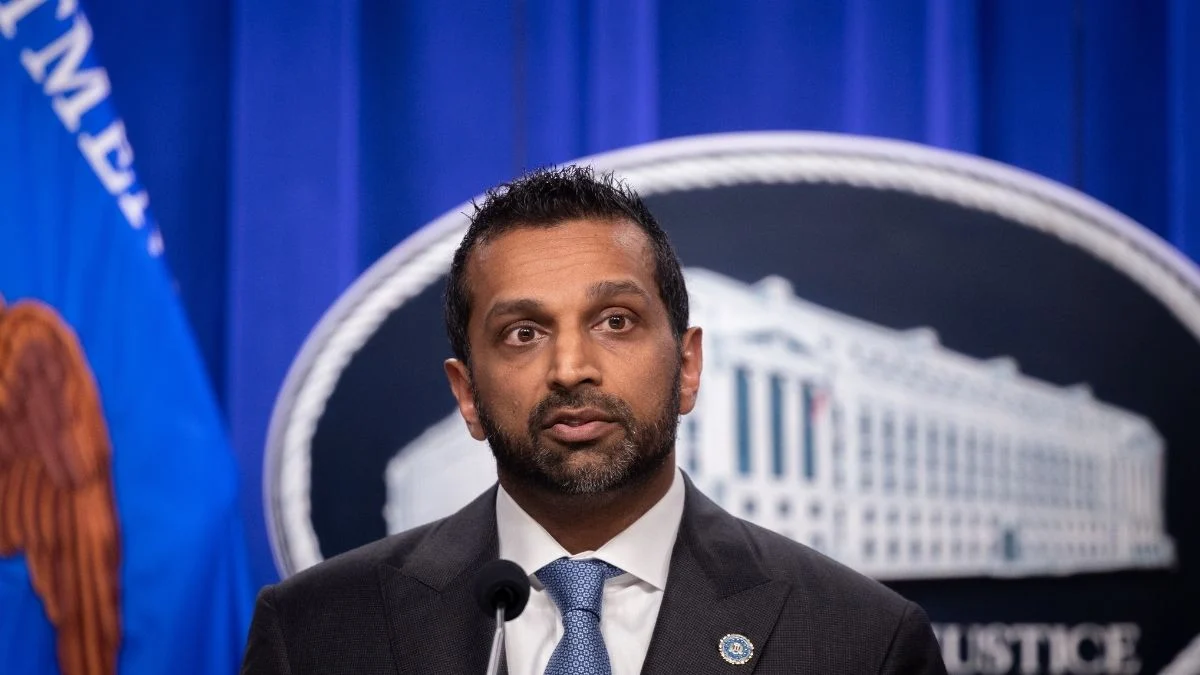
Introduction: A High-Stakes Digital Controversy
In an era where the intersection of social media, political discourse, and federal oversight is increasingly volatile, FBI Director Kash Patel has found himself at the center of a burgeoning firestorm. Following the sudden passing of long-time U.S. Senator Lindsey Graham on July 11, 2026, a commemorative post authored by Patel on the platform X (formerly Twitter) has ignited widespread condemnation.
While the post began as a traditional tribute to a fallen public servant, its concluding sentence—in which Patel asserted that the FBI was “assisting local authorities” with the matter—has been characterized by critics and political analysts as “genuinely reckless.” By inserting the federal law enforcement agency into a case already clarified by medical professionals as a natural death, Patel has inadvertently fueled a deluge of conspiracy theories, casting a shadow over the integrity of the FBI’s communication protocols.
The Facts: Senator Graham’s Passing and the Medical Report
Senator Lindsey Graham, a fixture of American politics since his election to the Senate in 2002 and a pivotal ally of President Donald Trump, passed away at the age of 71. The sudden nature of his death, coming shortly after a high-profile diplomatic trip to Ukraine, immediately prompted intense public interest.
According to a spokesperson for the late Senator, preliminary findings from the local medical examiner indicated that the cause of death was an aortic rupture—a catastrophic event involving the body’s largest artery. In medical terms, an aortic rupture is frequently the result of underlying, often undiagnosed, cardiovascular conditions.
Despite this clear medical explanation, the transparency of the situation was quickly muddied. The inclusion of the FBI in the Senator’s post-mortem proceedings suggested to the public that the bureau viewed the death as something other than a natural event. This discrepancy between the medical examiner’s report and the FBI Director’s official statement served as the catalyst for the ensuing public backlash.
Chronology of Events: From Tribute to Turmoil
To understand the gravity of the controversy, one must look at the timeline of the post-mortem discourse:
- July 11, 2026: Senator Lindsey Graham passes away at age 71. News of his death begins to circulate, noting his recent return from an official trip to Ukraine.
- July 12, 2026: FBI Director Kash Patel issues a statement on X honoring Graham as a “devoted public servant” and “true patriot.”
- July 12, 2026 (Immediate Aftermath): The post gains traction due to the final line: “The FBI is assisting local authorities and has made every necessary resource available.”
- July 12, 2026 (Mid-day): Social media users, political commentators, and journalists begin to question why the FBI would be involved in a death attributed to natural causes.
- July 13, 2026: Criticism intensifies. Sam Stein of The Bulwark publicly denounces the tweet as “genuinely reckless.”
- July 14, 2026–Present: A wave of online speculation links Graham’s death to geopolitical adversaries, while critics of the FBI director highlight the incident as a pattern of administrative instability within the Bureau.
Supporting Data: The Digital Reaction and Conspiracy Landscape
The reaction to Patel’s post illustrates the modern vulnerability of public trust in federal institutions. When an official as high-ranking as the FBI Director implies a criminal investigation into a death already declared "natural," it provides oxygen to fringe theories.
The Role of Online Speculation
The comments section of Patel’s post became a microcosm of modern political paranoia. One user noted, “The FBI doesn’t investigate a death by natural causes. If it were a cardiac arrest, many things can lead to cardiac arrest other than natural causes.” This sentiment was echoed by others who sought to draw connections between the Senator’s recent itinerary and his health.
Prominent figures and online influencers were quick to capitalize on the ambiguity. Some theories suggested that the Senator had been targeted by foreign actors—specifically Russia or Iran—as retaliation for his vocal support of Russian sanctions. One viral post explicitly asked, “Did Russia just poison Lindsey Graham?” referencing the Senator’s recent push for a sanctions bill. Such theories, while lacking evidence, gain significant traction when they appear to be corroborated by the perceived involvement of the FBI.
The Critique of Institutional Integrity
Experts in political communication argue that the Director’s choice of words was fundamentally irresponsible. By mentioning the FBI’s involvement, Patel essentially "officially" validated the notion that there was something suspicious about the Senator’s death. This creates a "feedback loop" where the Director’s statement encourages conspiracy, and the resulting conspiracy necessitates further investigation, thereby wasting agency resources and eroding public faith in medical examiner reports.
Official Responses and Bureau Dynamics
The silence from the official FBI press office regarding the specific implications of Patel’s tweet has been noted by several news outlets. Generally, the FBI does not involve itself in cases of natural death unless there is evidence of foul play. The Director’s assertion that the agency was "assisting local authorities" suggests one of two things: either there is an ongoing investigation that the public is unaware of, or the Director committed a significant gaffe in his public communication strategy.
Political allies of the administration have largely remained quiet, hoping the controversy will dissipate. However, the optics of the situation are increasingly difficult to manage. The incident underscores a persistent tension within the Department of Justice and the FBI regarding the role of the Director as a public spokesperson versus a law enforcement professional.
Broader Implications: A Pattern of Mismanagement?
This incident is not an isolated occurrence for Kash Patel. Since his appointment as the ninth FBI Director on February 21, 2025, his tenure has been marked by repeated questions regarding his professional conduct and his management style.
The Protection Controversy
In November 2025, a report from Yahoo News highlighted concerns regarding the misuse of agency resources. Patel faced intense scrutiny after allegations surfaced that he had assigned official FBI security details to his romantic partner, country singer Alexis Wilkins. Critics argued that this was a flagrant violation of agency ethics, suggesting that the Director was using his position for personal benefit rather than institutional security.
Impact on the FBI’s Reputation
The cumulative effect of these controversies—from the alleged misuse of funds to the recent “reckless” social media commentary—has left the Bureau in a state of perceived instability. The FBI is traditionally viewed as a non-partisan, steady hand in the American government. When the Director becomes a source of partisan friction or public confusion, it weakens the agency’s ability to conduct its mission effectively.
The controversy surrounding the Senator Graham post serves as a reminder that in the digital age, a single, poorly phrased sentence from a government official can have the same impact as a systemic policy failure. It invites questions about the vetting process for high-level officials and whether the current leadership at the FBI is prioritizing the agency’s long-term credibility or short-term public perception.
Conclusion: The Path Forward
As of this writing, the mystery surrounding the Senator’s death remains confined to the medical examiner’s preliminary findings of an aortic rupture. No evidence of foul play has been provided by local law enforcement or the federal government.
The incident, however, remains a focal point for those concerned with the direction of the FBI under Director Patel. Whether this represents a genuine shift in how the FBI communicates about sensitive deaths or simply a singular lapse in judgment, the fallout has been significant. For the public, the takeaway is clear: in an era of hyper-connectivity, the words of those in power carry a weight that can either clarify or contaminate the truth. As the outcry continues, the pressure on the Director to clarify his statement—or face the consequences of his rhetoric—continues to mount.
What are your thoughts? The intersection of federal law enforcement and social media is a new frontier for American politics. Does the FBI Director have a duty to avoid commenting on sensitive deaths, or was this merely a tribute gone wrong? The public remains divided as the debate over institutional integrity continues.
 Neng Nana
 Azzam Bilal Chamdy
 Nana
Nana
