

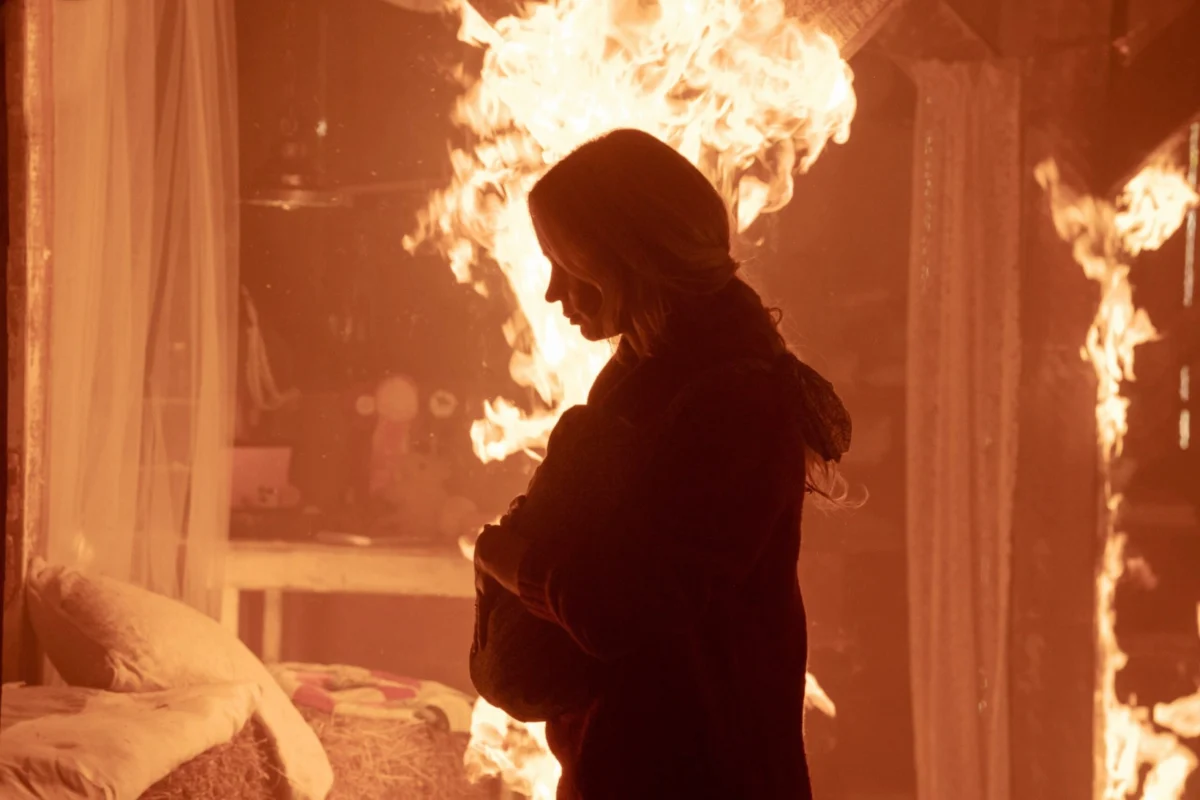
When John Krasinski released A Quiet Place in the spring of 2018, it arrived as a high-concept anomaly. Built on a premise so terrifyingly simple it could be explained in a single breath—blind, extraterrestrial apex predators hunt exclusively by sound, meaning any errant noise results in instant death—the film was an exercise in pure cinematic tension. It felt remarkably self-contained. It was an intimate, devastating portrait of a single family grieving a profound loss while fighting for survival on a remote farm.
Yet, in Hollywood, a critically acclaimed, breakout box-office phenomenon rarely stays isolated for long.
Years later, looking across a thriving franchise that encompasses direct sequels, high-profile urban spin-offs, and comic book adaptations, the cinematic landscape of A Quiet Place has proven to be surprisingly resilient. Far from falling victim to the law of diminishing returns that plagues many modern horror franchises, the universe built by Krasinski continues to expand, proving that the world of absolute silence has plenty of noise left to make.
Main Facts: The Anatomy of a Modern Monster Franchise
To understand the longevity of the A Quiet Place intellectual property, one must examine its core components:

- The Origin: The 2018 original film was directed and co-written by John Krasinski, who penned the script alongside Scott Beck and Bryan Woods. It grossed over $340 million worldwide against a modest $17 million budget.
- The Creative Shift: Though initially envisioned as a strict "one-off," the franchise expanded with 2020’s A Quiet Place Part II, shifting the narrative focus to Millie Simmonds’ character, Regan.
- The Universe Expands: The IP broadened further with the 2024 prequel spin-off A Quiet Place: Day One, shifting the setting from rural isolation to the chaotic, hyper-noisy streets of New York City.
- The Core Cast: Spanning multiple films, the series has featured powerhouse performances from Emily Blunt, Cillian Murphy, Millicent Simmonds, Noah Jupe, and Lupita Nyong’o.
- Streaming Window: A Quiet Place Part II recently re-entered the cultural conversation as it cycled onto streaming platforms like Netflix, reminding audiences of the sequel’s tight craftsmanship.
Chronology of a Silent Invasion
2018: The Genesis on the Farm
When A Quiet Place premiered, it felt distinct from standard creature features. Krasinski wasn’t just interested in jump scares; he was interested in the psychological weight of parenting in an environment where a crying baby spells doom. The film chronicled the final days of the Abbott family’s rural sanctuary. Lee Abbott (Krasinski) sacrifices himself to save his children, leaving his pregnant wife Evelyn (Emily Blunt) and their children—including deaf teenager Regan (Millicent Simmonds)—to fend for themselves. The movie closed on an iconic note of defiance: rather than just running away, Evelyn loads a shotgun, weaponizing the feedback from Regan’s cochlear implant against the alien beasts.
2020–2021: Stepping Out Into the Wider World
Initially, Krasinski resisted the idea of a sequel. In May 2018, he told Deadline that a follow-up was never on his mind during production. However, inspiration struck when he envisioned shifting the protagonist mantle to Regan.
Released widely in 2021 after pandemic delays, A Quiet Place Part II picked up moments after the first film. The Abbott family abandons their burned-out farm, venturing into the dangerous unknown. Along the way, they encounter Emmett (Cillian Murphy), a bitter survivor who has lost his family and hope. By pairing Regan—whose cochlear implant has transformed her from vulnerable to a symbol of resistance—with Emmett, the sequel elevated the franchise from a survival thriller into a narrative about inherited hope and collective resilience. It also cleverly broadened the lore, introducing survivalist communities on nearby islands and revealing that the creatures cannot swim.
2024: The Noise of New York
The universe underwent its most radical evolution with the release of A Quiet Place: Day One. Stepping away from the Abbott family entirely, the prequel directed by Michael Sarnoski dropped audiences into the terrifying opening hours of the invasion in the most densely populated, deafeningly loud environment imaginable: New York City. Starring Lupita Nyong’o, the film explored how millions of urban residents panicked, reacted, and tried to outrun a threat that capitalized on every rustling subway car, honking horn, and shattering window.

Supporting Data: Box Office and Critical Reception
The commercial durability of the A Quiet Place universe is supported by consistent box office performance and critical reception across its entries:
| Film | Release Year | Director | Estimated Budget | Global Box Office | Rotten Tomatoes Score |
|---|---|---|---|---|---|
| A Quiet Place | 2018 | John Krasinski | $17 Million | ~$341 Million | 96% |
| A Quiet Place Part II | 2020/2021 | John Krasinski | ~$61 Million | ~$297 Million | 91% |
| A Quiet Place: Day One | 2024 | Michael Sarnoski | ~$67 Million | ~$261 Million | 85% |
The data illustrates a rare phenomenon in horror: each successive theatrical release has maintained a high critical approval rating (all staying above 85% fresh on Rotten Tomatoes) while pulling in robust box office returns, even when pivoting away from original characters and core casts.
Official Responses and Creative Intentions
Behind the scenes, the evolution of the franchise has been driven by a deliberate philosophy: never make a sequel just for the sake of replication.
When discussing his pivot to making A Quiet Place Part II, Krasinski noted in interviews with Variety that the deciding factor was Millicent Simmonds’ character. "I had this small idea, which was to make Millie the lead of the movie," Krasinski explained. "Not only did I think she would give an amazing performance… her character opens the door to all the themes I was dealing with in the first movie."

Furthermore, Emily Blunt has repeatedly commented on the structured nature of the narrative arc. Regarding future installments, including the planned A Quiet Place Part III—which Krasinski is slated to helm—Blunt has indicated that it serves as a natural conclusion to the Abbott family’s specific chapter.
Paramount Pictures, recognizing the viability of the IP, has intentionally treated the universe not as a rigid soap opera, but as an anthology framework. By allowing filmmakers like Michael Sarnoski to inject fresh perspectives (Day One) and expanding into other mediums like IDW Publishing’s comic miniseries, the studio has safeguarded the franchise against creative fatigue.
Implications for the Future of Horror Franchises
The success of the A Quiet Place cinematic universe offers a compelling blueprint for modern intellectual property management in Hollywood. For years, major studios relied on endless, diminishing sequels that recycled the same formulas until audiences grew weary. A Quiet Place demonstrates an alternative path:
- Thematic Consistency Over Literal Continuation: Instead of forcing the Abbott family into increasingly absurd scenarios, the universe thrives by exploring the implications of the premise in different contexts (rural farms, isolated islands, chaotic mega-cities).
- Inclusive Representation as a Narrative Engine: Centering a deaf protagonist (Millicent Simmonds) was not merely a superficial diversity choice in the original film; it became the central mechanic of survival and the emotional core of the franchise. Disability is reframed as strategic strength.
- Controlled Scaling: By keeping budgets reasonable relative to major blockbuster franchises, Paramount ensures that these films remain profitable, reducing the pressure to pander to the lowest common denominator and allowing for genuine suspenseful craftsmanship.
As eyes turn toward the horizon for A Quiet Place Part III—which is expected to close the book on the Abbott family saga—the overarching health of the franchise remains remarkably robust. If future installments can maintain the high bar set by their predecessors, refusing to let the quality of the storytelling whisper away, the audience will gladly keep listening in the dark.
 Nana
Nana
 Evan Lee Salim
 Siti Muinah
