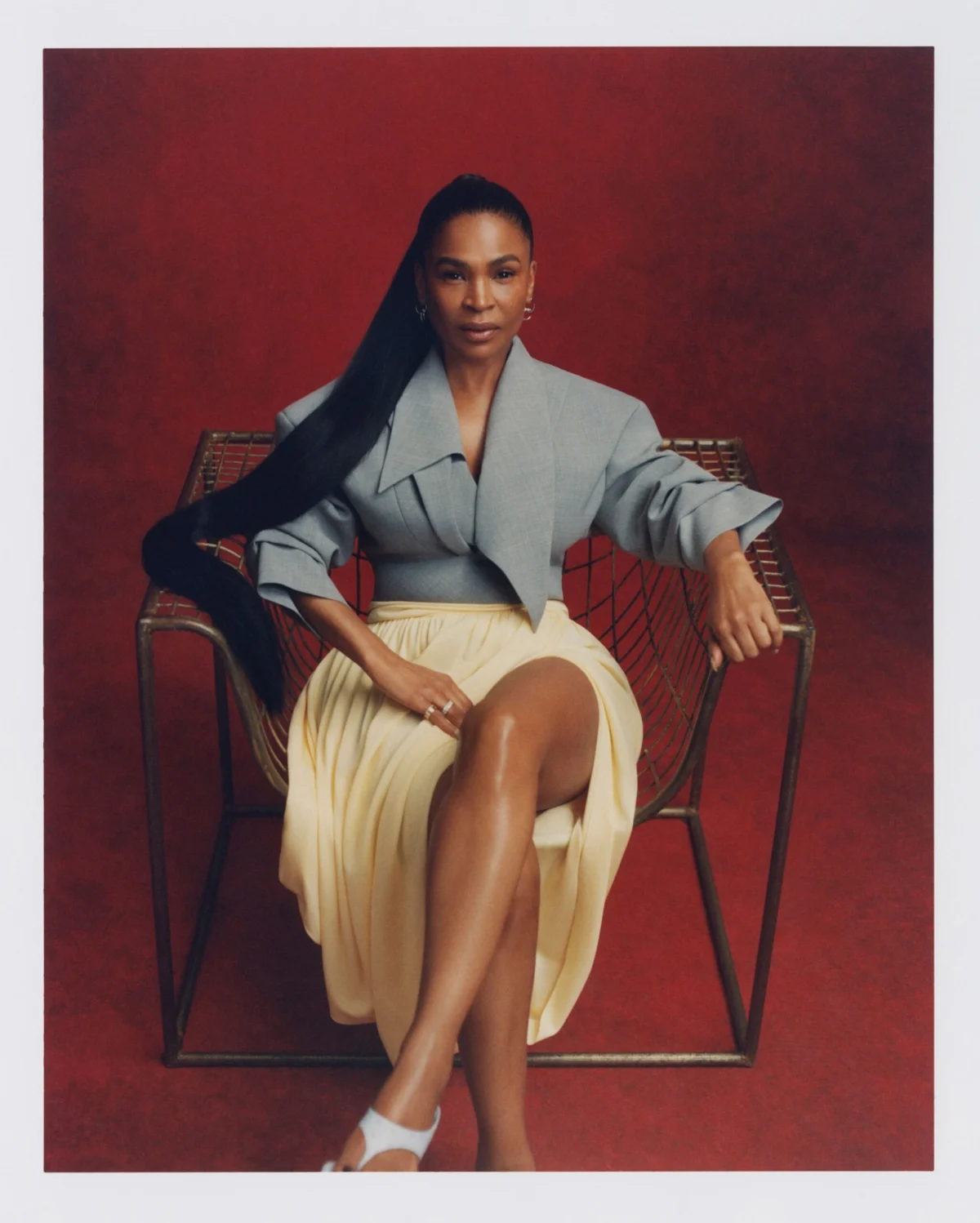
For over three decades, Nia Long has occupied a rare and revered space in the cultural consciousness. To generations of filmgoers, she remains the platonic ideal of ’90s cinematic royalty—a fixture of classic black cinema whose presence in touchstone films like Love Jones and The Best Man evokes a distinct era of style, warmth, and effortless grace.
Yet, as Long steps into her mid-50s, her career is undergoing a profound evolution. Rather than resting on the laurels of her past iconography, she is charting an ambitious new chapter both on and off the screen. Most notably, Long takes on one of the most subdued and emotionally demanding roles of her career: Katherine Jackson, the matriarch of the Jackson family, in the upcoming April biographical drama Michael.
Far from slowing down, Long is actively expanding her creative footprint. She recently wrapped production on Don’t Ever Wonder, a romantic dramedy directed by Eugene Ashe that reunites her on-screen with Love Jones co-star Larenz Tate. At the same time, she is putting the finishing touches on a deeply personal, two-year-in-the-making memoir. Balancing high-profile Hollywood projects, an upcoming press tour, and motherhood, Long’s current trajectory is a masterclass in professional endurance, personal reinvention, and the art of unyielding self-possession.
Chronology: A Life Shaped by Art, Movement, and Memory
To understand Nia Long’s present-day clarity, one must look back at a life marked by distinct geographic and emotional shifts:
Early Roots (1970s): Long was born in Brooklyn, New York, into a vibrant Trinidadian household surrounded by a predominantly Black community.
The Midwest Disorientation (Childhood): She spent six formative years in Iowa City while her mother attended university. Isolated from other Black children, Long faced early conflicts regarding her identity and self-image, a period she is currently exploring in her upcoming memoir.
The ’90s Breakthrough: Long transitioned into television and film, capturing the cultural zeitgeist with iconic roles in The Fresh Prince of Bel-Air, Boyz n the Hood, Love Jones, and The Best Man. She cemented her status as a generational icon of Black beauty and talent.
Balancing Motherhood and Stardom: As her eldest son entered his twenties and her youngest son reached his teens, Long expanded her ambitions, moving increasingly toward producing and curating stories that honor authentic representation.
The Public Turning Point (2022): Long navigated a highly publicized personal transition when the end of a 13-year relationship played out across global media headlines. Rather than retreating, she channeled the experience into deep self-reflection, healing, and boundary-setting.
The Present Era (2026): With the spring release of the Michael Jackson biopic Michael, a completed reunion film with Larenz Tate, and her role as a global brand ambassador for Estée Lauder, Long enters an empowered second act defined by absolute creative freedom.
Supporting Data: Career Milestones and Creative Metrics
Long’s career is underpinned by impressive longevity in an industry notoriously harsh on aging women and Black actors:
Box Office and Cultural Impact: Long’s filmography includes multiple culture-defining features that grossed hundreds of millions globally while cementing Black romance and complexity in mainstream cinema.
The Memoir Project: Her upcoming autobiography represents a grueling, two-year creative excavation of her childhood in Iowa, her relationship with her late poet father Doughtry Long Jr., and her journey toward self-acceptance.
Recent Filmography: Her turn as Katherine Jackson in Michael places her alongside an ensemble featuring Colman Domingo as Joe Jackson and Jaafar Jackson as Michael Jackson. Additionally, her role in Don’t Ever Wonder features a powerhouse supporting cast including Blair Underwood, Susan Kelechi Watson, and Algee Smith.
Global Partnerships: Long serves as a prominent face for Estée Lauder, a full-circle milestone given her early childhood struggles with mainstream beauty standards in the Midwest.
Official Responses and Personal Reflections
Sitting down for an interview at the Chateau Marmont, Long radiates a blunt yet deeply warm candor. Discussing her preparation for Michael, she notes how playing Katherine Jackson required a mastery of silent intensity.
"There have been moments in my life where I’ve been required to be more graceful than I’ve ever had to be in the past," Long reflects. "And that requires a sense of really being able to dig deep into some sort of self-examination… The only way you thrive and survive is through a tremendous amount of grace. What I think I learned from her is that sometimes grace is really quiet."
When conversation shifts to the intense public scrutiny she faced following her 2022 high-profile breakup, Long refuses to play the victim, viewing the ordeal through the lens of empowerment.
"The amount of pouring into myself that I’ve done is strong and mighty and intentional," she states. "I’ve now identified the things that I need to work on and the things that I need to heal. But I also identified what is intolerable."
Addressing the persistent pressures of aging in the public eye—particularly the double-edged sword of the phrase "Black don’t crack"—Long embraces bodily shifts with radical acceptance.
"I’m 55. I got hormonal stuff going. Your body shifts, changes. It’s a whole new body," she says matter-of-factly. "I don’t deprive myself of anything that I want. I find the balance."
Implications: Redefining Aging, Beauty, and Autonomy in Hollywood
Nia Long’s continued cultural resonance carries profound implications for how Hollywood views longevity, particularly for Black women. For decades, the entertainment industry has attempted to box Black actresses into static archetypes or discard them once they reach a certain demographic threshold. Long’s trajectory shatters these limitations.
By refusing to let her identity be authored by Hollywood executives, tabloid headlines, or restrictive beauty standards, she offers a blueprint for modern womanhood. Her insistence on financial literacy, generational wealth-building, and creative control behind the camera signals a shift from mere employment to total ownership.
Furthermore, her reflections on navigating personal heartbreak without internalizing public noise offer a universal lesson in emotional intelligence. As she prepares to release her memoir and continues to captivate audiences on screen, Long proves that a woman’s second act can be her most powerful epoch—one defined not by the expectations of an audience, but by the sovereign peace of the kitchen table.




 Iffa Jayyana
 Lina Irawan
 Asro
Asro
