

UNITED NATIONS, New York — As the Middle East teeters on the precipice of a broader regional conflagration, the United Nations has expressed cautious optimism regarding fresh reports of a ceasefire between Israel and Hezbollah. However, the optimism is tempered by the grim reality on the ground in Lebanon and a growing chorus of international concern regarding the human rights implications of a high-stakes diplomatic deal between Washington and Tehran.
The Fragility of Peace: A Diplomatic Tightrope
United Nations Spokesperson Stéphane Dujarric addressed journalists at the daily noon briefing in New York, confirming that the international body is closely monitoring reports of a potential cessation of hostilities. While the UN welcomed any movement toward a de-escalation of violence, Dujarric reiterated the organization’s long-standing position: the only viable path to long-term security and regional stability lies in the absolute respect for existing ceasefire arrangements and a return to substantive dialogue.
The current atmosphere of uncertainty stems from the volatility of a provisional agreement recently brokered between the United States and Iran. This sweeping 14-point Memorandum of Understanding (MoU) covers a vast array of geopolitical flashpoints, including military withdrawals, the reopening of the strategic Strait of Hormuz, commitments to halt nuclear weapons development, and a massive $300 billion reconstruction fund. Crucially, the framework includes a demand for a ceasefire across all fronts, including Lebanon.
Despite the breadth of this agreement, its implementation remains elusive. Israel, which has maintained that it is not a signatory to the Washington-Tehran deal, has signaled it is not bound by its terms. Furthermore, neither Israeli officials nor leadership within Hezbollah have provided official, public confirmation of a renewed commitment to peace. Consequently, diplomatic efforts—including high-level talks in Switzerland—have faced severe setbacks, with some sessions postponed in the immediate wake of Israeli airstrikes on Lebanon this past Friday.
Chronology of Conflict: A Surge in Hostilities
The UN Interim Force in Lebanon (UNIFIL) remains the primary observer on the ground, maintaining "constant contact" with all warring parties to navigate the volatile landscape. Despite the diplomatic rhetoric, UNIFIL’s internal data paints a picture of a conflict that is intensifying rather than receding.
A Sharp Escalation
The data provided by UNIFIL underscores the disconnect between political declarations and the reality of life in Southern Lebanon:
- Thursday’s Tally: Peacekeepers detected 52 distinct violations of Lebanese airspace by Israeli aircraft, alongside 217 projectile trajectories. Of these, 188 were attributed to the Israel Defense Forces (IDF), while 29 were traced to non-State actors, presumably Hezbollah.
- Friday’s Intensification: The situation deteriorated significantly between midnight and 4:00 PM local time on Friday. UNIFIL recorded a staggering 748 projectile trajectories. The vast majority—695—were attributed to Israeli forces, with 53 coming from non-State actors. During this same window, there were 49 airspace violations and 51 confirmed Israeli airstrikes, accompanied by persistent ground activity, including heavy armor movements and logistical operations.
This data suggests that, while ceasefire negotiations circulate in the halls of power, the military machinery on the ground is operating at a heightened tempo.
Humanitarian Crisis: A Cycle of Displacement
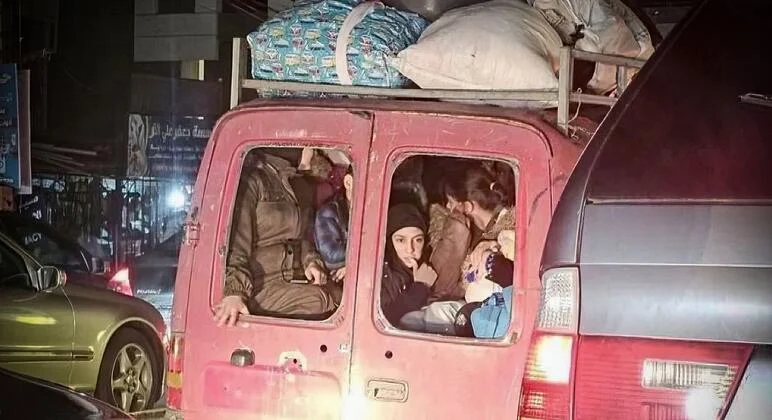
Amid the shelling and the uncertainty, the humanitarian toll continues to mount. UNIFIL has taken an active role in stepping up the delivery of food, water, and medical supplies to displaced families seeking refuge in Beirut and the surrounding districts.
In a joint visit to the coastal city of Saida, French and UK development ministers, accompanied by UN Humanitarian and Resident Coordinator Imran Riza, toured a collective shelter. The site managers provided a nuanced look at the state of public morale: they reported that many families who had previously fled their homes in the wake of earlier ceasefire announcements had begun to return, only to be forced back into shelters by the renewed fighting.
"For many displaced families, ceasefire announcements have yet to translate into improved safety or the ability to return home," Mr. Dujarric cautioned. The psychological toll on these populations, who are trapped in a cycle of fleeing and returning, remains a critical concern for the humanitarian community.
The Human Rights Shadow: Accountability in Iran
While the Lebanon crisis occupies the immediate focus of the Security Council, a parallel, equally alarming crisis is unfolding within Iran. Independent UN human rights experts issued a stark warning on Friday: the Washington-Tehran deal, while welcome in its intent to secure peace, is "fundamentally incomplete" if it ignores the systematic abuses occurring within Iranian borders.
The Human Cost of Diplomacy
The experts, appointed by the UN Human Rights Council, argued that the Iranian people have been rendered "barely visible" in the framework of the new agreement. While the deal addresses economic and military concerns, it remains silent on the devastating human impact of the conflict.
Since the outbreak of hostilities in late February, the following trends have been documented:
- Civilian Casualties: Millions have been internally displaced, and thousands of civilians have perished in airstrikes targeting residential areas, schools, and hospitals.
- Crackdown on Dissent: Iranian authorities have moved aggressively to silence internal opposition. Thousands of individuals have been detained, with widespread reports of torture, forced disappearances, and mock executions.
- The Death Penalty: Since the war began, at least 156 individuals have been executed. The experts highlighted that 42 of these cases were based on espionage and national security charges, often following trials that lacked basic legal protections, where confessions were allegedly extracted through torture and legal counsel was denied.
The UN experts argue that any lasting settlement must prioritize human rights. They contend that trading justice for geopolitical stability will only breed further instability in the long term, urging the international community to demand accountability as a prerequisite for any further diplomatic cooperation.
Implications for Regional Stability
The intersection of the Lebanon ceasefire efforts and the broader Iran-US diplomatic pivot presents a complex challenge for international law and global security. The primary concern among analysts is that a "peace" built on a foundation of military expediency, without addressing the underlying grievances of the populations involved, is inherently unstable.
The Risks of a ‘Top-Down’ Peace
- Erosion of Trust: By sidelining the human rights concerns of the Iranian people, the international community risks losing the moral high ground, potentially fueling further civil unrest within Iran that could bleed into regional conflicts.
- Military Disconnect: The persistent disregard for "deconfliction" zones and the ongoing escalation in southern Lebanon demonstrate that military commanders on the ground may be operating independently of the diplomatic directives coming from Tehran or Washington.
- The Sovereignty Question: Israel’s refusal to acknowledge the legitimacy of the US-Iran deal underscores the difficulty of enforcing regional agreements when key stakeholders are excluded or alienated from the process.
Conclusion: The Long Road Ahead
The UN’s stance remains clear: the path to peace is not found merely in the signing of memoranda, but in the cessation of all hostilities, the restoration of humanitarian access, and the commitment to fundamental human rights.
As the world watches, the situation remains in flux. While the potential for a Lebanon ceasefire offers a glimmer of hope, the data from UNIFIL and the urgent warnings from human rights experts serve as a sobering reminder that peace is a fragile commodity. Without a comprehensive approach that addresses both the immediate military violence and the systemic human rights abuses that have defined this conflict, any "ceasefire" may prove to be little more than a temporary pause in a much larger, ongoing tragedy.
The international community now faces a critical juncture: to pursue a "quick fix" that stabilizes the geopolitical map, or to insist on a more difficult, yet necessary, path that includes the protection of human rights and the pursuit of genuine, long-term accountability.
 Lina Hope
 Asro
Asro
 Layla Zulfa
