

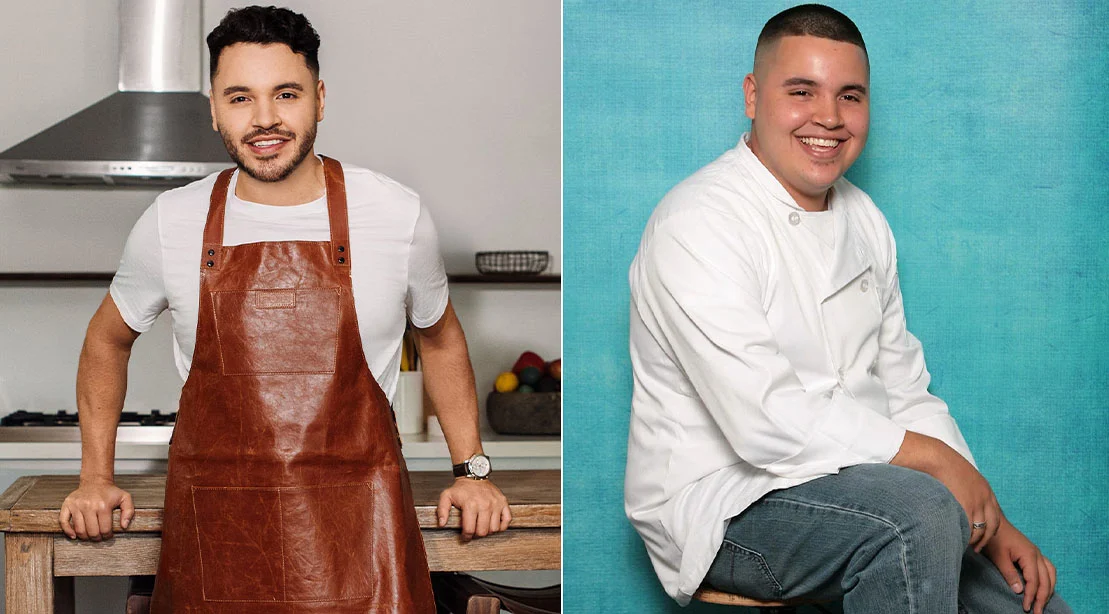
In the high-stakes world of culinary arts, the kitchen is often a paradox: it is a place of creation, passion, and nourishment, yet for many professionals, it can also become a catalyst for unhealthy habits. For Miami-based chef and Food Network Star finalist Chris Valdes, the journey to wellness was not about abandoning the vibrant, soul-stirring flavors of his Cuban heritage, but rather about redefining the mechanics of his craft. Having successfully shed 40 pounds of body fat, Valdes has emerged as a blueprint for those seeking to marry the love of gastronomy with a sustainable, health-conscious lifestyle.
The Culinary Catalyst: A Career Built on Flavor
Chris Valdes first captured the hearts of television audiences during Season 14 of the Food Network Star, showcasing a style he describes as "bold, flavorful, and heavily influenced by my Cuban roots." His rise to fame wasn’t merely a product of technical prowess; it was rooted in a deep, emotional connection to the Latin and Caribbean dishes that defined his upbringing.
For Valdes, food has always been a language of love. Growing up in a family restaurant, he viewed every meal as an opportunity for connection and celebration. However, as any professional chef knows, the professional kitchen environment—characterized by irregular hours, constant tasting, and the ubiquity of high-calorie ingredients—is often at odds with the demands of a fitness-oriented lifestyle. To maintain his signature flavor profile while achieving a 40-pound weight loss, Valdes had to move beyond the superficial label of "healthy vs. unhealthy" and embrace a more nuanced approach to nutrition.
Chronology of a Transformation: From Crisis to Clarity
Valdes’s path to wellness was neither linear nor immediate. It was a series of lessons learned through trial, error, and profound personal reflection.
The Early Wake-Up Call
At the age of 23, Valdes faced his first major health confrontation: a medical report indicating that his cholesterol levels were dangerously high. This served as a stark "wake-up call" for the young chef. However, like many in the industry, his initial response was reactive rather than foundational. He hired a personal trainer and intensified his time in the gym, but he treated fitness as a temporary fix. When the intensity of the training sessions subsided, the weight inevitably returned.
The Illusion of a Quick Fix
At 25, frustrated by his lack of progress and the persistent struggle with his body image, Valdes underwent liposuction. He reflects on this period with remarkable candor, noting that it was a pivotal moment in his psychological development. "I believed that if I could physically change my body, maybe everything else would fall into place," he admits. The procedure provided an immediate aesthetic result, but it failed to address the underlying habits and emotional triggers that had led him to weight gain in the first place.
"Liposuction could change what I saw in the mirror, but it couldn’t teach me discipline or consistency," Valdes explains. He realized that true transformation had to be an internal process. He had to learn how to change his mindset and his relationship with the food that had been his constant companion since childhood.
The Turning Point: CrossFit and the 21/90 Rule
Seeking a sustainable path forward, Valdes discovered CrossFit. Unlike his previous gym experiences, which felt like a chore, the high-intensity, community-driven nature of CrossFit provided a mental escape. "I didn’t have to think about everything I was carrying or what tomorrow looked like. I just needed to get through the next rep," he says.
He coupled this physical activity with the "21/90 rule," a behavioral science principle suggesting that it takes 21 days to form a habit and 90 days to make that habit a permanent part of one’s lifestyle. This structure allowed him to cultivate consistency, turning exercise from a punishment into a fundamental ritual.
Supporting Data: Rethinking the Culinary Landscape
Valdes’s nutritional philosophy is built on the premise that Latin food is not inherently "unhealthy." Instead, it is a matter of preparation and intentionality. His strategy focuses on three core pillars:
- Additive Nutrition: Rather than focusing on what he needed to remove (a restrictive mindset), Valdes pivoted to what he could add. By increasing the intake of high-quality proteins, fiber-rich vegetables, and nutrient-dense foods, he naturally reduced his consumption of processed calories.
- Methodological Swaps: A significant portion of the calorie density in traditional cuisine comes from cooking techniques rather than the ingredients themselves. Valdes moved away from deep-frying in favor of grilling, roasting, air-frying, and searing.
- The Flavor-First Mandate: Valdes argues that if a healthy meal is bland, the diet is doomed to fail. He leans into the natural aromatics of his heritage—fresh citrus, garlic, chiles, and dried spices—to provide depth and character to his dishes without the need for heavy, calorie-laden sauces.
Official Perspective: The Chef’s Philosophy
When asked about his current approach, Valdes is quick to distance himself from the "healthy chef" label. He insists that he is, first and foremost, a creative, and he refuses to dilute the soul of his culture’s cuisine.
"I don’t want people to think I’m suddenly giving up the Cuban and Latin foods that I love, because that’s not realistic for me," he asserts. Instead, his approach is one of "intentionality." By being mindful of portion sizes and ingredient quality, he has found a way to honor his heritage while living a life that promotes longevity. This, he notes, has actually made him a more innovative chef. The challenge of re-engineering a classic recipe to be lighter while retaining its traditional essence has spurred a new wave of creativity in his kitchen.
Implications: A Sustainable Future
The journey of Chris Valdes offers significant implications for both professional chefs and the general public. His story underscores the idea that wellness is not about deprivation, but about the quality of the relationship one has with food.
Mental Health and Emotional Eating
Perhaps the most significant takeaway from Valdes’s story is the importance of acknowledging the emotional role of food. Having dealt with the instability of his youth—including his father’s incarceration and the loss of the family business—Valdes recognized that food had become a source of security. By separating his self-worth from his weight and addressing his emotional triggers through consistent movement, he was able to stop using food as a crutch for stress.
Professional Longevity
For those in the culinary industry, the pressure to taste, graze, and indulge is relentless. Valdes’s success proves that it is possible to maintain a professional standard of flavor without sacrificing personal health. His reliance on herbs and fresh ingredients serves as a masterclass in culinary efficiency; he has proven that complexity of flavor does not require a heavy hand with fats or sugars.
Setting the Standard
As Valdes continues to influence viewers on platforms like Good Morning America, his transformation serves as a beacon of transparency. He does not claim to have perfected his health overnight; rather, he advocates for a slow, deliberate transition toward better choices. By sharing his struggles with body image and his realization that internal change must precede external results, he provides a roadmap that is as psychological as it is physical.
Conclusion: A New Recipe for Life
Chef Chris Valdes has successfully rewritten his own narrative. By moving away from the "all-or-nothing" mentality that plagued his twenties, he has found a middle ground where culture, career, and physical health coexist. His 40-pound weight loss is merely a byproduct of a much deeper shift—a shift toward intentional living and a renewed appreciation for the raw power of quality ingredients.
For anyone struggling with the balance between the love of food and the need for health, Valdes’s message is clear: You do not need to choose between your culture and your health. Through small, consistent, and creative changes, you can have both. Whether he is searing a piece of fresh fish with citrus-infused spices or leading a high-intensity CrossFit class, Valdes is living proof that the best, most sustainable, and most satisfying life is one designed with intention.
 Iffa Jayyana
 Nila Kartika Wati
