

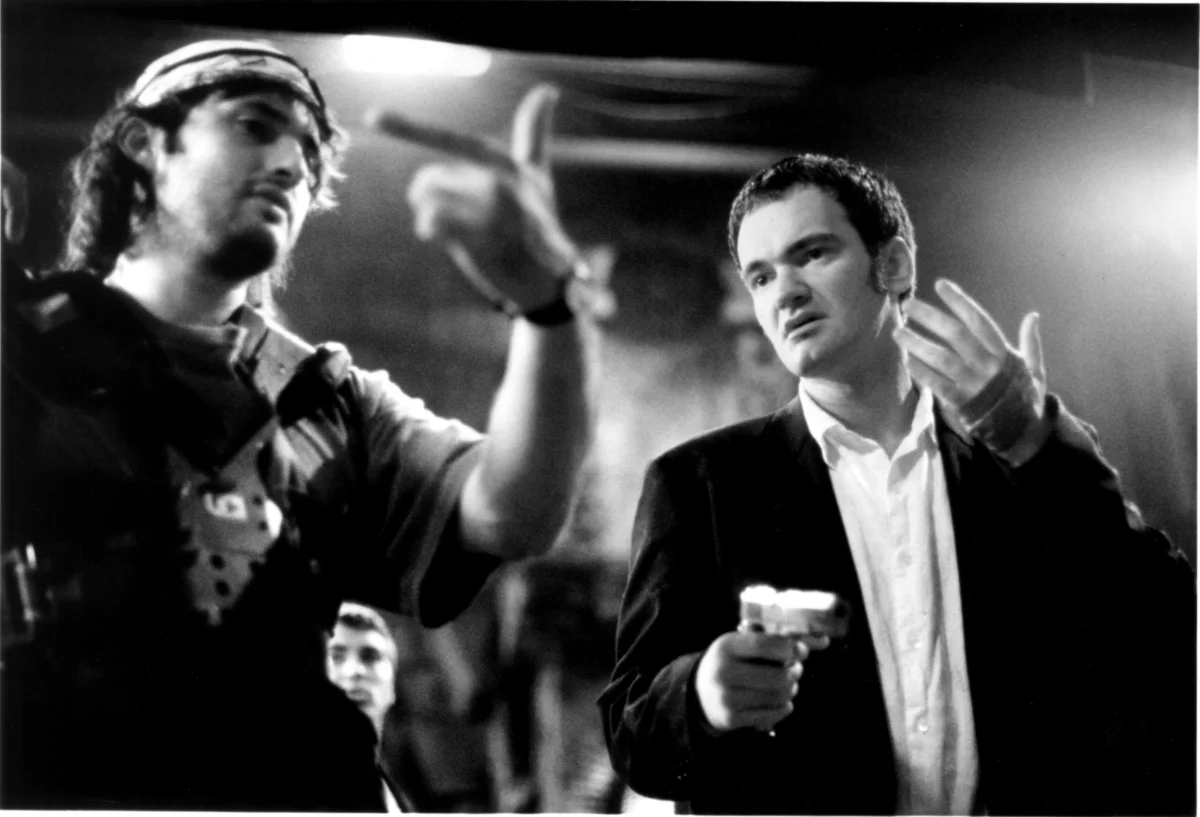
Thirty years after its initial conception and nearly three decades since its theatrical release, Robert Rodriguez’s From Dusk Till Dawn remains a definitive cult classic of the 1990s. The film, a violent, high-octane collision between a crime thriller and a supernatural creature feature, stands as a testament to the creative synergy between two of cinema’s most idiosyncratic voices: Robert Rodriguez and Quentin Tarantino.
Following a special 30th-anniversary screening at the Academy Museum of Motion Pictures this past Friday, director Robert Rodriguez pulled back the curtain on the film’s chaotic production history. His insights revealed a fascinating narrative of "stolen" monologues, shifting industry perceptions, and the creative compromises that ultimately forged one of the most unpredictable genre-blending experiments in modern film history.
The Genesis of a Cult Classic
From Dusk Till Dawn holds a unique place in the annals of Quentin Tarantino’s career. It remains the final feature film based on a Tarantino screenplay that the auteur did not direct himself. However, its path to the screen was far from linear. In the early 1990s, the KNB EFX Group—the legendary makeup effects powerhouse founded by Robert Kurtzman, Howard Berger, and Greg Nicotero—approached a pre-fame Tarantino to write a script that would serve as a showcase for their practical creature effects.
This was Tarantino’s first professional screenwriting assignment, penned well before the meteoric rise of Reservoir Dogs (1992) or the pop-culture explosion of Pulp Fiction (1994). At the time, the project was stalled, languishing in developmental limbo as industry executives struggled to reconcile the script’s bifurcated nature: a hard-boiled kidnapping drama that abruptly pivoted into a gore-drenched vampire massacre.

"Quentin loved the characters of the brothers so much, he spent half the script with them before even getting to the bar," Rodriguez explained to the audience at the Academy Museum. "People would look at it and say, ‘This is like two movies in one. It doesn’t make any sense. This switches gears so late in the story.’ But that’s exactly what we liked about it."
A Stolen Monologue and the ‘Pulp’ Connection
Perhaps the most startling revelation from the retrospective is the origin of one of cinema’s most famous speeches. The biblical Ezekiel 25:17 monologue, delivered with terrifying precision by Samuel L. Jackson in Pulp Fiction, was originally written for the character of Jacob, the grieving minister played by Harvey Keitel in From Dusk Till Dawn.
"Quentin was starting to steal from it because it wasn’t being made," Rodriguez joked during the panel. "In Pulp Fiction, the Ezekiel speech that Sam Jackson says was originally spoken by Harvey Keitel’s character in Dusk. He was already starting to pick the bones of his own script."
The irony is profound: had From Dusk Till Dawn been greenlit first, the image of Jules Winnfield reciting scripture before a hit would not exist. Instead, the monologue would have been part of a desperate, blood-soaked confrontation inside a Mexican bar. The massive success of Pulp Fiction eventually changed the industry’s tune; suddenly, the "two-movies-in-one" structure of Dusk—previously seen as a fatal flaw—was rebranded as "brilliant" and "innovative."

Chronology of a Production Split
The production of From Dusk Till Dawn in the summer of 1995 was as unconventional as the script itself. To manage the technical complexity of the film, Rodriguez made the radical decision to shoot the second half of the movie—the vampire-infested bar scenes—before the first.
"We couldn’t film the outside section of the movie right away," Rodriguez noted. "The very first day of shooting was Quentin and George Clooney walking into the bar. That also helps create this feeling of a disjointed two halves, because we literally shot the second half first before we went outside to film the opening sequence."
This reverse-chronology, coupled with the tonal shift, resulted in a film that felt like a fever dream. The production was a masterclass in independent filmmaking ingenuity, with Rodriguez and his team working under immense pressure to bring the KNB-designed creatures to life.
The Rodriguez Touch: Aztec Myths and Snake Dances
While Tarantino provided the foundation, Rodriguez was responsible for several of the film’s most iconic elements. The character of Santanico Pandemonium, the mesmerizing vampire queen played by Salma Hayek, was an invention of the director’s desire to ground the film in regional folklore.

"There was a vampire called ‘Blonde Death’ that Quentin had always imagined Madonna playing," Rodriguez shared. "I said, ‘Well, they’re in Mexico, so it should be a Mexican character. What about Salma Hayek?’ Quentin had just met her on Desperado, so he said, ‘Oh yeah, I’ll rewrite the name for her.’"
Tarantino, ever the cinephile, named the character after a Mexican horror movie he recalled from his days working at the Video Archives store. Rodriguez further elevated the role by conceptualizing her legendary, hypnotic snake dance. He also shifted the film’s mythology, moving away from standard European-style vampires toward the concept of ancient, Aztec-linked entities.
"Originally in the script, they were just common vampires," Rodriguez explained. "I felt that we could bring more of an Aztec culture to it. That last shot in the film, I just made up that Aztec temple. Quentin thought it was cool. It added the idea that over time, they had turned this ancient site into a bar."
Missed Opportunities: The 3D Vision
One of the most ambitious ideas for the film never reached fruition: Rodriguez had originally intended for the vampire half of the movie to be filmed in 3D.

"When they got to the bar, you were going to put on your glasses," he revealed. "That’s why the second half is still designed with everything flying into the camera. But I saw how archaic the old 3D film cameras were in the ’90s. It was going to be impossible to shoot with them." While he would eventually conquer the 3D medium with Spy Kids 3-D and Alita: Battle Angel, the technical limitations of 1995 forced him to abandon the gimmick for Dusk.
The ZZ Top Collaboration: A Masterclass in Cool
The film’s aesthetic was rounded out by a stellar soundtrack, headlined by the legendary ZZ Top. The band’s contribution, "She’s Just Killing Me," came about through a famously idiosyncratic correspondence between Rodriguez and frontman Billy F. Gibbons.
In a letter that has since become the stuff of legend, Gibbons agreed to the collaboration with a style that matched the film’s own "cool" factor: "Hey now, brother man. The answer to your query is whoa. I’d be delighted to provide you and Senor Tarantino with a killer diller of an original Top… I’ll send up a smoke signal upon completion of the composition."
Implications and Legacy
The success of From Dusk Till Dawn solidified the creative partnership between Rodriguez and Tarantino, who had become fast friends on the film festival circuit after the debuts of El Mariachi and Reservoir Dogs. Their bond led to further collaborations, including Desperado and the anthology film Four Rooms.

Looking back, the film serves as a vital bridge in 90s independent cinema. It demonstrated that a film could be simultaneously high-brow in its dialogue and low-brow in its thrills. The "stealing" of the Ezekiel speech, the last-minute rewriting of characters, and the reverse-order shooting schedule were not just production mishaps—they were the crucible in which the film’s cult status was forged.
For modern filmmakers, From Dusk Till Dawn remains a lesson in the power of creative flexibility. It proves that even when a project is rejected for its "disjointed" nature, a strong enough voice—and the right collaborators—can turn a mess into a masterpiece. As Rodriguez noted at the museum, the industry’s eventual embrace of the film’s "two-in-one" structure paved the way for more experimental, genre-defying narratives in the decades that followed.
Thirty years later, as the film is revisited by a new generation of horror and thriller aficionados, it is clear that From Dusk Till Dawn was never meant to be a polished, conventional product. It was meant to be a raw, bloody, and entirely singular ride—a promise that, despite the stolen monologues and the abandoned 3D dreams, it continues to deliver to this day.
 Ammar Sabilarrohman
 Siti Muinah
 Iffa Jayyana
