

By Tim De Chant
Senior Climate Reporter
Main Facts: The $135 Million Injection and the Promise of Super-Hot Rock
In a definitive sign that next-generation renewable energy technologies are capturing the attention of heavy-hitting investors, geothermal startup Mazama Energy announced Thursday that it has successfully closed an oversubscribed $135 million Series B funding round.
The fresh capital injection will be directly deployed to accelerate the company’s pioneering work in developing horizontal wells in "super-hot rocks"—geological formations capable of generating an astonishing 15 megawatts (MW) of electricity per well.
Mazama Energy is carving out a vanguard position in the race to provide reliable, round-the-clock baseload power. As the technology sector scrambles to secure endless streams of electricity to fuel power-hungry artificial intelligence (AI) data centers and other massive industrial loads, enhanced geothermal systems (EGS) are rapidly emerging as the ultimate dark horse of the clean energy transition.
While tech giants and data center developers have traditionally leaned heavily on natural gas and conventional renewables paired with batteries to meet soaring energy demands, Mazama and its peers are proving that heat trapped deep beneath the Earth’s crust can be safely, reliably, and commercially harnessed on a massive scale.
The newly announced Series B round was co-led by Centaurus Capital and Doerr Capital, with significant strategic participation from oil and gas heavyweights ConocoPhillips and Shell Ventures. Furthermore, the round saw strong backing from returning early-stage investors, including Khosla Ventures (which originally incubated the startup) and Gates Frontier. New institutional and philanthropic participants joining the syndicate included SiteGround Capital, H. Barton Asset Management, and the Jeffrey and Marieke Rothschild Foundation.
Chronology: From Incubation to Massive Resource Revisions
To understand Mazama Energy’s meteoric rise, one must trace its trajectory from an experimental concept incubated within Khosla Ventures to a commercial-scale player backed by some of the most prominent venture capital funds and energy conglomerates in the world.
- Early Incubation & Foundation: Mazama was spun up inside Khosla Ventures, focusing on advanced geothermal extraction techniques that bypassed the limitations of traditional, geography-restricted hydrothermal resources. By leveraging advancements in horizontal drilling techniques borrowed from the oil and gas sector, the company sought to unlock heat anywhere on Earth.
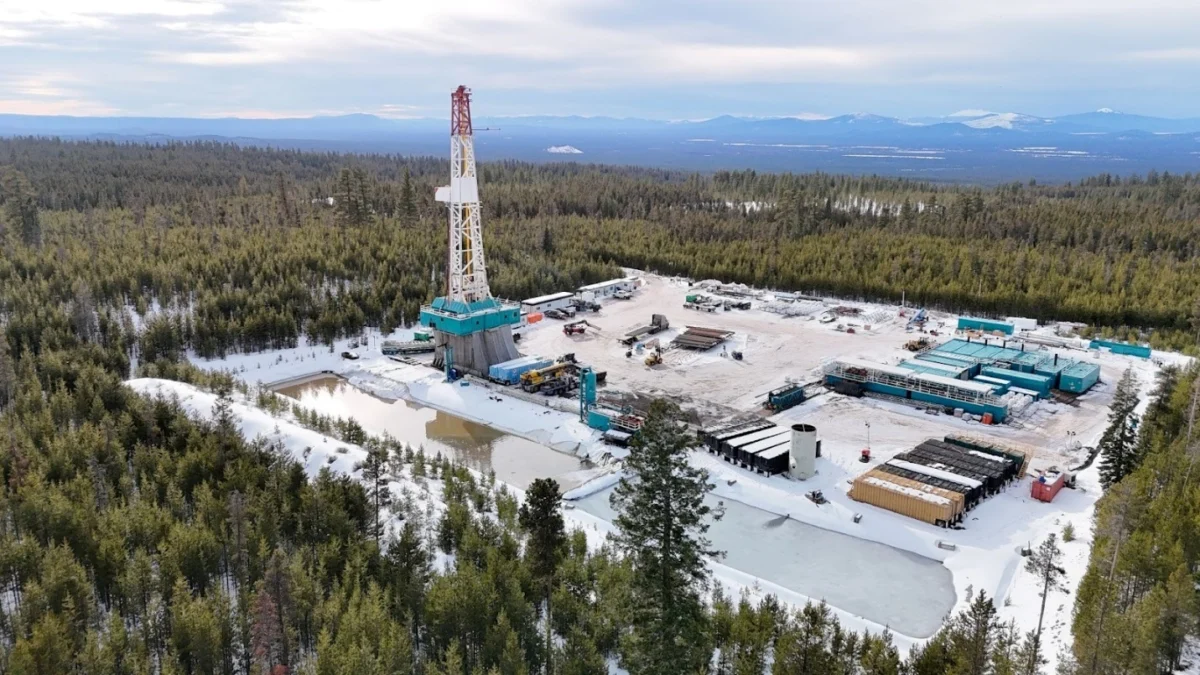
- Late 2024 Milestones: High-profile investors, including Vinod Khosla, began publicly championing Mazama’s flagship site in Oregon. At the time, preliminary geological assessments indicated that the site held the raw potential to produce roughly 5 gigawatts (GW) of electricity.
- Mid-2025 Drilling Breakthroughs: Over the past year, Mazama demonstrated unprecedented drilling speeds and engineering execution. The company successfully drilled past 10,000 feet in a mere 15 days, pushing downward toward target depths of approximately 15,000 feet.
- Late 2025 (Present): Buoyed by operational successes, Mazama revised its estimates drastically upward. The company announced that its premier Oregon site is now calculated to have a theoretical capacity of up to 10 gigawatts of electricity—double its previous estimate. Concurrently, the startup secured land for a second developmental site, proving its pipeline is expanding alongside its technological capabilities.
- The Road to 2030: Mazama plans to begin generating commercial electricity at its inaugural site as early as next year. The company has laid out a measured milestone schedule, aiming to achieve 200 megawatts of active generation capacity at the Oregon location by 2030, on its path toward full-scale resource development.
Supporting Data: The Physics and Economics of Supercritical Fluids
The secret behind Mazama Energy’s high valuations and massive power outputs lies in the physics of extreme depths and supercritical fluids.
Traditional geothermal energy has historically relied on naturally occurring hydrothermal pockets—rare locations where water, heat, and permeable rock naturally converge near the Earth’s surface. These limitations confined commercial geothermal to specific geographic areas, predominantly along tectonic plate boundaries like the Pacific Ring of Fire.
Enhanced geothermal systems, however, create artificial reservoirs in dry, hot rock by injecting fluid to fracture the subterranean formations. Mazama is taking this concept a step further by chasing super-hot rock (SHR).
The Power of Supercritical States
- Extreme Depth: Mazama’s rigs are engineered to plunge roughly 15,000 feet (nearly 3 miles) into the Earth’s crust.
- Blistering Temperatures: At these depths, ambient rock temperatures reach a scorching 750°F (400°C).
- Supercritical Transformation: When water is injected down to these depths under high pressures, it crosses the thermodynamic threshold into a "supercritical" state. In this phase, the fluid is neither entirely a liquid nor a gas.
- Amplified Energy Absorption: A supercritical fluid possesses the density of a liquid combined with the viscosity of a gas. This unique state allows it to absorb thermal energy far more efficiently than ordinary steam. According to company specifications, this enables each Mazama well to produce up to 10 times more power than traditional geothermal technologies, clocking in at an impressive 15 megawatts per well.
Global Resource Potential
The macroeconomic implications of tapping super-hot rock are staggering. According to comprehensive analyses by the University of Twente and the Clean Air Task Force (CATF), successfully commercializing and harnessing just 1% of the super-hot rock available worldwide could unlock more than 63 terawatts (TW) of clean, continuous electricity. To put that in perspective, 63 terawatts is many times greater than the total current electricity consumption of the entire global human population.
Official Responses and Strategic Backing
The composition of Mazama Energy’s Series B investor syndicate tells a compelling story about the convergence of Silicon Valley venture capital, climate philanthropy, and traditional fossil fuel giants pivoting toward the future of energy.
The inclusion of energy majors like ConocoPhillips and Shell Ventures highlights a broader industry trend: oil and gas companies possess the exact subsurface engineering expertise, drilling rigs, seismic imaging tools, and workforce skill sets required to execute deep-earth geothermal projects. By investing in Mazama, these legacy energy players are hedging their bets and securing a foothold in a clean energy market that utilizes their core competencies.
At the same time, returning investors like Khosla Ventures and Gates Frontier emphasize the moral and environmental imperative of establishing firm, 24/7 zero-carbon power sources. Vinod Khosla, founder of Khosla Ventures, has long maintained that deep geothermal energy represents one of the few scalable pathways capable of displacing fossil fuels entirely without relying on massive, land-intensive battery storage arrays.
The addition of specialized institutional investors—such as Centaurus Capital, Doerr Capital, SiteGround Capital, H. Barton Asset Management, and the Jeffrey and Marieke Rothschild Foundation—demonstrates a broadening financial consensus. These entities recognize that as global electricity demand skyrockets due to the electrification of transport, industrial manufacturing, and the relentless expansion of AI computational infrastructure, technologies capable of delivering uninterrupted baseload power will command immense market value.
Implications: Powering the AI Boom and Transforming the Grid
Mazama Energy’s technological breakthroughs and successful capital raise carry profound implications for the future of global energy markets, climate policy, and the tech industry.
1. Feeding the AI Data Center Beast
Artificial intelligence and cloud computing have created an unprecedented surge in electricity demand. Modern AI data centers require continuous, uninterrupted power (often referred to as 24/7/365 carbon-free energy). Solar and wind farms, while vital, are intermittent and require extensive battery storage to bridge generation gaps. Natural gas has frequently been tapped as a stopgap to prevent grid destabilization, drawing criticism from climate advocates. Enhanced geothermal offers an ideal alternative: a clean, firm power source that runs continuously, rain or shine, day or night, directly addressing the energy needs of data center operators without adding carbon emissions.
2. A Paradigm Shift for the Geothermal Industry
For decades, geothermal was viewed as a niche energy source plagued by high upfront exploration risks and geographic constraints. By proving it can drill deep, fast, and effectively anywhere through the application of advanced oil and gas extraction techniques, Mazama is democratizing geothermal energy. If Mazama and its peers can successfully prove out their commercial models in Oregon and beyond, the total addressable market for geothermal will expand from a few localized regions to a truly global asset class.
3. Engineering Challenges and the Path to 2030
Despite the boundless optimism surrounding super-hot rock, significant hurdles remain. Drilling at 15,000 feet into 750°F rock introduces severe material science challenges. Downhole tools, drill bits, cements, and casing materials must withstand corrosive chemical environments, extreme pressures, and blistering heat without failing. Mazama’s ability to scale its operations, keep drilling times short, and manage subsurface risks over the next five years will serve as a bellwether for the entire EGS sector.
As Mazama moves toward its target of generating commercial electricity next year and scaling its flagship Oregon asset to 200 megawatts by 2030, the world will be watching closely. Should the startup deliver on its ambitious promises, it will not only validate a $135 million bet by top-tier investors but fundamentally rewrite the playbook for how humanity powers its future.
Tim De Chant is a senior climate reporter at TechCrunch. He holds a PhD in environmental science, policy, and management from the University of California, Berkeley, and lectures in MIT’s Graduate Program in Science Writing. You can contact Tim by emailing [email protected].
 Asep Darmawan
 Siti Muinah
 Ali Ikhwan
