

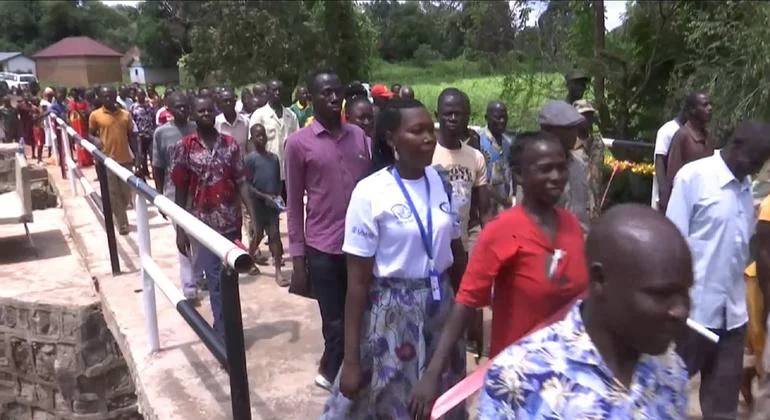
In an era of interconnected global challenges, the United Nations remains at the forefront of coordinating humanitarian intervention, fostering democratic stability, and championing environmental consciousness. This week’s developments range from the urgent health imperatives in Central Africa and the tragic consequences of conflict in Yemen, to the celebration of democratic milestones in Colombia and a bold new grassroots climate initiative in Japan.
I. Public Health: Strengthening the Perimeter Against Ebola
The Escalating Crisis in the Democratic Republic of the Congo (DRC)
Since its declaration in May, the current Ebola outbreak in the Democratic Republic of the Congo has rapidly evolved into a significant public health emergency. With more than 1,000 confirmed infections and a death toll approaching 300, the virus continues to place an immense strain on local infrastructure and regional stability.
Strategic Funding and Regional Surveillance
On Thursday, UN Emergency Relief Coordinator Tom Fletcher announced a vital injection of funding via the UN Central Emergency Response Fund (CERF). This financial lifeline is not merely for the epicenter of the outbreak but serves as a strategic investment in the safety of neighboring nations.
The funding is specifically earmarked to fortify surveillance, laboratory diagnostic capacity, case management, and rigorous infection prevention protocols in Burundi and South Sudan. These nations, due to their proximity and fluid cross-border movement, are at a high risk of transmission. By establishing a "cordon sanitaire" of medical preparedness, the UN aims to prevent a localized epidemic from spiraling into a regional catastrophe.
The Humanitarian Toll and Economic Ripple Effects
Inside the DRC, the impact is multi-dimensional. Humanitarian partners have provided food assistance to over 51,000 individuals, but the containment measures—while necessary—have inadvertently disrupted local trade networks. This has led to a scarcity of goods and a sharp, often debilitating, rise in food prices in affected provinces. While the World Health Organization (WHO) and the Africa Centres for Disease Control (CDC) have successfully expanded laboratory capabilities, the UN has issued a clarion call for increased donor support. The humanitarian objective is clear: to ensure that life-saving medical care and basic sustenance remain available even as containment protocols tighten.
II. Conflict’s Deadly Legacy: UNICEF Mourns Children in Yemen
The Tragic Incident at Raybi
Tragedy struck the village of Raybi in Yemen this past week, where five children were killed and seven others suffered severe injuries due to an explosive ordnance. UNICEF, the UN agency dedicated to child rights, expressed profound condolences, underscoring the horrific reality that the most vulnerable populations often pay the highest price for ongoing conflict.
The Hidden Danger: Remnants of War
The incident serves as a grim reminder of the "deadly remnants of conflict." Children displaced by war are at a statistically higher risk of encountering landmines, unexploded ordnance, and other hazardous debris. These remnants do not cease their danger when a ceasefire is called or a battle ends; they remain buried, waiting for a misplaced step.
A Call for Protection and Education
UNICEF has intensified its advocacy for stronger, systematic efforts to protect children. The agency’s strategy involves three pillars:
- Rapid Clearance: Expedited removal of explosive remnants of war in civilian-frequented areas.
- Education: Expanding mine-risk education programs to teach children how to recognize and avoid suspicious objects.
- Survivor Support: Sustained, long-term psychological and physical support for the children and families impacted by these incidents.
"Every child deserves to grow up safe from harm," the UNICEF statement read, emphasizing that the right to play and exist without fear is a fundamental human entitlement, currently violated by the presence of these lethal, forgotten weapons.
III. Democratic Resilience: Colombia’s Peaceful Transition
A Commendation from the Secretary-General
UN Secretary-General António Guterres has formally commended the people of Colombia for the peaceful and orderly conduct of their recent presidential elections. Following a highly contentious campaign period—characterized by initial disputes over results by the incumbent administration—the nation navigated a delicate political moment with maturity and civic engagement.
The Path Toward Reconciliation
The concession of candidate Ivan Cepeda to Abelardo de la Espriella, while a political event, was noted for its significance in maintaining the constitutional order. Mr. Guterres highlighted the impressive voter turnout during the second round of voting, viewing it as a testament to the Colombian public’s commitment to their democratic institutions.
UN Commitment to the Incoming Administration
The United Nations has signaled its readiness to collaborate with the incoming administration. The organization aims to continue its support for nationally led efforts focused on:
- Peace Consolidation: Maintaining the integrity of the peace agreements.
- Security: Addressing localized violence and institutionalizing safety.
- Sustainable Development: Ensuring that prosperity is shared equitably among the populace.
UN Spokesperson Stéphane Dujarric stated on Thursday that the Secretary-General remains optimistic that all political actors in Colombia will work together to rebuild trust across the social and political spectrum, signaling a new chapter of governance focused on national unity.
IV. Climate Advocacy: Japan’s "89 Percent" Initiative
Transforming Silence into Action
In an innovative approach to climate activism, the United Nations Information Centre (UNIC) in Tokyo, in collaboration with 136 local media partners, has launched a campaign titled: “I am one of the 89% who want to stop global warming.”
The initiative stems from a profound psychological insight: global surveys indicate that 89 percent of the world’s population desires more ambitious climate action from their governments. However, a "pluralistic ignorance" exists, where the majority erroneously believe they are in the minority. This campaign aims to break that cycle by proving that support for climate action is not a fringe interest, but the mainstream consensus.
Supporting Figures and Cultural Influence
The campaign utilizes the influence of prominent public figures to normalize the conversation around climate change. Among the 30-plus contributors are:
- MIDORI: Classical violinist and UN Messenger of Peace.
- Anne Watanabe: Renowned actress and WFP Goodwill Ambassador.
- Naomi Kawase: UNESCO Goodwill Ambassador and award-winning film director.
Environmental Urgency in the Japanese Context
The timing of the campaign is critical. Japan is currently enduring an exceptionally hot summer, with temperatures consistently breaching the 35°C mark. These meteorological extremes serve as a physical manifestation of the climate crisis, lending urgency to the initiative. By aligning with Secretary-General Guterres’s recent warnings regarding the fossil fuel origins of the climate and energy crises, the campaign encourages individuals to shed their reticence and join a collective, vocal movement.
Strategic Goals (2025–2026)
Running through the end of 2026, the project is designed to:
- Amplify Voices: Utilize social media and digital platforms to share personal commitments to climate action.
- Build Influence: Provide a unified platform that policymakers cannot ignore.
- Institutionalize Awareness: Embed climate consciousness into the daily discourse of Japanese society.
V. Implications: The Path Forward
The events of this week illustrate that whether in the form of a microscopic virus in the DRC, a hidden explosive in Yemen, a democratic ballot in Colombia, or a thermometer reading in Japan, the global community is intrinsically linked by the consequences of its choices.
The Ebola outbreak demands not just charity, but a coordinated regional surveillance infrastructure. The tragedy in Yemen serves as a harrowing reminder that the cessation of hostilities is merely the first step toward true security for children. The peaceful election in Colombia highlights that democratic trust, while fragile, can be maintained through institutional adherence and citizen participation. Finally, the Japanese climate campaign demonstrates that when individual concerns are aggregated, they possess the power to shift national and global policy.
As the UN continues its work across these varied theaters, the recurring theme remains clear: localized action, when supported by global cooperation and consistent funding, is the only viable path to navigating the complexities of the 21st century. The international community’s ability to remain responsive, rather than reactive, will determine the success of these ongoing efforts in the months and years to come.
 Lina Hope
 Layla Zulfa
