

By Global Affairs Correspondent
The global promise to achieve gender equality by 2030 is rapidly slipping out of reach, according to the Gender Snapshot 2026, a sobering new report released by the United Nations. The findings present a stark indictment of the international community’s progress, revealing that not a single indicator for Sustainable Development Goal 5 (SDG 5)—which mandates the achievement of gender equality and the empowerment of all women and girls—is currently on track to meet its 2030 deadline.
From the halls of legislative power to the sanctity of private homes, the report maps a landscape of systemic exclusion, pervasive violence, and a concerning retreat in political will. As the deadline approaches, the data suggests that the dream of a gender-equal world is not merely delayed; it is being systematically dismantled by underfunding, political apathy, and the persistence of archaic power structures.
The State of Play: A Systemic Failure
The Gender Snapshot 2026 serves as a grim progress report on the health of global democracy. SDG 5 encompasses a broad spectrum of human rights, ranging from the elimination of gender-based violence and harmful practices like forced marriage and female genital mutilation (FGM), to the assurance of equal economic rights and leadership opportunities.
The data confirms that in every one of these metrics, the world is failing. There is not a single nation on Earth that has achieved full legal equality between genders. Furthermore, in more than half of the 131 countries analyzed, significant legal gaps remain that effectively relegate women to second-class status, denying them the same protections and opportunities as their male counterparts.
A Chronology of Stagnation
- 2015: The UN adopts the 2030 Agenda for Sustainable Development, setting the goal of gender equality as a cornerstone of global stability.
- 2021: Funding for gender equality initiatives reaches a peak, creating a sense of momentum that would soon prove fragile.
- 2023–2024: A period of global fiscal tightening sees the first major waves of budget cuts to institutional gender mechanisms.
- 2026: The current Gender Snapshot confirms that the previous years of "lip service" have failed to translate into structural change, marking a definitive point of crisis for the 2030 Agenda.
The Architecture of Exclusion: Who Holds the Power?
Perhaps the most visible failure of the current era is the persistent concentration of political and economic power in the hands of men. The report paints a picture of a global "boys’ club" that is proving remarkably resistant to reform.
The Political Barrier
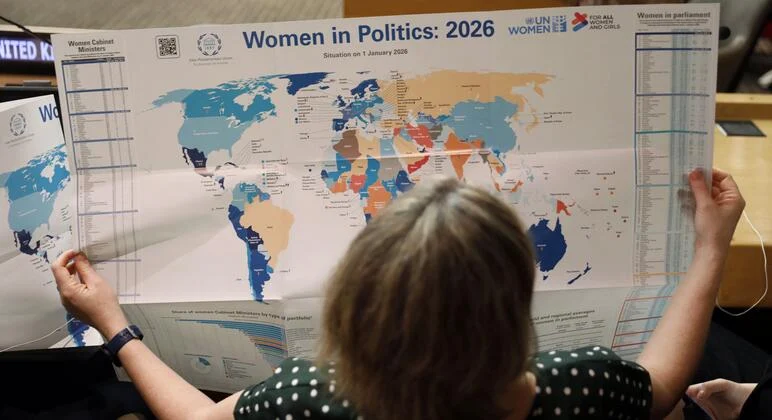
Currently, six out of every seven countries globally are led by men. This is not merely a reflection of voter choice, but a product of systemic barriers that filter out female candidates long before a ballot is cast. The cost of running for political office is staggering, often exceeding 100 times the average per capita income of a nation. This financial gatekeeping effectively bars the vast majority of women from entering the race.
Even for those who overcome the financial hurdle, the environment is increasingly hostile. In several nations, up to 80 percent of women seeking office report experiencing some form of violence in public life—ranging from harassment and threats to physical assault.
The "Glass Walls" of Governance
Even when women succeed in breaking into government, they are frequently steered toward "social" or "humanitarian" portfolios, while the core pillars of state power remain male-dominated. The report notes that:
- Nearly 90% of defense ministers globally are men.
- Over 80% of finance ministers are men.
This gender segregation in policy-making ensures that the decisions shaping national security, economic policy, and international trade remain under the exclusive purview of men, thereby marginalizing female perspectives on the issues that define the modern state.
The Corporate and Legal Void
The trend of male-dominated leadership extends far beyond government. Women occupy a meager 6 percent of CEO positions globally. In the judiciary, they lead fewer than 20 percent of the world’s highest courts. This concentration of power in business and law means that the rules governing employment, property rights, and justice systems are written primarily by men, for men.
Violence and Discrimination: The Human Cost
Beyond the boardrooms and parliaments, the Gender Snapshot 2026 highlights a devastating reality for millions of women and girls: the normalization of violence.
A Pandemic of Violence
The statistics are harrowing. Globally, nearly one in three women has been a victim of intimate partner or sexual violence. In the last 12 months alone, an estimated 316 million women have suffered physical or sexual abuse at the hands of an intimate partner. This is not just a statistical outlier; it is a global health and human rights emergency.
Harmful Traditional Practices
Despite decades of international advocacy, archaic practices remain entrenched:
- Forced Marriage: Nearly one in five girls is married before the age of 18, stripping them of their childhood, their education, and their autonomy.
- Female Genital Mutilation: An estimated 230 million women and girls alive today are survivors of FGM, a practice that leaves both physical and psychological scars for a lifetime.
The Economic Disenfranchisement
The report highlights that the lack of legal equality is not just a social issue—it is an economic one. Nearly two-thirds of countries offer little to no legal protection for women’s land rights. Without the ability to own land or secure property, women are denied the foundational collateral needed for economic independence. Fewer than 30 percent of countries have implemented laws that ensure joint land registration or the inclusion of women in land governance, effectively tethering women’s economic fate to their male relatives.
The Retreat of Priority: A Funding Crisis
The most alarming aspect of the 2026 report is the revelation that the international community is actively stepping back from its commitments. In the face of broader economic volatility, gender equality has been downgraded from a policy priority to an optional expense.
Funding for gender equality programs has plummeted to its lowest level since 2021. This reduction in resources is not occurring in a vacuum; it is accompanied by the systematic weakening of the very institutions designed to protect women:
- Budgetary Cuts: One in four institutional mechanisms tasked with promoting gender equality have seen their operating budgets slashed in the last two years.
- Institutional Erosion: One in three such institutions have seen their legal or political power stripped away.
- Organizational Retreat: An astonishing 42 percent of UN entities have reported a weakening of their own internal gender equality efforts.
Official Responses and the Path Forward
The findings have sent shockwaves through the UN system, prompting a call for an immediate reassessment of global priorities.
Li Junhua, UN Under-Secretary-General for Economic and Social Affairs, provided a sobering perspective on the findings. "What the Gender Snapshot 2026 shows is that this is not inevitable," he stated. "It is the result of choices, made visible through data. Investing in gender equality, institutions, and the statistical systems that hold them to account is not a cost. It is the fastest route back to the 2030 Agenda’s promise of equal power for all."
Implications for Democracy
The implications of the current trajectory are profound. The report explicitly warns that the democratic project itself is at risk. A nation cannot claim to be a functional democracy if it denies half of its population an equal voice in leadership. When women are excluded from the decision-making process, human rights protections are weakened, and the resulting policies often fail to account for the needs of the entire citizenry.
The Gender Snapshot 2026 is a final warning. It clarifies that the status quo is not sustainable and that the failure to reach the 2030 goals will have generational consequences. The data reveals a clear path: reversing these trends requires more than rhetoric; it requires the restoration of funding, the strengthening of legal protections for land and property, and, crucially, a radical transformation of the political landscape to ensure that power is no longer the exclusive preserve of men.
As the international community reflects on these findings, the question remains whether governments have the political courage to prioritize equality over short-term political convenience. The data has been delivered; the choice, as UN officials emphasize, rests with the leaders of the world.
 Lina Hope
 Asro
Asro
 Layla Zulfa
