

Main Facts
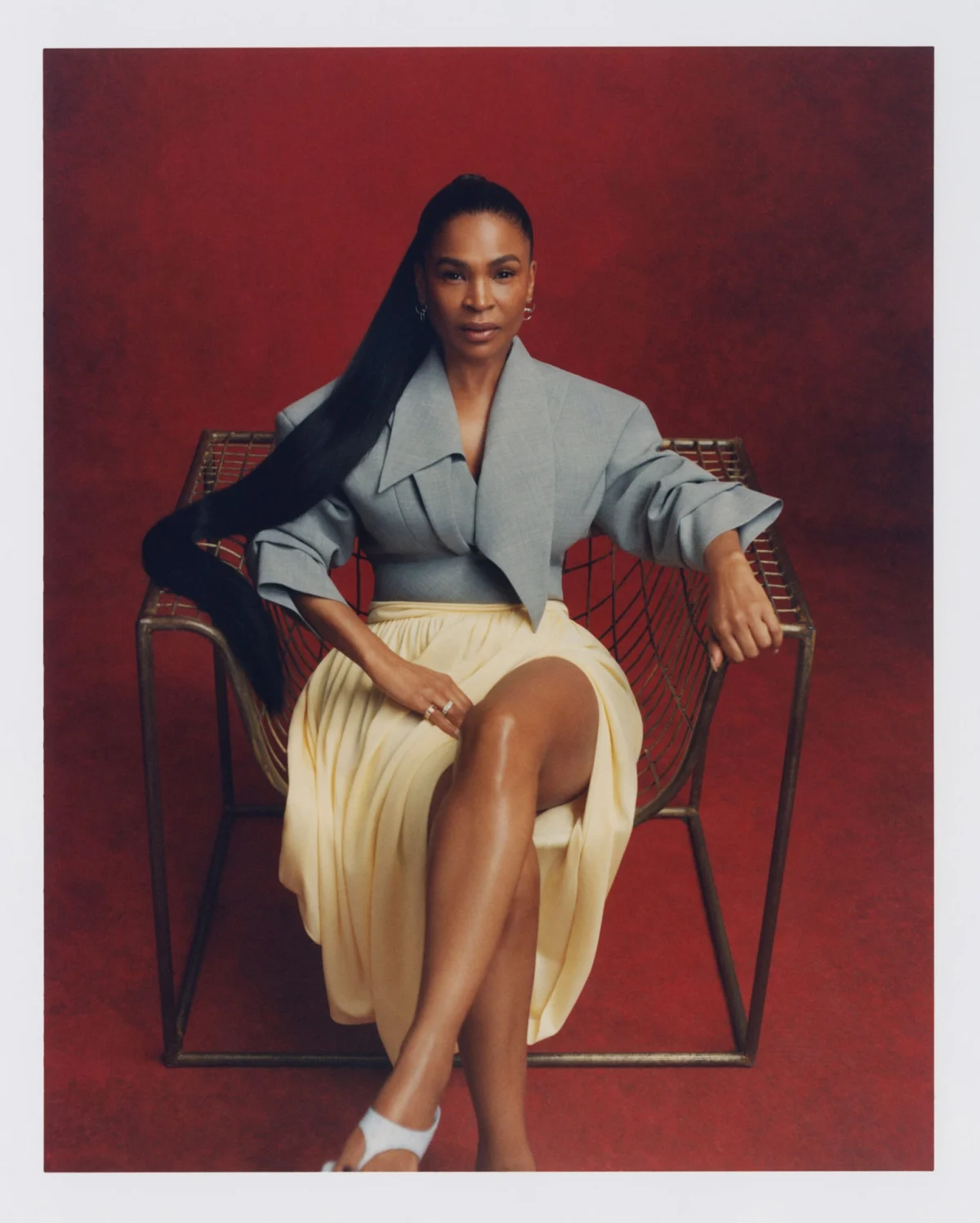
Nia Long—an enduring icon of American cinema and television, revered across generations as the epitome of ’90s cinematic excellence—is currently stepping into one of the most creatively expansive chapters of her illustrious career. At 55, the celebrated actress is drawing widespread early acclaim for her tour-de-force performance as matriarch Katherine Jackson in the upcoming biographical drama Michael, slated for release in April.
Beyond her monumental work in the Michael Jackson biopic, Long is expanding her creative footprint behind and in front of the camera. She recently wrapped production on Don’t Ever Wonder, an honest, romantic dramedy directed by Eugene Ashe that reunites her with Love Jones co-star Larenz Tate. The film explores the delicate, funny, and heartbreaking terrain of empty-nesters navigating second acts in life and romance.

Simultaneously, Long is putting the finishing touches on a deeply personal, two-year-in-the-making memoir. Reflecting on her journey from a childhood in Iowa City and Brooklyn to becoming a defining face of Black Hollywood—and a proud brand ambassador for Estée Lauder—Long approaches her 50s with a rare mixture of hard-won clarity, unshakeable self-possession, and an unwavering commitment to personal freedom.
Chronology: A Life Shaped by Transitions and Milestones
To understand Nia Long’s current creative renaissance, one must trace a trajectory defined by both cultural permanence and personal reinvention:

- Early Childhood: Born in Brooklyn into a vibrant, predominantly Black Trinidadian household, Long’s early worldview was shaped by community and cultural immersion. Her formative years temporarily shifted when she spent six years living in Iowa City while her mother attended university—an isolating experience as one of the few Black girls in the Midwest that profoundly impacted her early relationship with race and beauty standards.
- The 1990s Breakthrough: Long cemented her status as a cultural touchstone through unforgettable roles in pop culture touchstones: playing Lisa Wilkes on The Fresh Prince of Bel-Air, Nina Mosley in Love Jones (1997), and Jordan Armstrong in The Best Man (1999). Her performances established a new benchmark for the Black leading lady.
- 2022 Public Transition: Navigating a high-profile, deeply painful public separation after a 13-year relationship, Long weathered intense media scrutiny with a measured public response, focusing her energy on healthy co-parenting and rigorous self-healing.
- 2024–2026 Artistic Expansion: Marking a prolific period, Long takes on the heavy emotional lifting of portraying Katherine Jackson in the sweeping biopic Michael, reunites with Larenz Tate for Don’t Ever Wonder, and prepares to publish her introspective debut memoir.
Supporting Data and Context
Long’s enduring cultural relevance is backed by both critical longevity and commercial milestones:
- Box Office and Critical Legacy: Over a career spanning more than three decades, Long has anchored multiple commercial hits and cult classics that grossed hundreds of millions of dollars globally, shaping the modern landscape of Black romantic and dramatic cinema.
- Literary Endeavors: Her upcoming memoir, described by the actress as one of the "biggest, bravest, challenging" things she has ever undertaken, draws heavy inspiration from the teachings of her late father, poet Doughtry Long Jr., who passed away in 2020.
- Commercial Partnerships: Long’s partnership with global beauty giant Estée Lauder bridges a powerful historical gap, transforming her personal childhood struggles with representation into a triumphant validation of brown-skinned beauty on a world stage.
- Family Dynamics: As a mother of two sons—her eldest now in his 20s and her youngest at 14—Long balances a demanding global career with a grounded domestic life centered in Los Angeles.
Official Responses and Personal Reflections
Sitting down in a quiet corner of the Chateau Marmont, Long offered candid, unfiltered insights into her philosophy on fame, aging, and grace. Discussing her preparation for Michael, she emphasized the power of emotional restraint and quiet dignity:

"There have been moments in my life where I’ve been required to be more graceful than I’ve ever had to be in the past," Long shared, reflecting on both her role as Katherine Jackson and her personal trials. "And that requires a sense of really being able to dig deep into some sort of self-examination. Like, what do I stand for? What’s important to me, ultimately, regardless of Hollywood, the noise? And number one, for me personally, my children come before anything."
She added a poignant perspective on how she processes life’s turbulence without carrying the burden of past trauma:

"I’m proud of myself for giving so much grace. For being able to say people make mistakes and things happen. It’s life. When the stakes are high, the news is big. I can’t do anything about that, but I don’t have to protect my ego in any of this… You don’t have to respond to the noise with the undercurrent of your own trauma."
Addressing her approach to career longevity and financial independence, Long maintained a practical, grounded outlook:

"The only strategy I have in this game is my bank account. Let’s strategize how we’re going to make money and create generational wealth. That is where I’m strategic… I work hard to make sure that when I represent us, it’s not just someone putting their agenda on me. Whether it’s my hair, my makeup, my wardrobe, my lines."
Implications: Redefining Aging, Beauty, and Freedom in Hollywood
Nia Long’s current trajectory carries significant implications for how society views aging women, Black Hollywood, and the concept of personal autonomy in the public eye.

Dismantling the "Stored in Amber" Trap of Nostalgia
For decades, audiences have frozen Long in the amber of ’90s nostalgia—worshiping her as the platonic ideal of timeless beauty. Yet, at 55, Long actively refuses to mask the biological reality of aging. By speaking openly about hormonal shifts and the natural transformation of the body—all while unapologetically enjoying truffle fries and pasta—she pushes back against the limiting tropes often lobbed at Black women, such as the reductive phrase "Black don’t crack." Instead, she repositions aging not as a decline, but as a liberating evolution of self-possession.
The Evolution of the Black Leading Lady
Long’s career tracks the long-overdue evolution of the Black leading lady in American cinema. From early days where she felt disconnected from mainstream standards of beauty while growing up in Iowa, to becoming the blueprint for a generation of women seeking themselves on screen, Long has consistently demanded authenticity. Her upcoming role in Don’t Ever Wonder further champions narratives tailored for mature Black audiences—stories exploring empty-nested maturity, heartbreak, humor, and complex second acts in love.

A New Blueprint for Freedom
Ultimately, Long’s narrative serves as a masterclass in boundary-setting and emotional sovereignty. Whether recovering from public heartbreak, steering her own creative projects as a producer and writer, or simply looking forward to making homemade pizza with her teenage son, Long defines freedom on her own terms. It is a philosophy that requires no massive stage, no external validation, and no permission from an audience—proving that Nia Long’s most powerful performance is, and always has been, living authentically as herself.
 Asro
Asro
 Suro Senen
 Azzam Bilal Chamdy
