

Main Facts: A Fashion-Forward Spectacle
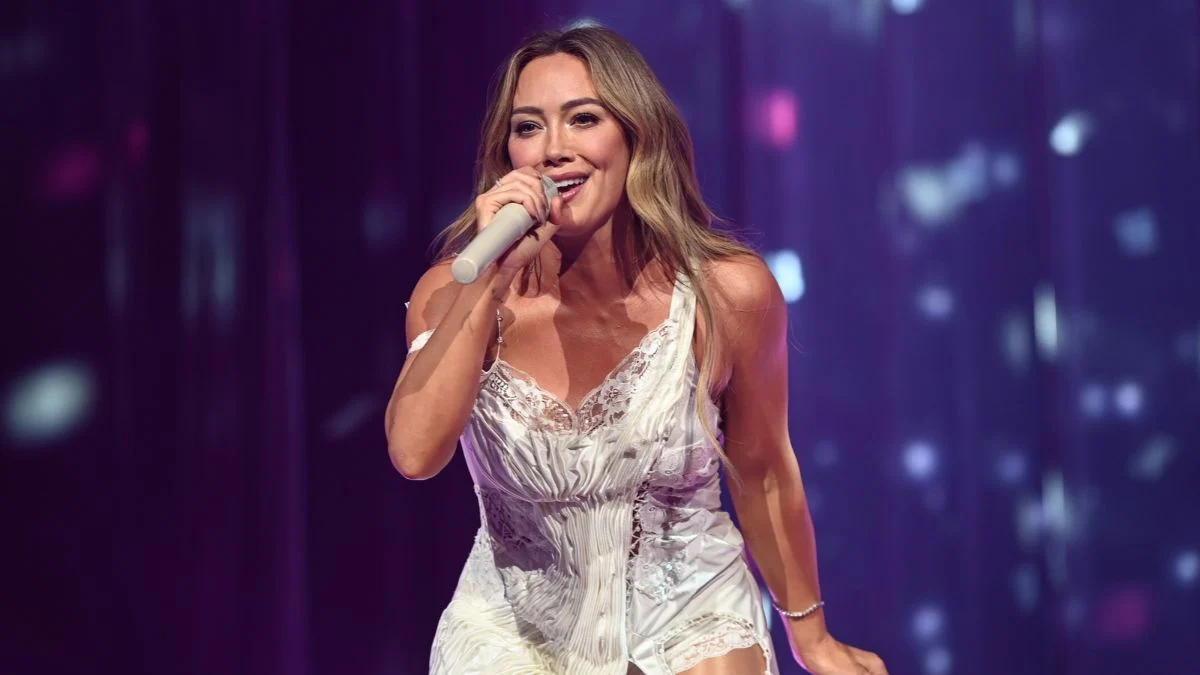
Hilary Duff has long been a fixture in the entertainment industry, but with her latest venture, The Lucky Me Tour, she has firmly cemented her status as a high-fashion icon. The tour, which recently made a highly anticipated stop in London, has become as much a showcase for avant-garde design as it is a musical event. The undisputed highlight of the London leg was a custom, deconstructed micro minidress designed by the rising fashion house Lou de Betoly.
The garment, an architectural feat of white lace and lingerie-inspired construction, challenged traditional stage-wear conventions. Featuring an asymmetrical silhouette that functioned as both a bodysuit and a dramatic, flowing train, the piece perfectly captured the duality of the tour: a balance between raw, performative energy and refined, editorial-grade fashion. By opting for a monochromatic aesthetic, Duff allowed the complex textures of the piece—ranging from delicate lace panels to structural gathered fabric—to take center stage, proving that her personal style evolution is currently at its zenith.
Chronology: A London Wardrobe Retrospective
The London concert was not merely a singular fashion moment; it was a curated narrative of style that unfolded throughout the evening. Duff’s sartorial journey during the show reflected her versatility as both a performer and a style chameleon.
The Opening Act: Shimmering Silver
Duff took to the stage initially in a high-octane shimmering silver minidress adorned with cascading fringe. This choice set a disco-inspired tone for the evening, with the fringe acting as a kinetic element that amplified her dance movements. The reflective nature of the fabric under the arena lighting turned the performer into a beacon of light, signaling an energetic start to the show.
The Transition: Cutouts and Metallic Precision
Mid-set, the aesthetic shifted toward a more modern, structural look. Duff donned a metallic silver dress characterized by intricate, geometric cutout details. This piece signaled a departure from the fluid movement of the fringe and into a more precise, edgy territory. The technical mastery required to create the garment’s negative space highlighted Duff’s commitment to collaborating with designers who push the boundaries of fabric manipulation.
The Climax: The Lou de Betoly Masterpiece
The pinnacle of the night arrived when Duff debuted the custom Lou de Betoly creation. The white ensemble served as a stylistic pivot point, grounding the show in a moment of ethereal elegance. The contrast between the barely-there bodysuit and the voluminous, floor-sweeping train provided a dramatic visual anchor for the performance, transforming the stage into a makeshift runway.
The Descent: Casual Sophistication
As the concert progressed toward its final acts, the wardrobe became increasingly accessible, mirroring the rapport Duff builds with her audience. She transitioned into a pale blue cropped top paired with oversized, cargo-style denim, layered under a sheer white overlay. This look bridged the gap between haute couture and street style. The night concluded with a final, relaxed appearance: a classic graphic white T-shirt and loose-fit blue jeans, a look that felt intimate and grounded, punctuated only by the singer holding a cocktail onstage—a moment of candid connection that underscored the tour’s title, The Lucky Me.
Supporting Data: The Anatomy of a Trend
The Lou de Betoly minidress represents a growing trend in pop-star fashion: the "deconstructed" aesthetic. Stylists are increasingly moving away from traditional gowns in favor of garments that appear to be in a state of flux.
According to fashion industry analysts, the construction of this specific piece is notable for its juxtaposition of "lingerie-inspired" elements—such as thin, delicate straps and fitted bodices—with the ruggedness of asymmetrical, raw-edged textiles. The choice of white is significant in the context of stage design; white reflects the lighting rig’s spectrum more effectively than darker colors, allowing for a broader range of visual effects during the performance.
Furthermore, the integration of the train—a classic red-carpet element—into a performance bodysuit reflects a desire for "theatrical utility." The train adds a sense of grandiosity that is usually reserved for formal wear, yet because it is attached to a high-cut bodysuit, it does not impede the singer’s mobility during high-energy dance numbers. This marriage of form and function is the hallmark of modern pop-star styling, moving away from the "costume" approach of the 2000s toward a more sophisticated, designer-led collaboration.
Official Responses and Stylist Insights
While the singer herself has kept the commentary surrounding her tour wardrobe focused on the experience of performing, her styling team has alluded to a deliberate strategy behind the Lucky Me aesthetic. In brief social media dispatches, members of her creative team have described the tour as a "living mood board."
"Hilary wanted this tour to feel like a visual diary," a representative noted. "Every city brings a new energy, and the wardrobe is designed to reflect that transition. We aren’t just picking outfits; we are picking garments that tell the story of the music. The Lou de Betoly piece, in particular, was about finding that ‘perfect imperfection’—the deconstructed look represents the vulnerability and the power of the songs."
Fashion critics have responded with overwhelming positivity. Vogue contributors and fashion journalists have praised the move away from the overly polished, predictable silhouettes that have defined the post-pandemic concert tour circuit. By embracing riskier, more unconventional shapes, Duff is being heralded for her "fearless" approach to her visual identity.
Implications: The Evolution of Pop-Star Branding
The success of the Lucky Me Tour wardrobe carries significant implications for the intersection of music and fashion.
1. The Rise of the "Designer-Performer" Partnership
Duff’s reliance on designers like Lou de Betoly highlights a shift where the performer is no longer just a "face" for a brand, but a partner in the design process. This symbiotic relationship ensures that the wardrobe is tailored not just to the performer’s measurements, but to the specific choreography and emotional trajectory of the show.
2. Moving Away from Predictability
For years, pop stars were expected to have a "uniform" for their tours—a series of interchangeable, safe outfits that prioritized comfort and brand recognition. Duff’s London wardrobe proves that audiences are hungry for novelty. By rotating through metallic fringe, structural cutouts, and deconstructed lace, Duff keeps the audience engaged on a visual level, ensuring that no two segments of the show feel the same.
3. The Democratization of Luxury
By mixing high-end, custom couture with casual, accessible denim and T-shirts, Duff is masterfully navigating the "high-low" trend. This approach makes the fashion feel attainable and relatable, even when the garments themselves are one-of-a-kind. It reinforces the idea that true style is about the curation of a look, rather than the price tag or the label.
4. A Template for Future Tours
The success of this wardrobe strategy provides a new blueprint for other artists. The "Lucky Me" aesthetic suggests that a tour should be viewed as a seasonal collection. Just as a fashion house launches a spring/summer or fall/winter collection, artists can use their tours to document their evolving taste, their collaborations with emerging talent, and their willingness to experiment with silhouette and proportion.
Conclusion
As The Lucky Me Tour continues its global trajectory, Hilary Duff has proven that she is no longer content with playing it safe. Her London performance was a masterclass in modern stage fashion, blending the theatricality of couture with the intimacy of a concert. Whether she is draped in shimmering fringe or the intricate, deconstructed lace of a Lou de Betoly minidress, Duff is commanding the stage with a renewed sense of confidence. Her wardrobe is a testament to the fact that pop music and high fashion are not disparate worlds, but complementary forces. As she travels to the next city, fans and fashion enthusiasts alike will be watching not just for the setlist, but for the next bold, unpredictable step in her sartorial evolution.
 Neng Nana
 Azzam Bilal Chamdy
 Nana
Nana
