

By Rhea Nayyar
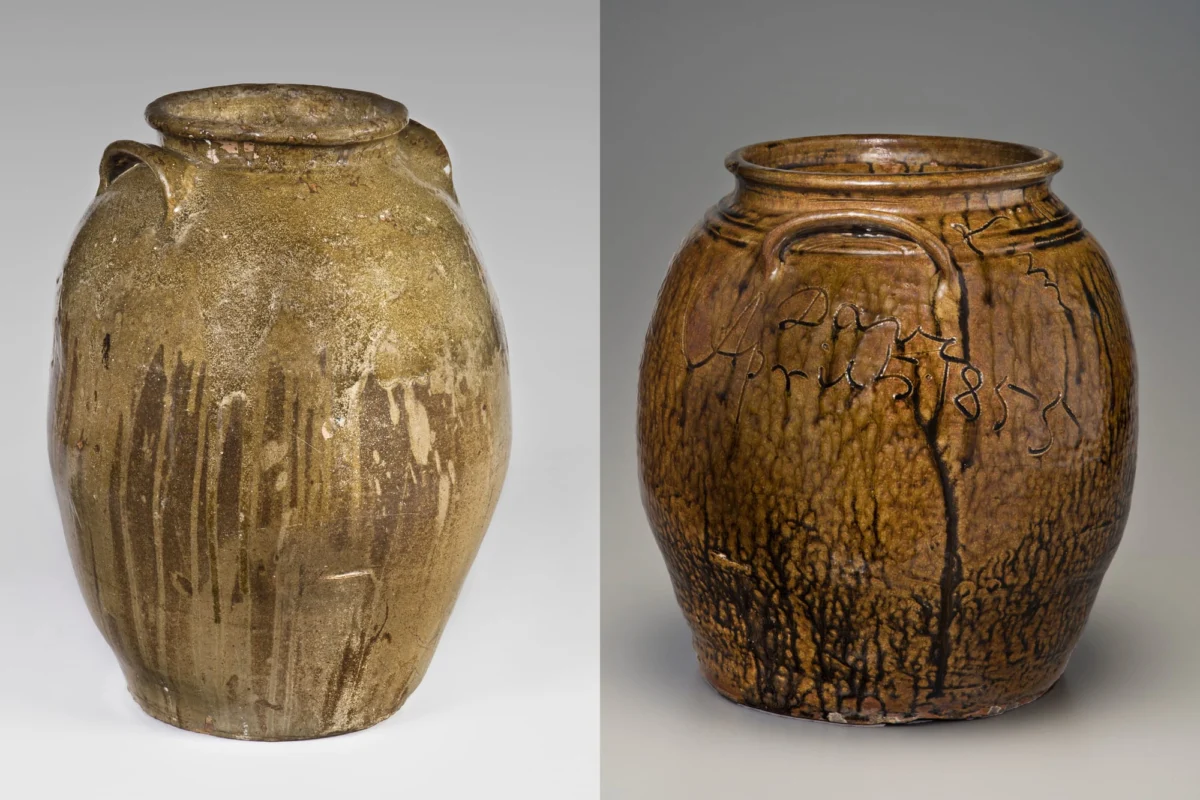
In a powerful acknowledgment of historical injustice and a monumental step toward cultural restitution, institutions across the United States are actively working to right the wrongs of the past. The Milwaukee Art Museum has officially transferred the ownership of two rare, 19th-century stoneware vessels crafted by the legendary enslaved artisan David Drake—widely known as "Dave the Potter"—to his direct descendants.
This landmark ownership transfer, facilitated through an agreement that simultaneously ensures the masterpieces will remain on long-term public display, was swiftly followed by a complementary announcement from a Virginia institution regarding the return of yet another historic Drake vessel. These decisions signal a profound shift in how museums handle works created by enslaved artists, pivoting from mere custodial possession to active acknowledgement of lineage, human rights, and generational equity.
Main Facts: The Legacy of David Drake and Current Restitution
The core of this developing cultural milestone centers on the works of David Drake, an enslaved African American master ceramicist whose output during the antebellum period in Edgefield, South Carolina, remains internationally celebrated. The Milwaukee Art Museum’s recent agreement returned two monumental jars—created circa 1840–1850 and in 1855, respectively—to Drake’s living family members.
Crucially, the restitution arrangement does not mean these treasures will disappear into private collections. Instead, the family has negotiated a long-term loan agreement with the museum, ensuring that the public will still be able to gaze upon these remarkable artifacts and confront the legacy of the artist who made them.
The artifacts themselves are astonishing feats of engineering and artistry. Drake was renowned for throwing massive alkaline-glazed stoneware jars that defied the technical limitations of the era. However, what elevates his work from exceptional craftsmanship to priceless historical testimony is his use of literacy. At a time when the antebellum South strictly criminalized reading and writing for Black individuals, Drake inscribed his pots with his signature, dates, and poignant, often defiant original rhyming couplets.
These inscriptions represent profound acts of resistance. By signing his name and embedding his voice into clay, Drake claimed a humanity and an identity that the slave system sought systematically to erase. The return of these vessels to his descendants bridges a 175-year chasm of displacement, reuniting the physical manifestations of Drake’s genius with the family tree from which he was violently severed.
Chronology: From Edgefield Workshops to Museum Galleries
To understand the weight of these recent repatriations, one must trace the timeline of David Drake’s life, the creation of his masterworks, and their subsequent journey into the modern museum landscape.
1801–1810s: Early Life in South Carolina
David Drake was born into chattel slavery around 1801 on a plantation in South Carolina. While the precise details of his early childhood remain shrouded by the deliberate record-erasure of the slave economy, historical documentation indicates that as a young man, he was brought into the burgeoning industrial landscape of Edgefield District, South Carolina. Edgefield would soon establish itself as the undisputed epicenter of southern ceramic production, driven largely by the labor of enslaved artisans who possessed deep technical expertise in kiln management, wood-firing, and alkaline glazes.
1830s–1850s: The Era of Mastery and Subversive Literacy
During his years working in various Edgefield-area potteries—including operations managed by Harvey Drake and Abner Landrum—Drake honed his craft, becoming a master potter capable of throwing massive storage jars scaling upwards of 40 gallons.
It was also during this period that Drake secretly acquired literacy. This act defied the severe legal frameworks of the antebellum South. Following the Stono Rebellion of 1739, South Carolina enacted the Negro Act of 1740, which progressively codified strict anti-literacy measures. By the 19th century, teaching an enslaved or free Black person to read—or allowing them to possess writing materials—carried draconian punishments, ranging from severe corporal violence to execution.
Despite these terrors, Drake learned to read and write. Beginning around the 1830s, he began incising his pots with personal signatures and short, poetic couplets. These inscriptions not only documented the date and capacity of the vessels but also communicated complex human reflections, commentaries on his labor, and coded declarations of selfhood.
The 20th and Early 21st Centuries: Institutional Acquisition
Following emancipation and the turbulent decades of the Reconstruction era, Drake’s works gradually trickled out of the South, eventually catching the attention of folk art collectors, historians, and major fine art institutions. Over the course of the 20th century, museums across the United States acquired these stoneware vessels, valuing them for their striking aesthetics and their status as rare examples of early American industrial folk art. For decades, however, these institutions held the works within standard acquisition frameworks, rarely engaging with the living lineage of the artist or grappling with the reality that these objects were produced under the extreme duress of chattel slavery.
2026: A Turning Point in Restitution
The landscape of museum stewardship shifted dramatically when the Milwaukee Art Museum initiated discussions to return its two Drake jars to the artist’s descendants. This landmark transfer, announced publicly, set off a cascading effect within the museum community, culminating in subsequent announcements from Virginia institutions regarding additional "Dave the Potter" vessels.
Supporting Data: Understanding Edgefield Pottery and Anti-Literacy Laws
To fully appreciate the significance of these repatriations, it is vital to examine the socio-legal and material data surrounding David Drake’s life and work.
The Edgefield District Production Scale
Edgefield, South Carolina, was a unique industrial crucible. The region’s rich clay deposits and abundant timber made it ideal for large-scale stoneware production. Enslaved labor formed the backbone of this industry. Master potters like Drake did not merely shape clay; they mined raw materials, built and stoked massive subterranean groundhog kilns that reached temperatures exceeding 2,000 degrees Fahrenheit, and hauled heavy loads under brutal working conditions.
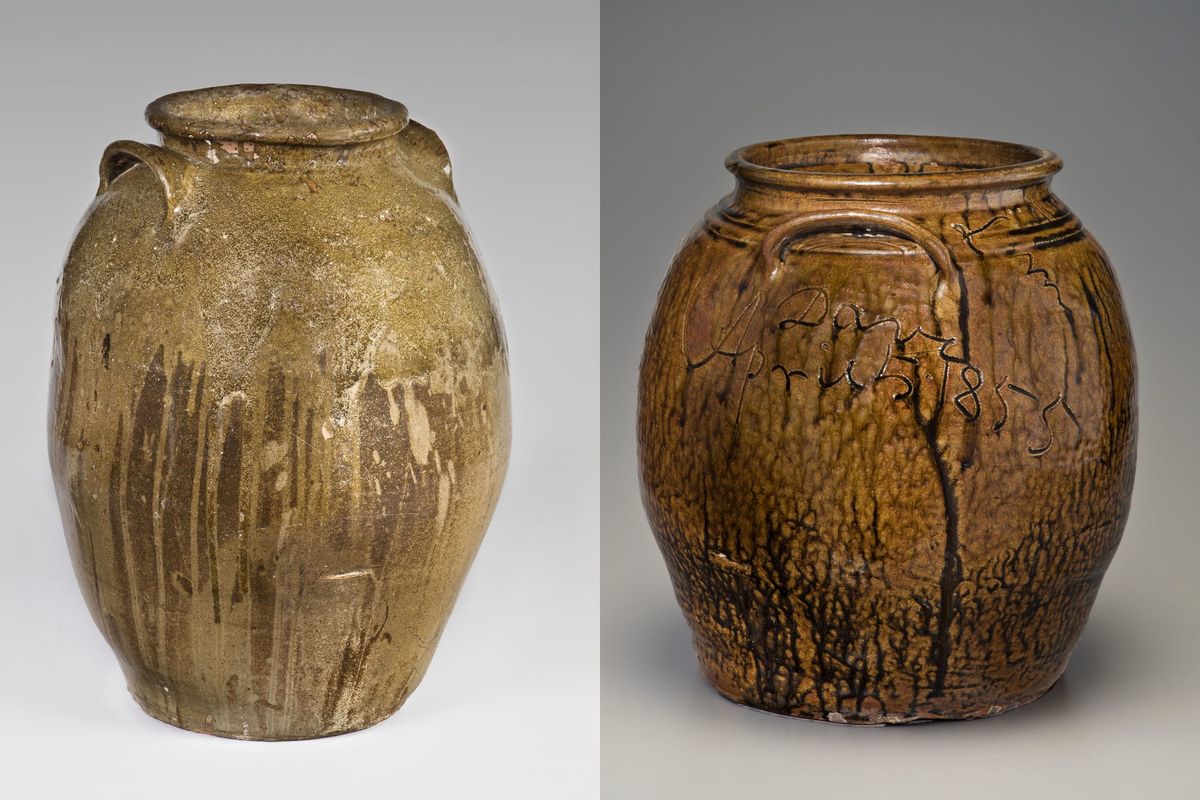
Drake’s specific output is characterized by its scale. While standard pottery of the era rarely exceeded a few gallons, Drake routinely threw vessels holding 20, 30, or 40 gallons. These large jars were essential for food preservation in the antebellum South—storing salted meats, corn, molasses, and pickling vegetables.
The Anatomy of the Inscriptions
Scholars have cataloged dozens of surviving vessels bearing Drake’s handwriting. The inscriptions typically fall into three categories:
- Signatures and Dates: Often reading simply "Dave," sometimes accompanied by dates ranging from the 1830s through the 1850s, and occasionally noting the plantation or pottery owner (though he famously dropped slaveholders’ names from his inscriptions later in life).
- Couplets: Short, rhyming verses that reflected his daily observations or biblical allusions. For example, a famous 1834 jar bears the inscription: "I make and rejice [rejoice] / When all things are going on so slick / Another felicitous rhyme." Another 1858 vessel states: "Landed on this celebs [stalwart] hill / There is no better potter than Dave still."
- Functional Notations: Indicating the volume or intended use of the vessel.
South Carolina’s Anti-Literacy Legal Framework
The danger under which Drake produced these inscriptions cannot be overstated. Under the legal apparatus of South Carolina:
- The Negro Act of 1740: Prohibited enslaved people from assembling in numbers, earning money, raising food, and crucially, learning to write.
- Subsequent Amendments: Throughout the early 1800s, penalties for teaching enslaved individuals to read were tightened. In 1834, the state passed a law explicitly penalizing anyone who taught a slave or free person of color to read or write, imposing heavy fines and imprisonment.
By committing poetry to clay, Drake committed daily infractions that could have resulted in his severe mutilation or death. His signature was an assertion of legal personhood in a system designed to treat human beings as movable property (chattel).
Official Responses: The Human Element of Repatriation
The emotional and cultural gravity of the Milwaukee Art Museum’s agreement is best captured through the voices of those most directly impacted: the descendants who have carried the memory of David Drake across generations.
In an official press statement regarding the return of the two stoneware jars, Yaba Baker, Drake’s fourth great-grandson, offered a profound reflection on what the agreement means for his family:
"For our family, this agreement is about more than the ownership of these two vessels. It is about recognizing David Drake as our ancestor whose voice, expertise, and creativity have endured for over 175 years."
Baker’s statement underscores a crucial paradigm shift in the museum world. For generations, descendants of enslaved artisans were treated as external observers to their ancestors’ institutionalized legacies. Today, family members are stepping forward not just as genealogical links, but as moral and legal stakeholders in the preservation, interpretation, and custody of their ancestors’ cultural property.
Museum leadership has similarly framed the agreement as a vital corrective action. Representatives from the Milwaukee Art Museum noted that transferring ownership while partnering on long-term display honors both the historical integrity of the objects and the rightful inheritance of the Drake family. This collaborative model demonstrates that museums can share stewardship with descendant communities without stripping the broader public of educational access.
Implications: What This Means for the Future of American Museums
The coordinated return of David Drake vessels by midwestern and eastern institutions carries sweeping implications for the museum sector, the art market, and the broader reckoning with America’s foundational history.
1. A New Precedent for Enslaved Artisans’ Works
Historically, repatriation and restitution movements have focused heavily on cultural patrimony looted during colonial conquests—such as the Benin Bronzes or Indigenous ceremonial items. However, the Drake restitutions establish a vital new precedent: the moral imperative to return works created under forced labor to the biological and cultural descendants of those who made them. While colonial plunder involves theft from a sovereign nation or community, chattel slavery involved the systematic expropriation of human labor, bodily autonomy, and creative output. The Milwaukee and Virginia agreements suggest that art created under slavery carries an inherent ancestral claim.
2. Redefining Museum Partnerships
The structure of these agreements—transferring legal title to descendants while maintaining long-term exhibition loans—provides a blueprint for future institutional actions. It proves that restitution does not have to be an adversarial process that empties museum galleries. Instead, it can foster deep, collaborative partnerships between cultural institutions and descendant families, ensuring that the historical context of the work is communicated with greater authenticity and emotional resonance.
3. Market and Valuation Shifts
As museum standards evolve, the art market is also taking notice. David Drake’s pottery has long commanded high prices at major auction houses, frequently fetching hundreds of thousands of dollars due to its rarity and historical significance. When institutional ownership is challenged by descendant claims, collectors and galleries will increasingly need to scrutinize the provenance and ethical dimensions of acquiring works produced by enslaved creators. The recognition of descendant rights may fundamentally alter how these masterworks circulate within the commercial art sphere.
4. Deepening Public Education
Finally, these repatriations enrich public education. When visitors walk into an art museum and read a plaque that acknowledges a vessel is owned by the descendants of the enslaved maker—rather than simply owned by a corporate museum trust—the educational impact multiplies. It transforms a passive viewing experience into an active engagement with history, reminding audiences that the ghosts of slavery are not distant abstractions, but living bloodlines whose descendants continue to reclaim what was stolen.
As the wave of restitutions continues to build from Wisconsin to Virginia and beyond, the legacy of David Drake shines brighter than ever. His pots, once fired in the scorching kilns of Edgefield, now serve as eternal beacons of human resilience, literacy against the odds, and the enduring power of family.
 Basiran
 Muslim
 Evan Lee Salim
