

By Digital Culture Desk
Published September 2026
Main Facts
The internet is rarely accused of being a universally kind place. Built on algorithms that often reward outrage, division, and sensationalism, social media platforms typically amplify friction over harmony. Yet, every once in a long while, the collective attention of millions converges on something remarkably pure.
In late summer 2026, a digital wave of altruism swept across TikTok, Instagram, and various lifestyle platforms, transforming personal online spaces into clearinghouses for human kindness. The catalyst? A viral baby registry gifting chain sparked by Call Her Daddy host and Unwell media network founder Alex Cooper.
Following her May 2026 announcement that she was expecting her first child with her husband, film producer and Unwell co-founder Matt Kaplan, Cooper began turning to her massive digital community for parenting advice, wisdom, and recommendations. To express her gratitude for the overwhelming support, Cooper began tracking down and purchasing items from expectant parents’ Babylist registries.
What started as a celebrity gesture quickly morphed into a massive, decentralized act of mass empathy. Within days, thousands of creators, brands, celebrities, and everyday internet users began browsing through strangers’ registries, purchasing everything from high-end strollers and car seats to basic necessities like diapers, bottles, and swaddles.

The movement eventually formalized into the official #BabylistItForward campaign, partnering with major baby-registry platform Babylist and brands like Pampers to support over 1,000 families. The trend has since generated tens of thousands of gift distributions, countless tearful unboxing videos, and a profound cultural dialogue about community support during the vulnerable transition into parenthood.
Chronology
To understand how a solitary celebrity thank-you note mushroomed into a massive international gifting chain, it is necessary to trace the timeline of events that captured the collective imagination of the internet in August and September 2026.
May 2026: The Announcement
Alex Cooper officially announces her pregnancy to the public, sharing the news that she and Matt Kaplan are expecting their first child. Almost immediately, Cooper leans into her digital community—a predominantly young, highly engaged demographic of women, parents, and fans—to ask for guidance on the realities of pregnancy, registry essentials, and early parenting.
Late August 2026: The Spark
As Cooper prepares for motherhood, she decides to give back to the very community that provided her with advice. Utilizing her platform and resources through the Unwell network, Cooper begins surprising random expectant parents by completely clearing out items from their public Babylist registries. Recipients respond by posting emotional reactions, stunned unboxing videos, and tearful expressions of gratitude as cribs, mattresses, and car seats begin arriving at their doorsteps.
The Ripple Effect: Users Take Action
Within days, the videos capture the algorithm’s attention. Instead of remaining an isolated celebrity stunt, the concept inspires regular social media users to do the same. Strangers open strangers’ public registry links found in comment sections, buying whatever they can afford—ranging from a single box of baby bottles to wiping out entire shopping lists. Creators, influencers, and reality television personalities (including Colton Underwood, Harry Jowsey, Jenna Ushkowitz, and Anneliese van der Pol) jump on board, inviting expecting mothers and fathers to drop their registry links in their comments.

Formalization: The #BabylistItForward Campaign
Recognizing the massive cultural wave taking place on its platform, Babylist partners with Cooper and the Unwell network to officially launch #BabylistItForward. Backed by corporate contributors like Pampers, the initiative initially commits to supporting over 1,000 families. Within the first hour of the campaign announcement, over 15,000 expectant parents flood the post with registry links, nominations for friends, and personal parenting stories.
End of August to September 2026: Brands Mobilize
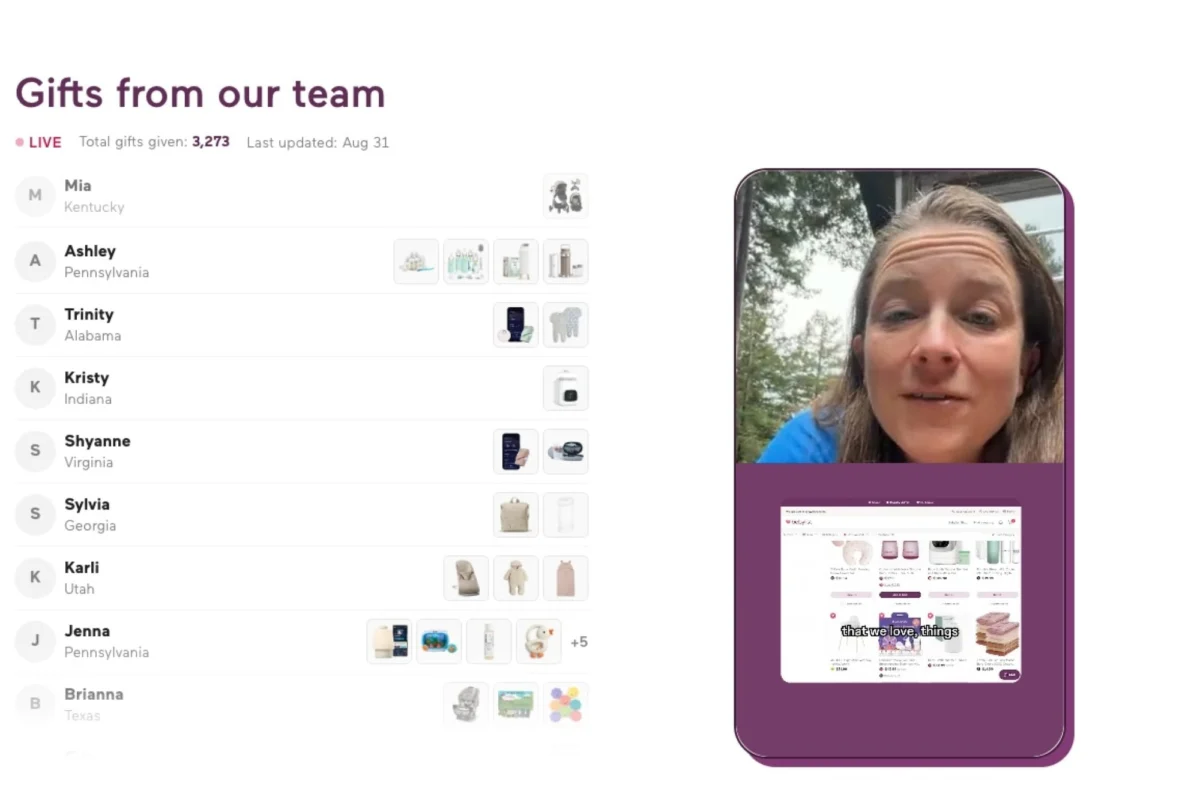
As the trend gains widespread media attention, retail brands large and small step into the fray. Companies like UPPAbaby, Mina Baie, Itzy Ritzy, Cozy Crew Club, and Kiplie launch dedicated gifting drives, committing strollers, diaper bags, and changing mats to selected registries. By August 31, Babylist’s dedicated team tracking page records over 3,200 individual gifts sent directly from corporate and internal team initiatives, alongside countless private transactions performed by everyday web users.
Supporting Data and Metrics
The scale of the #BabylistItForward movement reveals a deep, underlying hunger for positive digital engagement. Quantifiable metrics provided by campaign organizers and platforms illustrate the sheer velocity of the trend:
- 15,000+ Responses in One Hour: Within sixty minutes of launching the official #BabylistItForward initiative, more than 15,000 expectant parents responded to the announcement post, flooding comment sections with registry links and nominations for friends, siblings, and coworkers.
- 3,279+ Team Gifts: As of August 31, Babylist’s internal tracking page recorded thousands of direct purchases fulfilled by the company’s internal teams alone, a figure that continued to climb exponentially as external brands joined the ecosystem.
- Corporate Commitments:
- UPPAbaby pledged to completely clear five full registries while supplying high-end strollers from 50 additional lists.
- Mina Baie committed to buying items from five parents’ registries while gifting luxury diaper bags to 20 runners-up.
- Itzy Ritzy offered up to $300 worth of branded products for each selected registry on their radar.
- Individual Impact Stories: Viral human-interest cases, such as active-duty service member Wyatt Morris and his wife Breanna, who shared their Babylist registry on TikTok, demonstrated the rapid velocity of community support. After posting their link, the couple watched in real-time as internet strangers completely fulfilled every single item remaining on their list.
Official Responses and Perspectives
The phenomenon has elicited thoughtful commentary from industry leaders, creators, and corporate executives who view the trend as a shift in how digital spaces handle community building.
Jennifer Hyman, incoming CEO of Babylist, spoke directly to the emotional core of the movement in statements highlighting why the campaign resonated so deeply with modern parents. According to Hyman, the initiative proved that contemporary parents are searching for much more than transactional baby gear—they are actively seeking "answers, reassurance, and connection" during one of the most vulnerable phases of their lives.

"Reading their stories and seeing what that meant to them made me want to find a way for Unwell to keep paying that forward," Alex Cooper shared in a media release regarding the decision to institutionalize her initial acts of kindness through her network.
Industry analysts point out that while corporate-backed gifting campaigns are frequently deployed as public relations strategies, the grassroots organic translation of the trend—where everyday citizens with limited disposable income chose to buy a $15 box of pacifiers for a complete stranger—demonstrates that the emotional investment was genuinely authentic.
Furthermore, parenting communities on TikTok and Instagram organically transformed into peer-to-peer educational hubs. Alongside the relentless exchange of registry links, comment sections became sprawling forums where experienced parents debated which products were absolute necessities, which high-priced items first-time parents could safely skip, and where budget-friendly alternatives could alleviate financial pressure.
Implications and Cultural Significance
The #BabylistItForward trend leaves behind important implications for the future of digital culture, influencer marketing, and online philanthropy.
1. The Evolution of "Kindness Content"
For years, internet philanthropy has walked a fine line between genuine altruism and performative "poverty porn"—where creators film themselves handing cash to unhoused individuals or struggling workers primarily for engagement metrics and monetization. The #BabylistItForward trend effectively inverted this dynamic. Instead of a creator filming a power imbalance where they act as a savior to a passive recipient, the baby registry trend democratized giving. It allowed everyday people to participate horizontally, buying small items for peers who shared their exact life stage, socioeconomic status, or anxieties.

2. Redefining Corporate Social Responsibility
The swift and agile response of brands like UPPAbaby, Mina Baie, and Pampers signals a new playbook for digital marketing. Consumers increasingly expect brands to read the cultural room and participate in organic expressions of goodwill rather than relying solely on traditional, heavily scripted advertising campaigns. By embedding themselves into a viral act of kindness, these brands positioned themselves as empathetic stakeholders in family milestones rather than distant corporate entities.
3. The Digital Village for Modern Parents
Raising a child in the 21st century often comes with profound isolation. The traditional "village" of extended family and hyper-local neighborhood support systems has largely disintegrated or scattered geographically. What the #BabylistItForward movement successfully re-engineered was a digital substitute for that village. It proved that millions of people are willing to step into the role of supportive neighbors, validation-providers, and financial helpers for complete strangers.
Conclusion
As the algorithmic winds inevitably shift and new viral trends replace the summer of 2026, the tangible impact of this movement will remain fixed in reality. While online fads fade quickly, the physical car seats, cribs, strollers, and bottles sitting in nurseries around the world—purchased by hands that will never hold the babies who use them—serve as a rare and enduring reminder of the internet’s capacity for genuine, unadulterated good.
 Suro Senen
 Nana Wu
 Neng Nana
