

Main Facts
In the upper echelons of the Los Angeles real estate market, properties that seamlessly bridge the gap between historic architectural integrity and contemporary luxury are exceedingly rare. Enter the striking 1927 Spanish Colonial Revival nestled in the coveted Hollywood Hills, a nearly 5,100-square-foot architectural gem recently listed for $8 million. The property is currently owned by prominent interior designer Ross Cassidy and his partner, real estate agent Jed Weisman.
Weisman, operating through Christie’s International Real Estate Southern California, holds the high-profile listing for the sprawling compound, which spans multiple structures and sits on lushly landscaped grounds complete with a private swimming pool and a separate guest bungalow.
The estate is a masterclass in thoughtful preservation. Rather than gutting the century-old residence to make way for sterile, ultra-modern minimalism, Cassidy and Weisman embarked on a painstaking, two-and-a-half-year restoration journey. Their objective was clear: elevate the home’s layout and amenities to suit the demands of 21st-century luxury living while aggressively safeguarding the irreplaceable architectural details that give Old Hollywood its legendary allure.
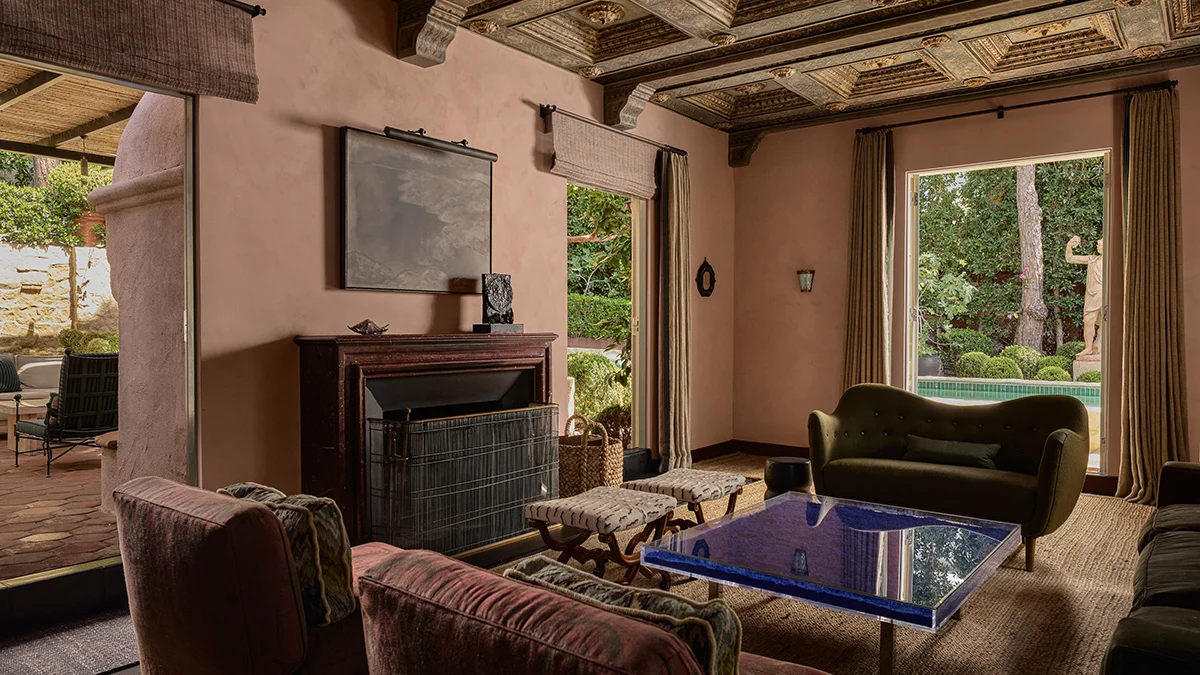
The sprawling residence features five bedrooms and multiple luxurious bathrooms, offering expansive walk-in closets and generous proportions rarely found in properties built during the Roaring Twenties. From its hand-painted beamed ceilings and intricate wrought-iron railings to its modern chef’s kitchen and resort-style outdoor living spaces, the estate represents the pinnacle of high-end California living.

Chronology of a Restoration: From a 1927 Build to an $8 Million Showcase
To truly appreciate the transformation of this Sunset Plaza-area property, one must trace its journey from its origins nearly a century ago to its present-day status as an architectural masterpiece.
1927: The Golden Era Foundation
Constructed at the height of Los Angeles’s interwar building boom, the house was originally designed in the classic Spanish Colonial Revival style—an architectural movement that defined the romantic, sun-drenched aesthetic of Southern California. During this era, homes in the Hollywood Hills were crafted with an emphasis on artisan details, utilizing heavy plaster, imported tiles, carved wood, and seamless indoor-outdoor connections designed to capitalize on the Mediterranean climate.
2020: The Acquisition
For Cassidy and Weisman, finding the right property was an exercise in patience. The couple spent years combing the Los Angeles market for a home with authentic historical bones. In 2020, public records indicate they secured the Hollywood Hills treasure for $3.3 million. Even in its unrenovated state, the property possessed the elusive, atmospheric quality of a home that felt deeply rooted in its environment.
2020–2022: The Two-and-a-Half-Year Transformation
Upon taking possession, the couple immediately initiated an extensive, highly granular renovation. Recognizing that historical floor plans often clash with modern lifestyles, Cassidy re-engineered the spatial flow of the house without compromising its architectural soul.

Among the most significant structural shifts was the reconfiguration of a guest room that previously could only be accessed from the exterior; Cassidy successfully integrated it into the main indoor footprint to serve as an elegant formal dining room. Additionally, a dramatic double-height library was intelligently divided into two distinct levels. This structural alteration allowed for the creation of a cozy, intimate family room situated directly beneath the primary suite.
2026: The $8 Million Debut
Following the completion of the meticulous updates, the property has officially transitioned to the open market. Priced at $8 million, the listing reflects not only the soaring value of prime Hollywood Hills real estate but also the countless hours of specialized craftsmanship and design pedigree invested by its owners.
Supporting Data and Architectural Breakdown
The nearly 5,100-square-foot compound is a rich tapestry of historical finishes paired with high-end modern amenities. A detailed examination of the estate reveals a property designed to impress at every turn:
Interior Architecture and Finishes
- Historic Elements Preserved: The home proudly retains its original leaded glass windows, intricate wrought-iron stair railings and accents, marble-framed doorways, dramatic carved wood ceilings, and hand-painted ceiling beams.
- Flooring Materials: Cassidy maintained a sophisticated palette of authentic flooring types, weaving together traditional terracotta, sleek terrazzo, and warm, narrow-plank oak floors across different zones of the home.
- Living and Family Spaces: The formal living room centers on a magnificent historic carved fireplace and ceiling. Meanwhile, the newly configured family room anchors casual gatherings with its own marble fireplace, complemented by chic, custom olive-green sofas.
- The Chef’s Kitchen: Representing a harmonious blend of old and new, the kitchen boasts bespoke sage green cabinetry paired with lustrous wood elements, dramatic veined marble countertops, and a continuous row of windows that flood the culinary workspace with natural light.
- Primary Suite & Bedrooms: The second-floor primary retreat is an exercise in understated glamour, featuring a statement bed upholstered in vibrant yellow, mirrored accent panels, and sweeping, tranquil views of the surrounding mature trees. In total, the main house offers five bedroom suites, including a convenient main-level suite for guests or multi-generational living.
Grounds and Exterior Amenities
- The Pool and Hardscaping: Set amidst meticulously clipped hedges, towering mature trees, and fragrant citrus plants is a partially recessed swimming pool edged in rusticated stone.
- Outdoor Living: A shaded ramada covers an expansive outdoor living area featuring a raised-hearth stone fireplace—ideal for cool Los Angeles evenings under the stars.
- Guest Bungalow: Providing ultimate flexibility for visitors or staff, a separate, self-contained bungalow positioned above the garage includes an additional bedroom and a full bathroom.
Official Responses and Designer Insights
When asked about his philosophy regarding historic properties, Ross Cassidy offered profound insight into the unique responsibilities borne by preservation-minded designers.

"My passion is restoring important historical houses and making them work in the modern world," Cassidy shared in an exclusive interview with Robb Report. He fondly characterizes the residence as a "100-year-old treasure" that successfully captures the intoxicating romance and character of old Hollywood, while thoughtfully incorporating modern luxuries such as oversized walk-in closets and generous, spa-like bathrooms.
Cassidy also emphasized the rarity of the property’s pedigree in a city known for rapid, often aggressive demolition and redevelopment:
"They aren’t making more century-old houses in LA," Cassidy notes. "So it’s my goal to honor, preserve, and rehabilitate the ones we have."
Furthermore, the designer reflected on the distinct creative freedom that comes with designing one’s own living space rather than working exclusively on client commissions. According to Cassidy, a designer’s personal residence is frequently their definitive masterwork because it affords them the luxury to obsess over minute details that might otherwise be compromised in commercial timelines or budget constraints:

"Designers’ own homes are always their best work because we are able to go much deeper into the details and minutiae."
Listing agent Jed Weisman, who represents the property through Christie’s International Real Estate Southern California, underscores that the home offers a turnkey solution for buyers seeking historic romance paired with modern turnkey convenience—a combination that is notoriously difficult to secure in the hyper-competitive Hollywood Hills submarket.
Market Implications and Broader Industry Trends
The listing of the Cassidy-Weisman estate on Sunset Plaza Drive arrives at a fascinating juncture for the Los Angeles luxury real estate market. It highlights several key trends currently shaping the high-end residential sector:
1. The Premium on Authentic Provenance
In an era dominated by sleek, glass-and-steel modern boxes that can occasionally feel interchangeable, buyers are increasingly placing a massive premium on architectural authenticity. Properties with verifiable history—particularly those built during the golden age of Hollywood in the 1920s and 1930s—command intense interest from discerning collectors, creatives, and executives who value narrative and soul over cookie-cutter square footage.

2. The Evolution of Historic Floor Plans
Historically, homes built nearly a century ago faced criticism for having compartmentalized rooms, dark corridors, and inadequate storage (such as notoriously tiny closets and shared, dated bathrooms). Cassidy’s project serves as a case study in how to surgically update a floor plan—such as transforming an exterior-access guest room into an interior dining space or carving a double-height library into functional multi-level living areas—without erasing the structural DNA that gives the house its historic charm. This "respectful modernization" blueprint is becoming the gold standard for high-end historic flips.
3. Designer-Owned Homes as Blue-Chip Assets
Real estate marketed by top-tier interior designers often attracts a specialized tier of buyers who recognize that the finishes, built-ins, and spatial flow have been curated with editorial precision. Because designers like Cassidy treat their own homes as autobiographical canvases, prospective buyers acquire not just a piece of real estate, but a fully realized work of interior art where every sightline, paint color, and hardware selection has been rigorously vetted.
As the property commands its $8 million asking price, it stands as both a testament to the enduring appeal of Spanish Colonial Revival architecture and a shining example of how contemporary design visionaries can honor the past while forcefully propelling it into the future.
 Evan Lee Salim
 Asep Darmawan
 Laily UPN
