

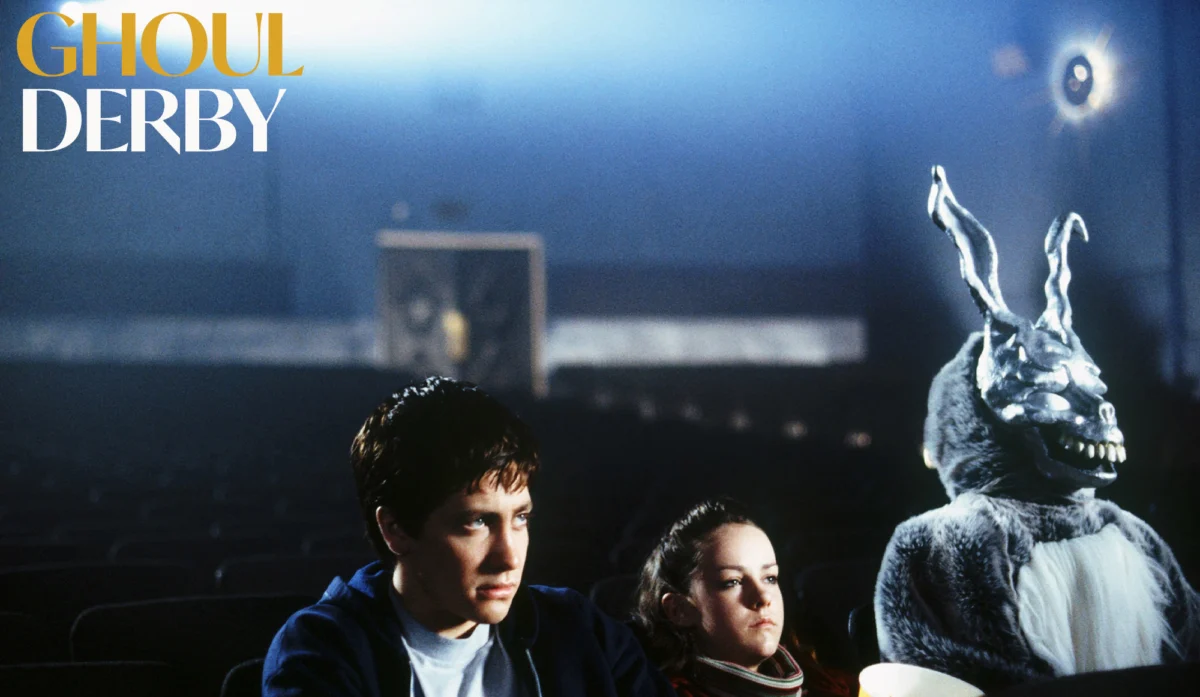
Twenty-five years ago, a low-budget, mind-bending psychological thriller emerged from the ether of the Sundance Film Festival to permanently alter the landscape of independent cinema. Directed by a then-unknown Richard Kelly, Donnie Darko arrived on October 26, 2001, carrying a heavy, melancholic atmosphere, a haunting rabbit suit, and a narrative structure that defied conventional logic. Today, as the film celebrates its silver anniversary, it stands not just as a foundational piece of cult cinema, but as a testament to the enduring power of high-concept storytelling.
For Kelly, this milestone is not merely a nostalgic exercise. It serves as a bridge to a new era of the "Darko-verse," one that finally fulfills the promise of the cryptic, unfinished lore that has kept fans obsessing for two and a half decades.
The Genesis of a Modern Myth
The inception of Donnie Darko was as unconventional as the film itself. Written while Kelly was a post-graduate student at USC, the script was forged in the unglamorous trenches of the film industry. While working for a post-production house—where he spent his days running errands for industry titans and witnessing the creation of music videos for artists like Madonna—Kelly began to synthesize his own adolescent memories with the intellectual weight of Stephen Hawking’s A Brief History of Time.
"I was around all these super-famous successful people, and here I was making minimum wage," Kelly recalls. This friction between his mundane reality and the high-octane creative energy of his surroundings fueled the film’s unique tone. The spark that ignited the script was a singular, surreal image: a jet engine falling from the sky. That "Twilight Zone-style" mystery provided the architectural blueprint for a story that would eventually grapple with the heavy themes of nihilism, predestination, and the terrifying possibility of variant universes.
A Chronology of Chaos: From Sundance to Silver Anniversary
The path of Donnie Darko from the festival circuit to cultural icon was fraught with skepticism. When it first premiered at Sundance, the response was polarizing. Critics and distributors were unsure how to categorize a film that blended suburban high school drama with apocalyptic sci-fi and supernatural dread.
- 2000-2001: Production takes place amidst a SAG strike, which ironically allowed the production to secure a stellar ensemble of "L.A.’s cool kid actors" who were eager for work.
- 2001: The film premieres at Sundance but struggles to find a home. Potential buyers threatened to cut the film to 90 minutes and strip away its iconic 80s soundtrack.
- The Turning Point: A fortuitous recommendation from Christopher Nolan and his producing partner, Emma Thomas, encouraged Newmarket Films to acquire the project. Nolan’s influence even extended to the edit, where he suggested adding a pivotal shot of Frank without his mask into the "Mad World" sequence.
- 2001-2002: The film earns only $2 million at the domestic box office but finds a second life on DVD, where it becomes a viral sensation before the term "viral" was part of the common lexicon.
- 2026: As the film hits its 25th anniversary, it enjoys a massive resurgence in popularity, bolstered by modern data analytics that reveal a growing, younger audience discovering the film.
The "Cool Kid" Ensemble and the Swayze Factor
One of the most remarkable aspects of Donnie Darko remains its cast. Beyond the breakout performance of Jake Gyllenhaal, who used the film as a launchpad to A-list superstardom, the project features a "who’s who" of future talent, including Maggie Gyllenhaal, Jena Malone, and Seth Rogen.

Perhaps the most surprising casting choice was 1980s icon Patrick Swayze, who played the duplicitous motivational speaker Jim Cunningham. According to Kelly, the participation of Drew Barrymore—who produced the film through her company, Flower Films—was the anchor that kept the production afloat. Barrymore, along with Jason Schwartzman, provided the necessary credibility to attract a high-caliber cast that would otherwise have likely migrated to Toronto for more traditional studio projects.
"People came in agreeing to be featured extras, and they had incredible resumes," Kelly notes. "They just wanted to work. If we hadn’t had this unique project, the entire cast of the movie would have been different."
The "Mad World" Needle Drop: A Creative Gamble
No discussion of Donnie Darko is complete without the haunting rendition of Tears for Fears’ "Mad World," performed by Gary Jules. The inclusion of the song was not a foregone conclusion; it was a high-stakes gamble that almost didn’t happen.
Kelly was adamant that the song was essential to the film’s emotional resonance. Lacking the budget to license it, he redirected his own future residuals to secure the rights. He then fast-tracked the editing of the sequence to demonstrate its power to the creative team. "You could see a light bulb go off," Kelly says. "That was a make-or-break moment." It proved to be the emotional heart of the film, cementing the association between the song and the image of a tearful, time-confused teenager for generations to come.
The Philosophy of the Future: The 600-Page Tome
As Kelly looks toward the future, the primary focus is The Philosophy of Time Travel, an upcoming sequel novel due in December. For years, the book existed only as a series of fragmented pages on the film’s pioneering, interactive website. Now, Kelly has expanded those fragments into a 600-page narrative that picks up two days after the events of the original film.
"All this stuff was only hinted at in the text of the movie because it’s only two hours long and takes place in a dreamlike world," Kelly explains. The novel promises to follow the lives of the Darko family in the aftermath of the original tragedy, offering a deep dive into the mechanics of the universe he created.

Importantly, this novel is entirely separate from the 2009 direct-to-DVD sequel S. Darko, which was produced without Kelly’s involvement and is largely disregarded by the director.
Implications: The "Darko-Verse" on the Big Screen?
Kelly is not content with the story remaining on the printed page. He views the novel as a "powerful engine for cinema." He is currently eyeing the potential for sequels, with a specific vision for how to handle the passage of time: motion-capture animation.
By using motion capture, Kelly hopes to preserve the likenesses of his original characters as they appeared in 2001, effectively freezing them in time while allowing the narrative to expand. His optimism is fueled by the changing demographics of film consumption. "It seems like Gen Z are reading books," he notes, pointing to the influence of #BookTok as a bridge between literature and film.
For the director, the data is clear: Donnie Darko is not a relic of the past, but a living, breathing entity that continues to connect with new audiences. "This anniversary feels different because there’s so much new to talk about," he says. "So much is finally coming to fruition and coming into release in a tangible way. It’s wild to think how many years have passed with the film just continuing to connect with people."
As the world prepares for the release of The Philosophy of Time Travel, it is evident that Richard Kelly’s obsession with the "vortex" is far from over. Whether it results in a new film franchise or simply serves to satisfy the long-standing curiosity of the film’s dedicated fanbase, the legacy of Donnie Darko is secure—not as a finished chapter, but as a perpetually unfolding mystery.
 Dwi Wanna
 Lina Hope
 Siti Muinah
