

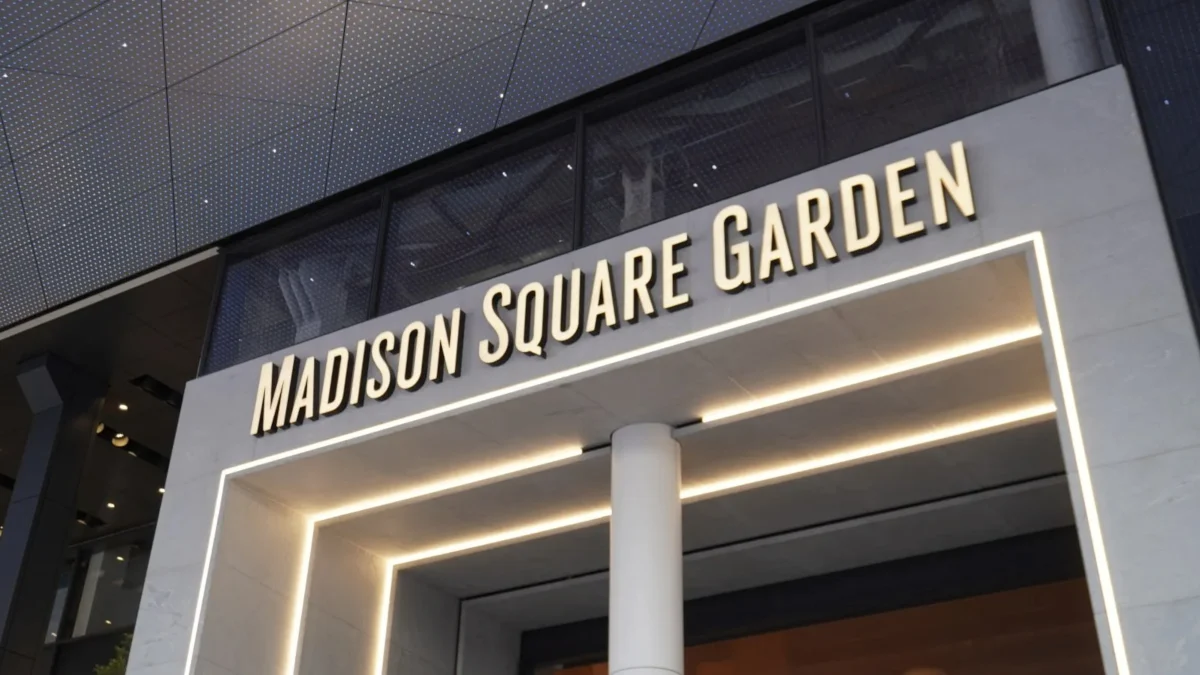
In a high-stakes escalation of media tension, Madison Square Garden (MSG) has officially filed a defamation lawsuit against WIRED magazine and its parent company. The legal action, lodged in a New York trial court, marks a significant confrontation between one of the world’s most iconic entertainment venues and a prominent technology publication. At the heart of the dispute is a July 2026 investigative report that alleged MSG maintained a database tracking the sexual orientation of celebrities for exclusionary purposes—a claim the arena vehemently labels as a malicious fabrication.
The Core Conflict: Surveillance vs. Inclusion
The controversy erupted on July 9, 2026, when WIRED published an article titled, "Madison Square Garden Kept a List of Gay Celebrities." The report suggested that the arena, which operates the world-famous Madison Square Garden arena and associated sports franchises, utilized a sophisticated surveillance-style database to categorize high-profile individuals based on their sexual orientation, allegedly assigning them risk levels.
MSG’s legal team, in a sprawling 40-page complaint, argues that the publication engaged in "shockingly unethical conduct" by cherry-picking information derived from hacked data. The arena acknowledges that it does, in fact, maintain records regarding the demographics of its celebrity clientele. However, it asserts that this data—kept alongside mundane details like birthdays and favorite sports teams—is a standard industry practice used to facilitate "inclusion and outreach."
According to MSG, the data was never intended to blacklist or monitor individuals for security risks. Instead, the company claims it was used to curate guest lists for supportive LGBTQIA+ events, identify potential sponsorship partnerships, and foster community engagement. The lawsuit contends that WIRED deliberately stripped this context away to manufacture a sensationalized "clickbait" narrative that paints the organization as discriminatory.
Chronology of the Dispute
The timeline of this conflict highlights the speed at which modern news cycles can collide with corporate reputation management:
- July 9, 2026: WIRED publishes its investigative feature, citing access to internal data and alleging that MSG tracked the sexual orientation of various actors, musicians, and public figures. The article quickly goes viral, drawing widespread condemnation from advocacy groups and the public.
- July 9–10, 2026: Madison Square Garden releases immediate statements denouncing the report as "inaccurate and false." The organization signals its intent to pursue legal avenues, claiming the damage to its reputation is both immediate and measurable.
- July 16, 2026: MSG files a formal complaint in a New York trial court. The lawsuit names WIRED, its ownership, editor Katie Drummond, and journalists Noah Shachtman and Maddy Varner as defendants.
- Present: The article remains active on the WIRED website, and the legal battle has moved into the discovery and motion phases of the judicial process.
The Allegations: Defamation and Contractual Interference
The lawsuit goes beyond a standard libel claim. MSG’s legal counsel has accused WIRED of "tortious interference with business relationships." The arena claims that by misrepresenting their internal data-collection practices, the publication sabotaged existing and potential relationships with customers, sponsors, and partners who were misled by the narrative of exclusionary surveillance.
The complaint reserves particular criticism for Noah Shachtman, suggesting that the editorial direction of the piece was a reckless attempt to drive traffic. "Defendants published the Article with knowledge of its falsity or with reckless disregard for the truth," the filing states. "This is not the first time Defendants have rushed to publish clickbait in place of facts, but it should be their last."
MSG’s argument rests on the premise that the data in question—often referred to as a CRM (Customer Relationship Management) tool—is standard for global entertainment brands. By suggesting that an internal field for sexual orientation is inherently nefarious, the arena argues that WIRED demonstrated a fundamental misunderstanding of business operations or, worse, an intentional bias designed to harm the company’s standing with the LGBTQIA+ community.
Supporting Data and The "List" Controversy
A critical component of the legal battle is the provenance of the information used by WIRED. The magazine based its report on data that MSG describes as "hacked." This raises significant legal questions regarding the use of stolen materials in journalism. While journalists often protect the identity of their sources, the legal standard for reporting on data obtained through illegal cyber-intrusions is high.
MSG maintains that there was never a "list of gay celebrities" in the sense of a security blacklist. They contend that the data was essentially a "who’s who" of high-profile individuals to whom the arena wished to offer VIP status, invitations, and community support. By characterizing these entries as "risk-based" data, the arena argues that WIRED turned a tool for hospitality into a weapon of public shaming.
"The Article’s implication that MSG maintains a database with a sexual orientation field for exclusionary, discriminatory, security, or risk-based purposes is a lie," the complaint asserts. "Defendants knew there was no nefarious ‘list’ of gay celebrities."
Official Responses and Stance
Representatives for WIRED and the named journalists have yet to issue a detailed public rebuttal beyond the publication of their original reporting. In standard media-litigation protocol, organizations often decline to comment on pending lawsuits, preferring to let their legal filings speak for them in court.
Madison Square Garden, however, has been vocal about its history of supporting LGBTQIA+ causes. The arena argues that it has consistently used its platform for visibility and inclusion, and that the WIRED article creates a false binary that contradicts their corporate culture. The arena’s request for a jury trial indicates a desire to take the case to the public record, hoping that a jury will find that the publication exceeded the bounds of protected free speech and entered the realm of malicious, defamatory harm.
Broader Implications for Journalism and Privacy
This case sits at the intersection of three highly volatile issues: the ethics of digital journalism, the privacy of corporate data, and the role of large-scale venues in managing celebrity reputations.
1. The "Clickbait" Standard
The litigation highlights the growing tension between traditional investigative journalism and the modern digital business model. If a media organization can be held liable for "reckless disregard for the truth" in an attempt to generate traffic, it could force a shift in how outlets verify sensitive, data-driven claims.
2. Corporate Data Transparency
The case also forces a spotlight on how corporations collect and store demographic information about their patrons. Whether or not MSG’s intentions were as benign as they claim, the mere existence of such data fields—especially when sensitive categories like sexual orientation are involved—raises questions about the necessity of such documentation in the age of data privacy.
3. The Future of the Case
MSG is seeking compensatory damages, punitive damages, and legal fees. For WIRED, the stakes are equally high; a loss in court could set a precedent for how news organizations are held accountable when reporting on sensitive, stolen, or leaked corporate information. As the case proceeds to a jury trial, the discovery process will likely reveal more about the inner workings of MSG’s CRM systems and the editorial deliberations that occurred at WIRED prior to publication.
In conclusion, the battle between Madison Square Garden and WIRED is more than a simple dispute over a headline. It is a fundamental disagreement over intent, accuracy, and the responsibility that media organizations bear when characterizing the private business operations of high-profile public entities. As the court prepares to weigh the evidence, the outcome will undoubtedly serve as a landmark case for the future of digital media law and corporate privacy.
 Asro
Asro
 Lina Irawan
 rifanmuazin
