

By Russell Brandom
Technology and Platform Policy Correspondent
Main Facts
Meta’s Superintelligence Lab has officially entered the highest tier of the artificial intelligence landscape, unveiling a pair of state-of-the-art flagship systems: Muse Wonder and Muse Wonder Full. Released on Monday, these models represent Meta’s first true venture into the "frontier model" category—a domain traditionally dominated by industry heavyweights like OpenAI and Anthropic.
While Meta’s previous release, Muse Spark, focused heavily on lightweight efficiency and low-latency performance, the Wonder models are scaled for heavy-duty computation, complex problem-solving, and advanced coding benchmarks. According to internal and third-party testing metrics released via the official model cards, Muse Wonder and Wonder Full achieve performance parity with competing systems such as Fable 5.1 and GPT-6 Astra.
The financial and operational architecture of the release highlights Meta’s strategic commercial goals:
- Muse Wonder is available commercially via the Meta Model API, priced competitively at $4 per million input tokens and $20 per million output tokens—mirroring the cost structures of GPT-6 Sol and Opus 5.5.
- Muse Wonder Full takes a more exclusive route, bypassing API distribution entirely. It will be reserved strictly for premium Muse Code subscribers.
- Core Integration: Both models will serve as the underlying intelligence driving Meta’s flagship consumer and enterprise Muse agent.
- Active Memory Breakthrough: Meta is heavily promoting the models’ breakthrough in "active memory"—a proprietary framework designed to retain, synthesize, and act upon user-provided context across days, weeks, and months.
Training for these resource-intensive models took place at Meta’s newly operational Prometheus data center in central Ohio, which came online earlier this year and boasts some of the highest computing capacities in the world.
Chronology of Development
To understand the magnitude of Monday’s drop, one must look back at the structural shifts within Meta’s artificial intelligence divisions over the past year.
- August 2025: Following a major executive and operational restructuring led by Scale AI founder Alexandr Wang, Meta pivoted its research roadmap. The mandate shifted away from incremental open-source iterations toward foundational, long-term superintelligence capabilities. Mark Zuckerberg and Wang streamlined engineering pipelines to focus heavily on agentic workflows.
- September 2026: Meta launched the Muse agent ecosystem alongside the lightweight Muse Spark model. While Muse Spark proved popular for snappy, low-latency tasks, the tech industry noted a conspicuous gap: Meta had not released a heavy, frontier-grade foundational model to compete directly with OpenAI’s bleeding-edge offerings.
- Early 2026: Meta’s Prometheus data center in New Albany, Ohio, officially came online. Designed specifically to handle unprecedented cluster sizes, Prometheus became the primary training ground for Meta’s next-generation architectures.
- Monday (Present Day): Meta bridged the frontier gap by releasing Muse Wonder and Muse Wonder Full, fulfilling the structural promises made during the August 2025 reorganization and setting a new baseline for the company’s scaling ladder.
Supporting Data and Benchmarking
Meta’s claims of frontier-level capabilities are backed by extensive testing metrics detailed in the official Muse Wonder model card and accompanying research documentation.
Performance Parity
In standard multi-task language benchmarks, code generation, and complex logical reasoning, Wonder and Wonder Full match or exceed previous industry benchmarks. Meta’s internal evaluations place the models squarely alongside Fable 5.1 and GPT-6 Astra.
MemoryBench Superiority
The most striking data point in the release surrounds MemoryBench (documented under arXiv:2510.17281), a rigorous benchmark designed to evaluate continual learning and memory construction frameworks in large language models.
- Traditional models suffer from catastrophic forgetting or context degradation over long operational horizons.
- According to Meta’s testing data, Muse Wonder outscores Fable, Opus, and Astra on the MemoryBench suite, signaling a paradigm shift in how artificial intelligence retains long-term personalized data.
Infrastructure Scale
The compute required to achieve these results is staggering. The models were trained on infrastructure housed within the Prometheus data center in Ohio. Prometheus represents the highest-capacity data center in Meta’s growing domestic footprint, leveraging advanced liquid-cooling systems and next-generation silicon clusters to process the vast parameter counts of the Wonder architecture.
Official Responses and Stakeholder Perspectives
Meta leadership and research teams have framed the Muse Wonder release not merely as an incremental upgrade, but as an existential step toward "personal superintelligence."
In an official corporate blog post, Meta’s AI division emphasized the trajectory of their scaling laws:
"Together, they mark the next step on our scaling ladder and a major leap toward personal superintelligence."
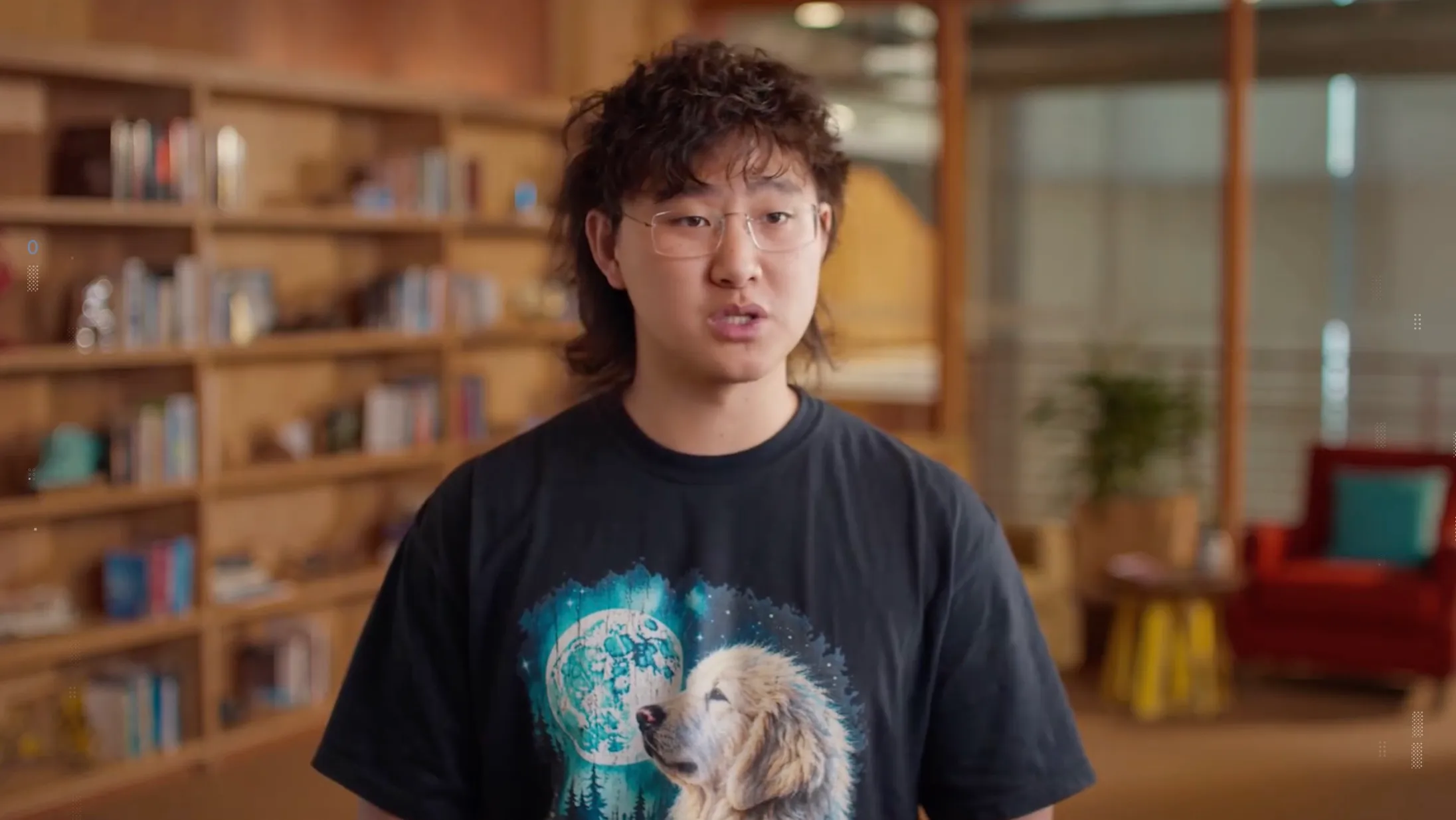
Research scientist Kavya Kopparapu elaborated on the user-centric engineering philosophy behind the models in a launch video accompanying the release. Kopparapu emphasized that the primary bottleneck of modern AI assistants has always been context retention:
"We put a tremendous amount of effort into making sure your model can remember what’s important to you over days, weeks, months, and beyond."
External reactions from enterprise clients and platform developers have focused largely on the accessibility constraints. While developers building on the Meta Model API can readily integrate the $4/$20 per million token Wonder model, the restriction of Muse Wonder Full exclusively to Muse Code subscribers has sparked debate within the developer community regarding closed-ecosystem lock-in versus open-weights philosophy—a historic cornerstone of Meta’s previous AI strategy.
Industry Implications
The launch of Muse Wonder and Wonder Full carries profound implications for the competitive AI landscape, enterprise workflows, and the future of consumer agents.
1. The Realization of Personal Superintelligence
For years, digital assistants like Siri, Alexa, and even early generative AI tools have suffered from severe amnesia. Every session essentially resets the persona, requiring users to constantly re-explain their preferences, coding styles, or professional constraints. Meta’s emphasis on "active memory" and its dominance on the MemoryBench scoreboard suggest a future where AI assistants act as genuine long-term collaborators. By remembering project details across months, an agent like Muse can proactively manage workflows without human micro-management.
2. A Shift in Meta’s Monetization and Product Strategy
By pricing Muse Wonder competitively ($4 per million input tokens, $20 per million output tokens) alongside models like GPT-6 Sol and Opus 5.5, Meta is signaling that it views itself as an enterprise-grade utility provider, not just an open-source benefactor. Furthermore, gating Muse Wonder Full behind Muse Code subscriptions indicates a move toward high-value verticalized software packages—monetizing specialized developer tools directly rather than relying entirely on API volume.
3. Escalating the Frontier Race
With Alexandr Wang’s restructuring now bearing fruit, Meta has definitively re-entered the heavyweight prizefight. The dominance of OpenAI, Anthropic, and Google is now being challenged by an infrastructure titan backed by the massive compute power of the Prometheus facility. As these frontier models are integrated deeper into consumer endpoints and developer IDEs, the battle for user retention will no longer be fought on raw parameter size alone, but on which system can build the most reliable, long-lasting digital memory.
 Suro Senen
 Sagoh
Sagoh
 Reynand Wu
