

By Crystal Bell
Published October 14, 2026
Main Facts
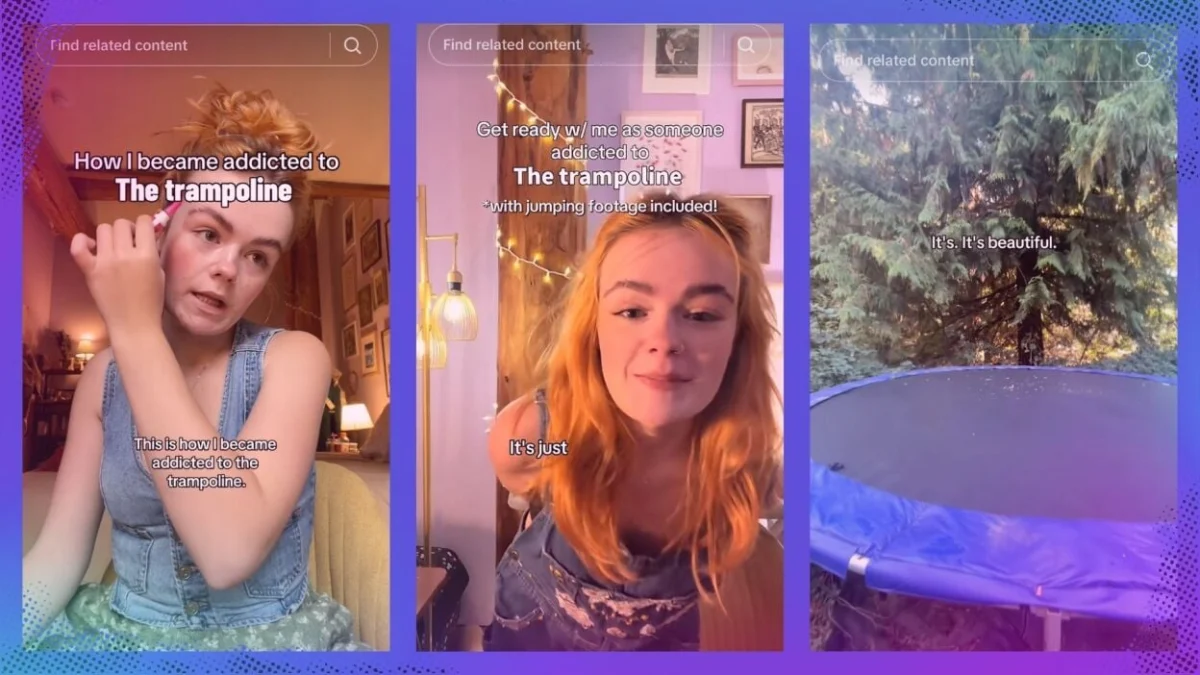
In an era defined by hyper-optimized morning routines, expensive wellness retreats, and the relentless pressure to monetize every waking moment, internet culture has found its unlikely anti-guru. TikTok creator @whatifimjustagirl has gone viral across multiple social media platforms for a remarkably simple, yet deeply eccentric, daily ritual: for the past seven years, she has spent nearly every night jumping on an outdoor trampoline between midnight and 3:00 a.m.
While the rest of the world sleeps—or engages in late-night doomscrolling—this anonymous creator heads out into the dark, wearing a specialized wardrobe rotation of leggings and flannel for colder weather, donning headphones, and bouncing under the stars for up to two hours.
Far from a fitness challenge, a sleep-tracking experiment, or an orchestrated bid for internet clout, the creator insists the practice stems from a pure, unadulterated source: she simply loves it. Yet, her openness about the habit has inadvertently thrust her into the center of a broader cultural conversation regarding parasocial surveillance, digital diagnostics, and the modern internet’s desperate search for authenticity.
Chronology: The Evolution of a Midnight Routine
To understand how a solitary backyard habit became a viral sensation, one must trace the timeline of @whatifimjustagirl’s digital footprint:
- 2019–Early 2020s: Long before attracting mainstream algorithmic attention, the creator quietly establishes her nocturnal routine. Bound by personal comfort and a deep-seated affinity for the motion, she integrates nightly bouncing into her schedule, treating it as a private anchor for her day.
- Mid-2026: As her content begins to circulate more widely on TikTok, users catch wind of her unusual hours and steadfast dedication. Clips detailing her gear rotation—such as cozy flannels for chilly midnight air—attract hundreds of thousands of views.
- October 2026: The trend reaches a tipping point. Cross-platform commentary explodes on X (formerly Twitter) and TikTok, prompting widespread curiosity, admiration, and, inevitably, unwarranted armchair psychological analysis from internet sleuths.
- Mid-October 2026: In response to a flood of comments speculating on her mental health and neurodiversity, the creator releases direct video responses clarifying her diagnoses, setting firm boundaries, and defending her right to experience joy without clinical categorization.
Supporting Data: The Anatomy of a Viral Trend
The fascination surrounding the midnight trampoline routine highlights several key metrics of contemporary internet consumption:
- Longevity of Habit: Seven years of unbroken adherence predates her primary viral exposure, proving that the routine was cultivated for personal fulfillment rather than digital monetization.
- Demographic Reach: The story has bridged multiple platforms—moving rapidly from TikTok to X and aggregation channels—generating widespread engagement despite its niche subject matter.
- The Wellness Contrast: While the global wellness industry is projected to reach trillions of dollars through structured sleep hygiene, biohacking, and productivity apps, this viral phenomenon relies on zero financial investment (aside from owning a trampoline) and zero corporate optimization.
- Audience Intrusion Statistics: A notable percentage of top comments on her videos featured unsolicited projections regarding neurodivergence, reflecting a growing cultural habit of armchair diagnosing creators based on brief, out-of-context clips.
Official Responses and Creator Statements
As the video views mounted, so did the chorus of assumptions from followers attempting to decode her behavior. Comment sections quickly filled with amateur diagnoses, with many users confidently asserting that her routine was a manifestation of autism or sensory-seeking behavior.

Choosing to address the speculation head-on, the creator published a candid response video detailing the realities of her mental health journey.
"I’m a girl who’s addicted to the trampoline," she stated in a viral TikTok address. Addressing the persistent rumors directly, she added, "I just wanted to comment on the mental health aspect of it because I have a lot of people assume I have autism, and I do not."
While being transparent about her actual diagnosis—obsessive-compulsive disorder (OCD)—she pushed back against the impulse of internet commentators to reduce every quirk of human behavior into a clinical symptom.
"Yes, is my obsession with the trampoline a little extreme? Yes. Does my OCD play a factor in that? Yes, but that’s not why I jump," she explained. "I don’t think there needs to be a diagnosis [for it]."
Her statements struck a chord with viewers who felt exhausted by the internet’s tendency to medicalize or hyper-analyze harmless personal eccentricities. Sometimes, a person is simply bouncing on a trampoline because it feels good.
Implications: What the Trampoline Girl Tells Us About Modern Life
The viral journey of @whatifimjustagirl transcends a mere quirky internet video; it holds a mirror up to the state of digital culture in 2026.
1. The Exhaustion of Productivity Culture
For years, social media has peddled the gospel of hustle culture, "that girl" morning routines, and aesthetic optimization. Every hobby must yield a side hustle; every free hour must be spent reading self-help literature or working out with quantified precision. In contrast, a two-hour midnight trampoline session represents radical uselessness. It produces no content, yields no capital, and serves no metric of self-improvement. It exists solely for the sake of joy—a concept that feels increasingly radical in a commodified digital landscape.

2. The Perils of Parasocial Pathologization
The reaction to the trampoline routine also exposes a darker side of internet culture: the compulsion to pathologize everyday human weirdness. Armed with pop-psychology buzzwords learned on TikTok, modern audiences frequently act as unlicensed clinicians, projecting neurodivergence or trauma onto creators who share mundane aspects of their lives. The creator’s firm boundary-setting highlights a vital pushback against this intrusive trend, reminding audiences that creators do not owe the public a clinical explanation for finding happiness in unconventional ways.
3. The Quest for Unfiltered Authenticity
Audiences are chronically fatigued by hyper-curated, brand-safe influencer content. When a creator steps outside with a pair of headphones, clad in old leggings and a flannel at 2:00 a.m., it feels real. It lacks the polish of a corporate ad campaign or the calculated edginess of a manufactured stunt. It is a genuine human being engaging in a bizarre, beautiful, and harmless ritual.
Conclusion
Jumping on a trampoline in the pitch-black hours of the morning is not a practical lifestyle blueprint for the masses. It requires backyard space, weather resilience, and neighbors tolerant of the faint, rhythmic squeak of springs echoing through the night.
Yet, the collective captivation of the internet points to a deeper, universal longing. As we navigate an increasingly digitized, stressful, and heavily monitored world, perhaps the secret to happiness isn’t hidden behind a paywalled wellness course or a rigid productivity hack.
Sometimes, it’s just a person, a trampoline, and the quiet freedom to jump under the stars.
 Suro Senen
 Nana Wu
 Neng Nana
