

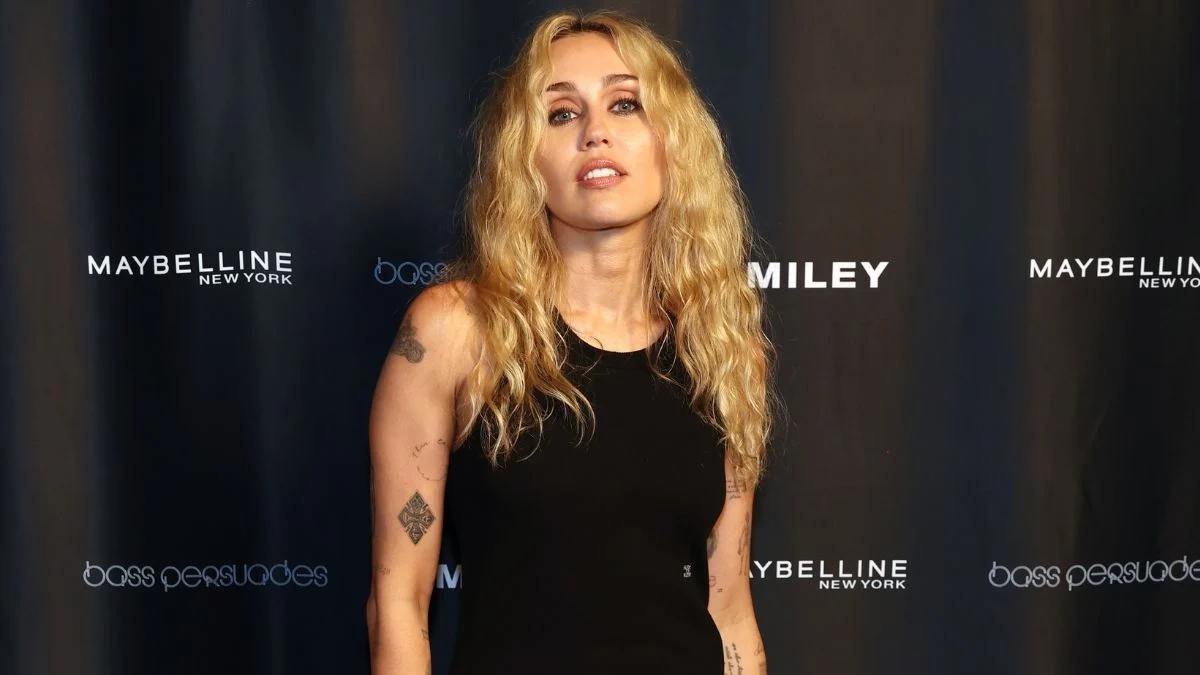
The boundary between the runway and the treadmill has never been more porous, and at the center of this cultural shift stands Miley Cyrus. In a move that has sent shockwaves through both the fitness industry and the fashion world, the Grammy-winning superstar has teamed up with Peloton for their latest initiative, "Let Yourself Run." Eschewing the standard aesthetic of neon spandex and traditional sportswear, Cyrus has introduced a new paradigm of athletic wear—one characterized by daring silhouettes, luxury labels, and an unapologetic rock-and-roll sensibility.
The Aesthetic Shift: A Plunging Statement
At the heart of the campaign is a visual identity that challenges the status quo. Cyrus, styled by the visionary Bradley Kenneth, fronts the campaign in the "WonderWoman Mio" black one-piece bodysuit from the legendary house of Norma Kamali. The garment, a masterclass in minimalist design, features a dramatic plunging V-neckline, delicate spaghetti straps, and a high-cut leg opening that creates an elongated, statuesque silhouette.
By layering this high-fashion piece over sheer black tights and accessorizing with dark, retro-inspired sunglasses, Cyrus has effectively blurred the lines between a high-editorial photo shoot and a functional fitness environment. The imagery, which captures the singer against a warm, wood-paneled backdrop, serves as a testament to the fact that performance gear no longer needs to sacrifice aesthetic edge for technical utility.
Chronology: From Pop Icon to Fitness Muse
The trajectory of Miley Cyrus’s involvement with athletic branding is a narrative of evolution. Her transition from a Disney-era performer to a multifaceted cultural icon who prioritizes physical and mental wellness has been well-documented.
- Early Career Foundations: Cyrus’s early years were defined by rapid-fire choreography and stage performance, which necessitated a high level of physical conditioning.
- The Wellness Turn: Over the past five years, Cyrus has been increasingly vocal about her commitment to daily movement—not just as a professional requirement, but as a mental health stabilizer.
- Fashion-Forward Fitness: The collaboration with Peloton follows a series of public appearances where Cyrus integrated luxury elements into her workout attire, signaling a departure from the "gym-only" mindset of the early 2010s.
- The "Let Yourself Run" Launch: The campaign officially debuted in late 2024, aligning with the rollout of Peloton’s cutting-edge "Tread Flex" treadmill. The synchronization of her music—specifically the track "Bass Persuades"—with the launch underscores a holistic integration of her creative and commercial identity.
Supporting Data: The Convergence of Athleisure and Luxury
The partnership between Cyrus and Peloton is not merely a celebrity endorsement; it is a strategic alignment with the "Athleisure" market, which is projected to reach unprecedented valuation by 2030. According to recent market analysis, consumers are increasingly prioritizing "day-to-night" versatility in their apparel.
Peloton’s decision to move away from purely functional marketing towards a high-fashion, narrative-driven approach is a direct response to the "Cyrus Effect." By aligning with an artist known for her boundary-pushing style, Peloton is positioning the Tread Flex not just as a piece of gym equipment, but as a lifestyle accessory. Data from social media sentiment analysis indicates that the "Let Yourself Run" campaign has generated a 40% increase in brand engagement among the 18–35 demographic, largely attributed to the visual appeal of the Norma Kamali collaboration.
Official Responses and Creative Vision
The creative process behind the campaign was a collaborative effort between top-tier industry professionals. Hairstylist Bobby Eliot and makeup artist Janice Daoud were instrumental in crafting a look that felt both raw and polished.
"Miley represents the modern athlete," says an internal source close to the Peloton creative team. "She doesn’t compartmentalize her life. Her workout is an extension of her creative process, and her wardrobe reflects that. We wanted to capture the grit of a run combined with the glamour of a red carpet. The Norma Kamali piece was the perfect vessel for that duality."
The artist herself has spoken previously about her approach to movement. In various interviews, Cyrus has emphasized that her relationship with fitness is non-traditional. "I don’t dress for the gym; I dress for the feeling," she has noted. This philosophy is clearly reflected in the campaign’s visual storytelling, where the "WonderWoman" bodysuit acts as armor rather than mere clothing.
Implications: The Future of Fitness Branding
The implications of the Cyrus-Peloton campaign are significant, signaling a broader shift in how brands communicate with a sophisticated, style-conscious audience.
1. The Death of "Gym-Only" Apparel
The industry is moving toward a post-athleisure reality where the distinction between "workout clothes" and "streetwear" is becoming obsolete. The use of high-cut, plunging luxury bodysuits in a treadmill context suggests that consumers are no longer satisfied with mass-produced athletic wear. They are seeking designs that offer emotional satisfaction and self-expression.
2. The Celebrity-Creator Paradigm
Peloton’s reliance on Cyrus’s music—"Bass Persuades"—and her personal aesthetic indicates a shift toward "total branding." It is no longer enough to have a celebrity in an ad; the celebrity must be an integrated part of the product experience. This synergy suggests that future campaigns will rely heavily on the artist’s own discography and personal style archives to drive brand value.
3. Redefining the Female Athlete
By highlighting her toned physique and detailed arm tattoos within the context of a high-fashion silhouette, the campaign challenges traditional standards of femininity in sports. It asserts that athleticism can be edgy, glamorous, and undeniably feminine without being performative for a male gaze. Instead, it promotes a vision of strength that is self-contained and confident.
A New Era of Movement
As Miley Cyrus continues to blur the lines between editorial style and athletic endurance, she is doing more than just selling a treadmill. She is defining a new lifestyle standard. The "Let Yourself Run" initiative is an invitation to move with intention, to dress with flair, and to reject the idea that fitness must be a sterile, utilitarian pursuit.
Whether she is posing in a Norma Kamali bodysuit or hitting a high note on a stage, Cyrus remains consistent in her ethos: life is a performance, and one should be dressed for the occasion, whether that occasion is a sold-out concert or a morning session on the Tread Flex.
In conclusion, this partnership serves as a masterclass in modern marketing. By leveraging the star power of one of the world’s most recognizable icons and pairing her with the cutting-edge aesthetic of high fashion, Peloton has successfully transcended its identity as a fitness company. It has become a fashion-forward authority, proving that when high-fashion energy meets physical discipline, the result is nothing short of iconic. As fans continue to dissect the campaign, one thing remains clear: the future of fitness is not just about how many miles you run, but how you look—and how you feel—while doing it.
 Neng Nana
 Azzam Bilal Chamdy
 Nana
Nana
