

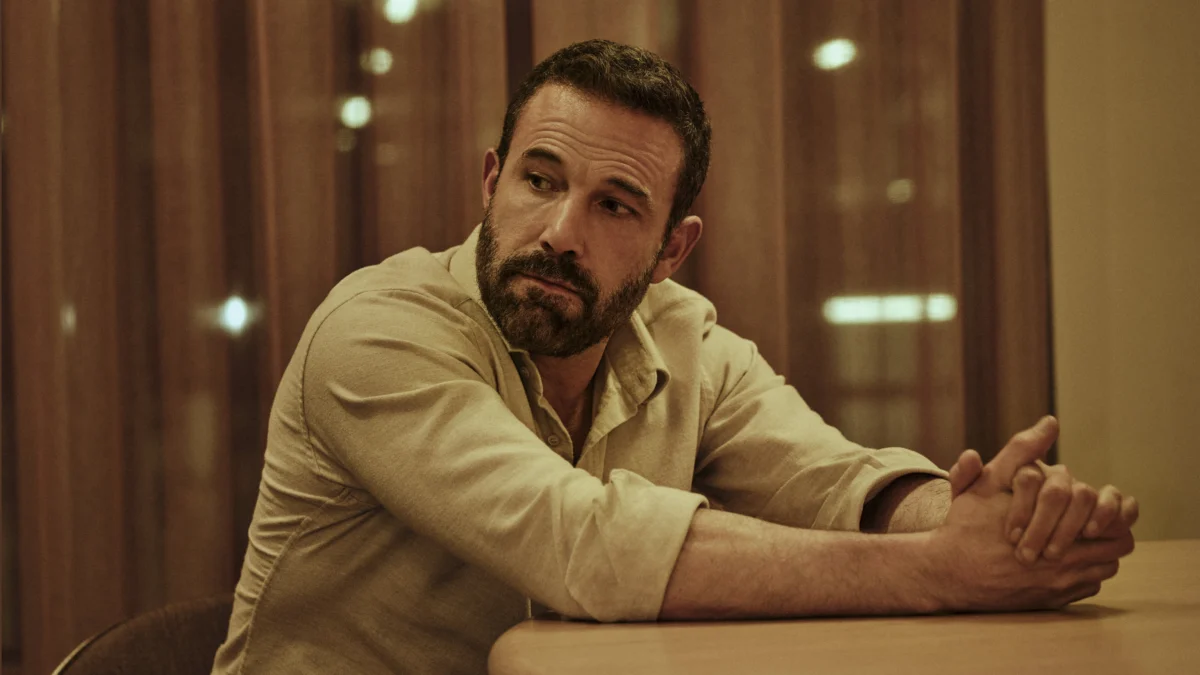
In a move that underscores the streaming giant’s deepening commitment to artificial intelligence, Netflix has officially confirmed the financial details surrounding its acquisition of InterPositive, a burgeoning AI-filmmaking startup co-founded by Academy Award-winning actor and director Ben Affleck. According to a formal regulatory filing submitted to the Securities and Exchange Commission (SEC), Netflix disbursed $587 million in cash to bring the startup into its corporate fold.
The confirmation puts to rest months of industry speculation regarding the valuation of the deal. While initial reports from outlets like Bloomberg suggested the price tag hovered near $600 million, the regulatory disclosure provides the definitive figure, cementing the acquisition as one of the most significant investments in AI-driven media production to date.
The Chronology of the Acquisition
The partnership between the streaming titan and the startup did not emerge overnight; it followed a period of intense industry scrutiny regarding the role of synthetic media in Hollywood.
Early Rumors and The March Announcement
The acquisition was first made public in early March 2026. At the time, Netflix issued a brief press release confirming the purchase, noting that the entire engineering and creative team behind InterPositive would transition to Netflix. However, the company notably omitted the financial terms, leading to widespread conjecture among investors and tech analysts.
The Integration Period
Following the announcement, the industry observed a quiet period of integration. Ben Affleck, long celebrated for his directorial precision in films like Argo and The Town, was appointed to the role of Senior Advisor. This position signaled that his contribution to Netflix would extend far beyond the technical handover of software, positioning him as a bridge between high-level studio production and algorithmic efficiency.
Regulatory Disclosure and Finalization
The SEC filing, which covers the second quarter of 2026, serves as the formal closing chapter of this transaction. By disclosing the $587 million cash payment, Netflix has provided transparency to its shareholders, framing the purchase not as an experimental toy, but as a core component of its future production infrastructure.
Understanding InterPositive: Bridging Creativity and Compute
To understand why Netflix felt compelled to spend over half a billion dollars, one must examine the specific value proposition of InterPositive. Unlike broad-spectrum generative AI tools that seek to replace human actors or screenwriters, InterPositive focuses on the "post-production bottleneck."
Addressing Real-World Production Challenges
In his initial statement regarding the acquisition, Ben Affleck articulated a vision that centered on the preservation of human craft. He argued that the primary purpose of InterPositive’s AI is to act as a "force multiplier" for filmmakers rather than a replacement.
The software specifically targets technical errors that are historically expensive to fix. These include:
- Background Replacements: Seamlessly adjusting locations or environments that may have been compromised by weather or logistical issues.
- Missing Shots: Using generative modeling to fill in gaps in coverage, allowing for continuity that would otherwise require costly re-shoots.
- Lighting Correction: Digitally re-balancing light sources in post-production to match the emotional tone or physical continuity of a scene, a process that traditionally requires weeks of manual color grading.
By automating these "heavy lifting" tasks, InterPositive allows directors to focus on performance and narrative arc, rather than being bogged down by the technical limitations of a shoot day.
Supporting Data: The AI Shift at Netflix
The acquisition of InterPositive does not exist in a vacuum; it is part of a broader, systemic shift in how Netflix manages its massive content library.
The Scale of AI Adoption
In its most recent quarterly earnings call, Netflix disclosed a startling metric: approximately 300 of its titles produced over the last year have incorporated some form of generative AI. This range of application is broad, spanning from automated dubbing and subtitle generation to the complex visual effects processing that InterPositive specializes in.
Financial Justification
For investors, the $587 million price tag is viewed as a hedge against rising production costs. As the cost of "prestige" television continues to climb—with some series budgets now exceeding $20 million per episode—the ability to fix a shot in software rather than flying an entire cast and crew back to a location represents a significant margin-saving opportunity.
Official Responses and Industry Sentiment
The reception to the deal has been a mixture of excitement from the technical community and cautious apprehension from creative guilds.
The Affleck Perspective
Ben Affleck has been careful to frame the deal as a protective measure for human creativity. In his public statements, he has consistently emphasized that "the soul of a film is in the performance." By providing tools that reduce the "friction" of filmmaking, he posits that he is helping creators retain their vision despite the constraints of modern production schedules.
The Studio Stance
Netflix leadership has framed the acquisition as a competitive necessity. By bringing the technology in-house, the company avoids the reliance on third-party VFX vendors, thereby protecting its proprietary workflows and keeping its production data secure within its own ecosystem.
Creative Guild Reaction
While the Writers Guild and Directors Guild have been vocal about the dangers of AI in the industry, the reception to InterPositive has been slightly nuanced. Because the tool is marketed as a "post-production utility" rather than a "content generator," it has faced less immediate backlash than tools that write scripts or generate imagery from scratch. However, concerns remain regarding how these tools might eventually lead to a reduction in the number of VFX artists and editors required for large-scale productions.
Strategic Implications: The Future of Film
The acquisition of InterPositive marks a turning point in the "AI-in-Entertainment" arms race. Several long-term implications are already beginning to take shape.
The End of the "Fix It in Post" Myth
Traditionally, "fixing it in post" was a term of derision in the industry, implying a failure of planning. With tools like InterPositive, the goal is to make post-production a creative extension of the filming process. The line between what is "real" and what is "generated" will become increasingly blurred, effectively ending the era of the "unfixable" production mistake.
Competitive Advantages in Content Volume
Netflix’s primary competitor, Disney and Warner Bros. Discovery, are also investing heavily in AI. By securing a high-profile figure like Affleck and a proven, high-utility tool, Netflix has signaled that it intends to lead the market in both the quality and the speed of its output.
The Talent Paradigm Shift
As Netflix integrates more AI tools, the definition of a "filmmaker" is beginning to change. Directors are no longer just managing actors and camera crews; they are increasingly required to interface with AI engineers and synthetic media pipelines. This suggests a future where the most successful directors are those who can synthesize human artistic intent with the capabilities of generative systems.
Conclusion
The $587 million cash outlay for InterPositive is, at its heart, a bet on the efficiency of storytelling. While the financial figure is massive, it represents a fraction of Netflix’s annual content spend, which frequently exceeds $17 billion. If InterPositive can reduce the cost of even a small percentage of Netflix’s library by streamlining post-production, the deal will likely be viewed as a bargain in the coming years.
However, the acquisition also raises profound questions about the future of labor in Hollywood. As Netflix continues to integrate generative AI across its catalog, the industry will be watching closely to see if Ben Affleck’s promise to "protect the power of human creativity" holds true, or if this is merely the first step toward a more automated, and potentially less human, era of entertainment. For now, the deal stands as a definitive statement: the future of Netflix is being written in code as much as it is in scripts.
 Asep Darmawan
 Siti Muinah
 Ali Ikhwan
