

Welcome back to TechCrunch Mobility, your definitive source for the rapidly evolving landscape of transportation, autonomous systems, and the intersection of AI with the physical world. If you haven’t yet joined our inner circle, sign up for our free newsletter to get these insights delivered directly to your inbox.
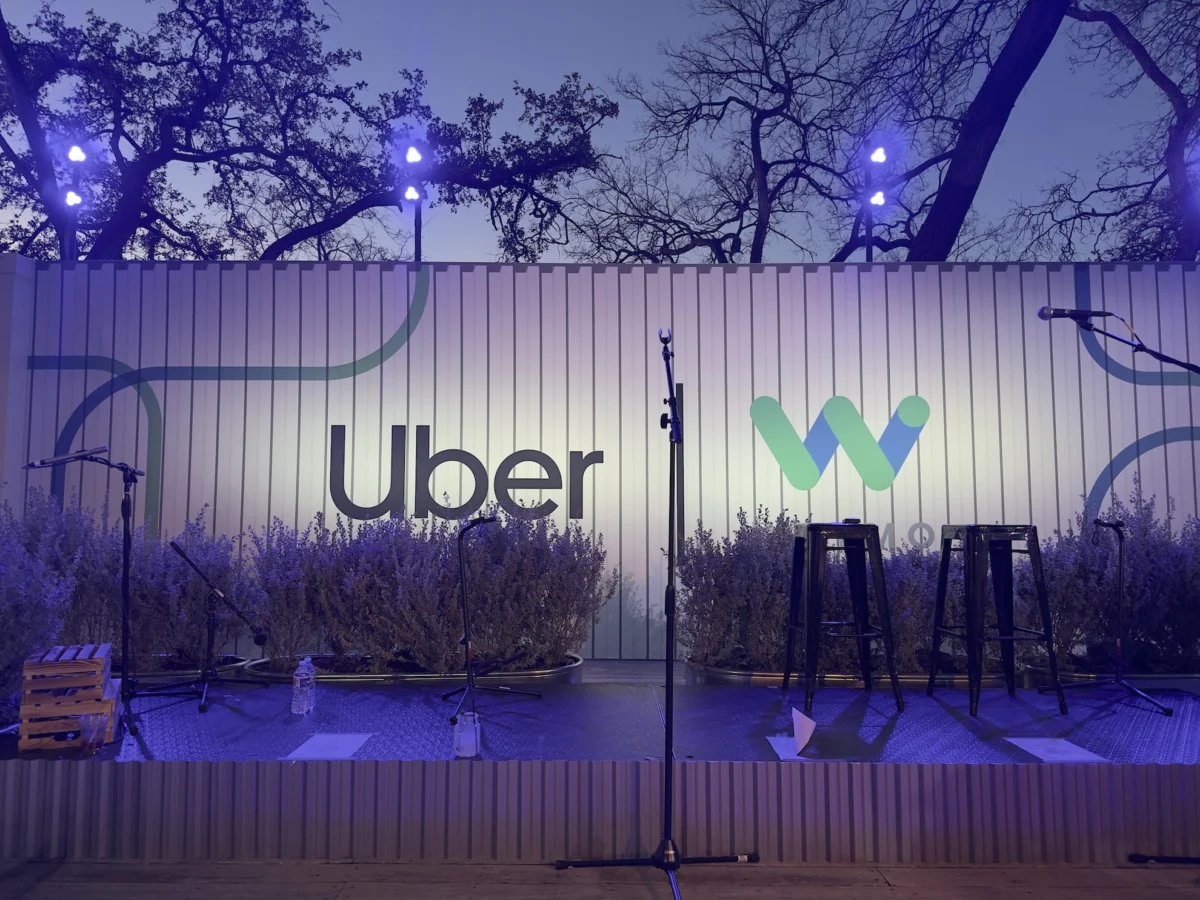
In the fast-paced world of autonomous vehicle (AV) development, alliances are rarely permanent. Last week, I explored the deepening rift between ride-hailing giant Uber and autonomous leader Waymo. What was once a strategic partnership has, in the blink of an eye, transformed into a fierce, multi-front regulatory war. This isn’t mere speculation; it is the result of weeks of investigative reporting, including an analysis of internal correspondence Uber has submitted to the D.C. Council as they debate the future of autonomous transit in the nation’s capital.
The Collision Course: Policy as a Competitive Weapon
The core of this conflict lies in a piece of legislation currently under consideration by the D.C. Council that would establish a regulatory framework for robotaxis to operate within the District. While the goal of the bill is to foster innovation, the reality of the lobbying effort has revealed that Uber and Waymo are operating from fundamentally incompatible playbooks.
Uber has emerged as a vocal opponent of the proposed D.C. bill. Their argument is twofold: first, they contend that the widespread deployment of robotaxis will displace thousands of human for-hire drivers; second, they argue that the current legislative path would grant Waymo a de facto monopoly.
To counter this, Uber has lobbied for a "hybrid" model. Under this proposal, robotaxi operators would be legally required to integrate their fleets into existing ride-hailing networks alongside human drivers. Industry insiders, however, tell me that this approach has little chance of becoming law. If it were to pass, it would force AV developers into a corner: they would either have to cede control to third-party apps like Uber or pivot their business models to accommodate a workforce they spent hundreds of millions of dollars attempting to automate.
A Chronology of the D.C. Council Hearing
The tension reached a boiling point this past Monday during a pivotal D.C. Council hearing. The chamber was packed with a diverse cross-section of stakeholders: representatives from Lyft, Tesla, Uber, and Waymo, as well as disability rights advocates, local business associations, highway safety groups, and labor unions.

The Testimony Breakdown
- The Proponents: Waymo, having already conducted extensive testing in the city with human safety operators, appeared to be one of the few entities that viewed the current bill as a viable path forward. Having already surpassed the proposed 180-day and 250,000-mile safety requirements, Waymo stands to gain a significant first-mover advantage should the bill pass as currently drafted.
- The Industry Resistance: Much of the remainder of the industry expressed deep skepticism. Tesla’s senior policy adviser, India Herdman, articulated a sentiment shared by several developers: the regulatory hurdles—specifically the $1 million application fee, the $5 million permit fee, and the $0.15-per-mile tax—are prohibitively steep. Furthermore, Tesla and its peers argued that the 250,000-mile requirement should be "portable," meaning miles accumulated in other jurisdictions should count toward the D.C. threshold.
Supporting Data: The High Stakes of Delivery and AVs
The friction in D.C. is happening against a backdrop of aggressive capital moves that suggest the industry is consolidating power for a long-term fight.
Uber’s Expansion:
Uber is doubling down on its position as a global delivery and transport titan. The company recently announced a massive $14.8 billion acquisition of Germany’s Delivery Hero. If regulators clear the deal—which will undoubtedly face intense scrutiny—Uber will effectively double its global delivery footprint, gaining access to nearly 100 new markets across Asia, Latin America, the Middle East, and Europe. Simultaneously, Delivery Hero has entered a separate $1.6 billion agreement to divest its assets in 14 markets where Uber Eats already holds a dominant position, with the buyer being New York-based firm SSW Partners.
Capital Flows into Infrastructure:
The broader mobility ecosystem continues to attract massive investment despite the regulatory uncertainty:
- Self Inspection: This San Diego-based startup, which is applying AI to streamline vehicle safety checks, successfully raised $10 million. Notably, the round was led by the family office of Sheryl Sandberg, signaling high-level confidence in the future of automated vehicle maintenance.
- Senra: The startup is attempting to pull automotive wiring harness manufacturing out of the "Cold War era." They secured $65 million in a Series B round co-led by Lowercarbon and Interlagos, with backing from industry titans like Sequoia Capital and Andreessen Horowitz.
- Zepto: On the other side of the spectrum, the Indian fast-delivery giant is reportedly facing a valuation squeeze, with sources suggesting their upcoming IPO will target a figure well below their $7 billion peak.
Official Responses and Corporate Strategy
The corporate narratives surrounding these moves are as revealing as the deals themselves.
The Lucid Motors Saga:
Lucid Motors recently found itself at the center of a volatile market event following a report that suggested the company was considering Chapter 11 bankruptcy. The impact was immediate, with the stock suffering its largest intra-day drop ever—over 50%. However, the company’s response was swift and coordinated; the CEO, the communications team, and an official SEC filing all categorically denied the rumors. The stock has since stabilized and recovered, trading 28% higher than its pre-drop level.
Lyft’s Positioning:
Lyft CEO David Risher has been busy distinguishing his company from its larger rival, recently stating that Lyft aims to be the "Good Uber." This branding strategy suggests that as Uber aggressively maneuvers to control the robotaxi ecosystem, Lyft is positioning itself as a more collaborative, less adversarial partner for city regulators and the labor force.

The Safety and Surveillance Backlash:
The regulatory landscape is becoming increasingly hostile to "surveillance-first" mobility. The Los Angeles Police Department is letting its contract with Flock Safety expire, citing concerns over civil liberties and privacy regarding the company’s extensive network of license-plate-tracking cameras.
Similarly, the National Transportation Safety Board (NTSB) recently confirmed that a fatal Tesla crash in June was caused by the driver, who manually overrode the Full Self-Driving (Supervised) system by pressing the accelerator to 100%. Meanwhile, in San Francisco, Mayor Daniel Lurie has demanded that state regulators tighten the leash on robotaxi companies after a July 4th incident where Waymo vehicles became stranded, effectively gridlocking the city.
Implications: The Future of Mobility
What does this all mean for the average consumer? We are witnessing the end of the "wild west" phase of autonomous vehicles. The next 24 months will be defined by three critical trends:
- Regulatory Fragmentation: As seen in D.C. and San Francisco, municipalities are no longer content to let tech companies dictate the terms of deployment. The era of high fees and strict mileage requirements is here.
- The "Platform" Consolidation: Uber’s move to acquire Delivery Hero is proof that the industry is pivoting toward "super-apps." Companies that own the platform—the digital interface that connects consumers to services—will ultimately control the economics of the robotaxi market, regardless of who builds the car.
- Increased Scrutiny on AI Safety: From Zoox’s software recall (after its vehicles became confused by smoke from a fire) to the NTSB’s findings on Tesla, the public and the government are demanding extreme reliability. The companies that can prove their AI is resilient under edge-case conditions will be the ones that survive the regulatory bottleneck.
One Final Thought:
If you want to dive deeper into the mind of the people steering this ship, I highly recommend checking out the latest Strictly VC podcast episode, where Uber’s Chief Product Officer, Sachin Kansal, sits down with our EIC, Connie Loizos. They cover everything from the future of AI agents in travel to why Uber is so determined to play both sides of the robotaxi race. It is a masterclass in corporate strategy for an industry in transition.
As always, the road ahead is long and paved with complexity. Keep your eyes on this space as we continue to track the policy, the money, and the machines that are moving the world.
Disclaimer: When you purchase through links in our articles, we may earn a small commission. This does not affect our editorial independence.
 Asep Darmawan
 Siti Muinah
 Ali Ikhwan
