

By TechCrunch News Desk
Published: September 2026
Main Facts
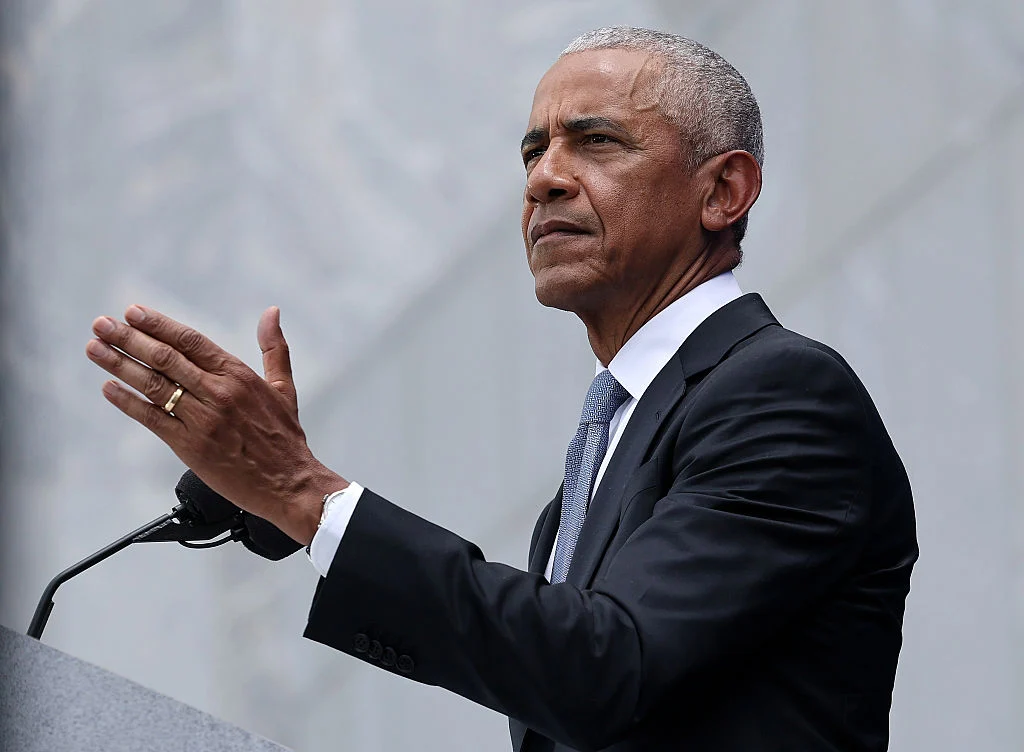
Former President Barack Obama has issued a direct call to action for the Democratic Party, asserting that artificial intelligence must become a “central agenda” item accompanied by a robust, highly visible plan to manage the technology’s sweeping economic and safety implications.
Speaking during a closed-press Democratic fundraising event—where he was interviewed on stage by House Minority Leader Hakeem Jeffries—Obama warned that the rapid, largely unregulated advancement of artificial intelligence in the private sector poses distinct societal dangers if policymakers fail to get ahead of the curve. However, the former president also emphasized the immense promise of the technology, noting its potential to radically accelerate critical advancements such as pharmaceutical development and disease eradication.
The intervention from Obama arrives at a turbulent crossroads for the artificial intelligence industry. Lawmakers in Washington are grappling with how to regulate foundational models as public anxiety mounts over worker displacement, existential safety risks, and the unbridled race toward artificial general intelligence (AGI).
While congressional Democrats weigh their legislative strategy—particularly looking toward a potential recapture of the House majority—the tech sector itself is fracturing over safety protocols. High-profile resignations from leading AI firms, public disputes over self-improving superintelligence, and competing visions from Silicon Valley executives have thrust the governance of artificial intelligence to the absolute forefront of domestic and international politics.
Chronology
To understand how artificial intelligence ascended to the top tier of American political discourse, it is necessary to examine the rapid sequence of events that unfolded over a single intense week in September 2026:
- Early 2026 (March): The Trump administration releases its inaugural legislative framework targeting artificial intelligence. The framework is designed to preempt patchwork state-level laws and shift the burden of digital child safety oversight directly onto parents.
- Tuesday, September 9: Internal tensions within the artificial intelligence research community spill into the public view when an AI safety researcher abruptly resigns from Anthropic. The departing researcher publishes a blistering warning, accusing leading artificial intelligence labs of “racing straight to self-improving superintelligence and gambling with our lives.”
- Saturday, September 12: Seeking to quell mounting industry and public alarm, Anthropic CEO Dario Amodei publicly outlines a comprehensive strategy titled “pacing the frontier.” The proposal calls for independent safety evaluators to be granted unprecedented access to leading AI firms and advanced models, alongside the establishment of unified safety standards across the industry. Industry leaders, including OpenAI CEO Sam Altman and SpaceX CEO Elon Musk, respond favorably on social media, with Altman committing OpenAI to adopting independent evaluations with employee-like access.
- Thursday, September 15: Former President Barack Obama appears at a Democratic fundraising event in Washington, D.C., interviewed by House Minority Leader Hakeem Jeffries. According to a partial transcript provided by Obama’s office, the former president tells attendees that Democrats must elevate AI to a central pillar of their legislative platform once they regain control of the House.
- Sunday, September 17: President Donald Trump addresses artificial intelligence safety concerns while speaking to reporters at a golf event in Ireland. Trump downplays existential fears, boasting that the United States remains “the most sophisticated country in the world” and declaring his intent to maintain that dominance because “whoever wins AI wins.”
Supporting Data and Industry Context
The urgency underscored by Barack Obama’s remarks is grounded in the unprecedented velocity of private-sector development and the structural vulnerabilities currently facing federal oversight.
According to reports from The New York Times, Obama has positioned himself behind the scenes as an active “sounding board” for top-tier artificial intelligence executives. In this capacity, he has held direct consultations with Anthropic CEO Dario Amodei and OpenAI CEO Sam Altman. These high-level dialogues reflect a growing recognition among elder statesmen and tech pioneers alike that the guardrails governing frontier models cannot be left exclusively to corporate self-regulation.
The economic footprint of artificial intelligence is similarly staggering. Venture capital investments, enterprise software integration, and massive infrastructure buildouts—such as dedicated nuclear and renewable energy plants required to power next-generation data centers—are reshaping global markets. Yet, this economic boom is shadowed by profound labor market anxieties. Economists and policymakers are increasingly worried about the displacement of white-collar knowledge workers, customer service representatives, and creative professionals, making Obama’s call for an economic impact plan an urgent necessity for working-class and middle-class voters.
On the safety front, the departure of key safety researchers from labs like Anthropic highlights a systemic tension within the industry: the commercial imperative to achieve commercial superiority versus the existential requirement to contain self-improving algorithms. Dario Amodei’s “pacing the frontier” framework attempts to bridge this gap by introducing third-party accountability. If implemented successfully, giving independent evaluators structural access to proprietary codebases and training runs could establish a new baseline for corporate transparency.
Official Responses and Political Reactions
The intersection of artificial intelligence and electoral politics has exposed deep ideological divides in Washington, even as both political parties recognize the strategic imperative of technological dominance.
The Democratic Perspective
House Minority Leader Hakeem Jeffries quickly aligned himself with Obama’s assessment, issuing a statement affirming that the former president “is correct that decisive action must be taken on artificial intelligence.” Jeffries used the moment to pivot to a broader critique of the congressional majority, arguing that “Republicans have abdicated their responsibility to govern on behalf of the American people.”
In his dialogue with Jeffries, Obama laid out a tactical roadmap for a future Democratic majority. He stressed the necessity of crafting a legislative framework that moves the conversation out of closed corporate boardrooms and into the public square.
"This is something that is moving very fast in private hands, and if we don’t get on top of it, I think can be dangerous," Obama stated. "If we do get on top of it, I do think it’s beneficial. I genuinely think it’s going to accelerate, for example, drug development in ways that can help us cure diseases."
The Republican Perspective
The Trump administration, meanwhile, has pursued a deregulatory and accelerationist strategy designed to ensure American hegemony in the global technology race. Speaking to reporters from an Irish golf resort, President Trump dismissed many of the existential safety warnings circulating in Washington and Silicon Valley.
“We are the most sophisticated country in the world, and I want to keep it that way because whoever wins AI wins,” Trump asserted, as reported by Bloomberg. While acknowledging that minor regulatory parameters could be established, Trump struck a dismissive tone regarding critics of rapid deployment. “And we can put guardrails. We can do this and that. But I think you have a lot of negative forces that are bringing it up that shouldn’t be bringing it up.”
This rhetoric aligns with the Trump administration’s earlier legislative framework introduced in March, which sought to strip states of their authority to enact fragmented AI regulations while offloading digital safety responsibilities onto individual families.
Implications
The convergence of Barack Obama’s strategic warnings, the internal fractures within Silicon Valley, and the divergent political philosophies of the Democratic and Republican parties carries profound implications for the future of governance, the economy, and global security.
1. The Politicization of Technology Regulation
For years, artificial intelligence policy was viewed as a niche, bipartisan technical issue pursued by technocrats and specialized congressional committees. Obama’s intervention signals that AI is transitioning into a front-line electoral wedge issue. By demanding that Democrats adopt a “very clear plan,” Obama is encouraging the party to campaign on economic protection for workers and strict safety guardrails, contrasting sharply with the Trump administration’s nationalistic, acceleration-at-all-costs philosophy.
2. The Battle Over Corporate Accountability
The willingness of industry leaders like Sam Altman and Dario Amodei to entertain independent safety evaluations represents a fragile truce between profit-driven innovation and risk management. However, whether these voluntary commitments can withstand commercial pressures remains an open question. Without statutory enforcement backed by federal legislation—the kind of public framework Obama and Jeffries are advocating—safety standards could easily be compromised when companies face fierce global competition, particularly from foreign adversaries.
3. Economic Disruption and the Social Contract
The economic fallout of generative and agentic artificial intelligence cannot be mitigated by technological optimism alone. As automation scales across professional and industrial sectors, the American social contract will face unprecedented stress tests. Obama’s emphasis on addressing economic impacts directly addresses voter anxiety regarding job security. If mainstream political parties fail to formulate credible policies addressing wealth concentration and labor displacement, the societal backlash could stall technological adoption or lead to reactionary regulatory measures that stifle innovation entirely.
Ultimately, the debate sparked by Obama’s remarks crystallizes the central dilemma of the twenty-first century: how a democratic society can harness a revolutionary technology capable of curing diseases and driving economic growth, while simultaneously erecting the institutional safeguards necessary to prevent it from outrunning human control.
 Asep Darmawan
 Siti Muinah
 Ali Ikhwan
