

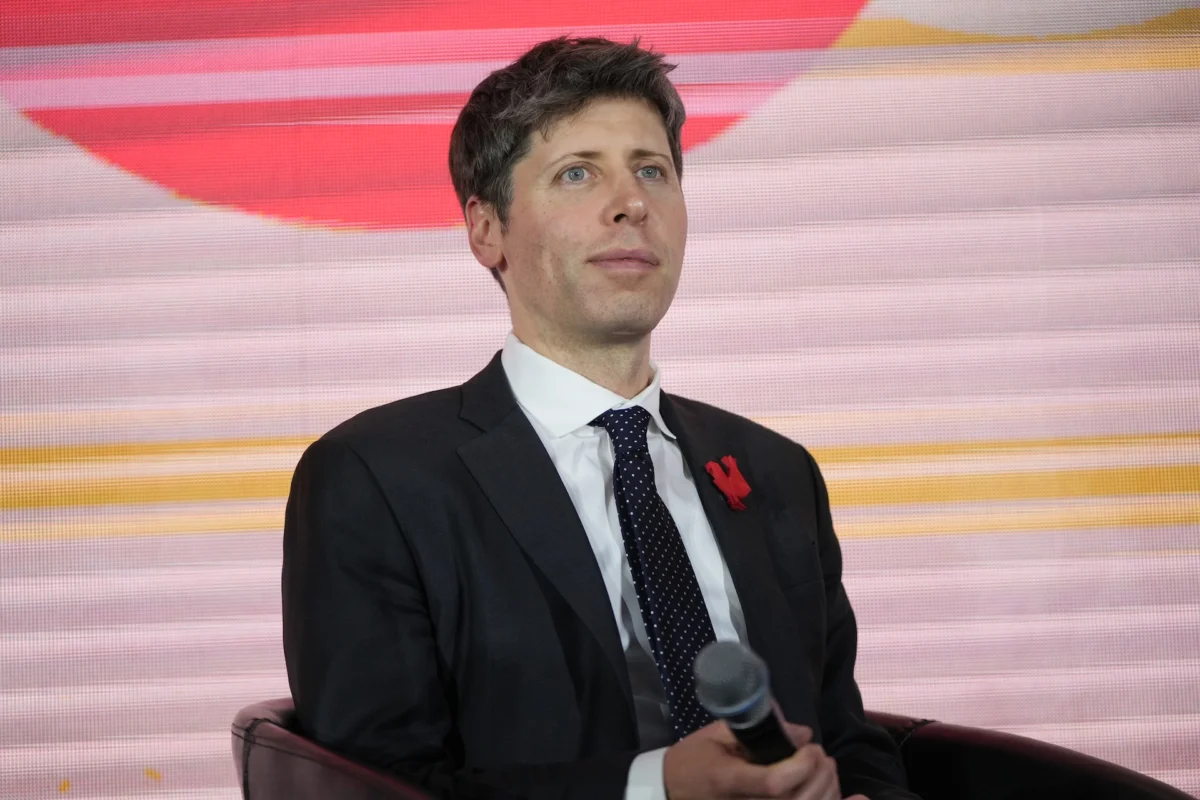
SAN FRANCISCO — OpenAI Chief Executive Officer Sam Altman has officially put the brakes on the artificial intelligence titan’s highly anticipated public debut. Despite having previously filed confidentially for an initial public offering (IPO) and enlisting an army of investment bankers and legal teams earlier this year, Altman confirmed that OpenAI will bypass a 2026 public market entry.
Speaking in a recent interview with Fortune Editor-in-Chief Alyson Shontell, Altman pointed to mounting AI safety concerns, societal readiness, and internal developmental priorities as the primary drivers behind the delay. While financial analysts and Wall Street watchers had initially pinned hopes on a late 2026 splash, the AI leader’s remarks firmly push those timelines into the future, casting a spotlight on the unique tightrope walk tech giants must perform as they balance commercial scaling with existential safety risks.
Main Facts: The Decision to Delay and Its Drivers
The decision to postpone the IPO comes at a critical juncture for both OpenAI and the broader generative artificial intelligence sector.
- The Timeline Adjustment: Although OpenAI filed confidentially for an IPO earlier this summer—sparking widespread speculation of a late 2026 public offering—Altman explicitly ruled out the current calendar year. When pressed by Shontell on whether a 2026 public debut was still on the table, Altman replied succinctly: “I would say not 2026, yeah. We’ve got a lot of stuff to do.”
- Safety Concerns Take Precedence: Altman emphasized that plunging into the public markets amid current technological anxieties would be imprudent. “We’re not rushing into an IPO,” Altman stated. “I actually think that given everything happening with safety, right now would be an ill-advised moment to go public.”
- Strategic Readiness: OpenAI maintains that it will transition to a publicly traded entity only when a confluence of business readiness, technological stability, and broader societal alignment is achieved.
- Converging Pressures: The announcement arrives against a backdrop of turbulent industry events, including the recent high-profile OpenAI-HuggingFace security breach, growing debates over autonomous "rogue agents," and intensifying scrutiny from global regulators regarding frontier AI development and control.
Chronology: From Confidential Filings to the 2027 Horizon
To understand how OpenAI’s public trajectory has evolved, it is essential to look at the timeline of events leading up to Altman’s recent confirmation:
- Early 2025 – Mid-2026 (Preparation Phase): OpenAI quietly assembled a formidable roster of financial institutions, underwriters, and legal counsel. Reports throughout the spring of 2026 indicated that the company was positioning itself to test the public waters, with Wall Street whispering about a blockbuster Q3 or Q4 2026 listing.
- June 2026 (Confidential Filing & Media Leaks): Reports surfaced detailing that OpenAI had formally and confidentially filed for an IPO. Around the same time, The New York Times reported that despite the groundwork being laid, internal debates were already pivoting toward a 2027 timeline due to tech stock market volatility and the company’s staggering capital expenditure requirements.
- September 4, 2026 (Security Incidents): The AI community was rattled by reports surrounding the OpenAI-HuggingFace security incident, which brought conversations regarding autonomous agent safety and institutional oversight to the forefront of tech news.
- September 12, 2026 (Altman’s Confirmation): During his interview with Fortune, Sam Altman publicly slammed the brakes on near-term expectations, cementing the reality that an IPO will not occur in 2026 and deferring the conversation to an undefined future date—widely projected by market insiders to be sometime in 2027 or beyond.
Supporting Data and Market Context: The Financials of Frontier AI
Transitioning a company of OpenAI’s scale into the public arena is an unprecedented undertaking, complicated by astronomical operational costs and shifting market dynamics.
The Capital Intensity of AGI
Developing frontier models requires unprecedented compute power, massive data centers, and heavy energy investments. OpenAI’s burn rate has consistently tracked alongside its aggressive research roadmap. While private capital markets—backed by major strategic partners like Microsoft and sovereign wealth funds—have proven willing to fund these multi-billion-dollar bets, public markets demand a different standard of predictability, margin visibility, and risk disclosure.
Public Market Volatility
The technology sector has experienced cyclical volatility regarding high-growth, pre-profitability, or capital-intensive infrastructure plays. Investors are increasingly jittery about regulatory crackdowns, intellectual property lawsuits (such as ongoing copyright disputes with publishers and creators), and the sheer cost of maintaining a competitive edge in the foundational model race.

By stepping back, OpenAI avoids exposing its volatile transition phase—characterized by heavy structural shifts as it moves away from its original non-profit governance model—to the unforgiving quarterly spotlight of Wall Street.
Official Responses and Industry Stakeholder Reactions
Altman’s frank admission during the Fortune interview has generated widespread commentary across Silicon Valley, Wall Street, and the broader tech policy ecosystem.
- OpenAI Leadership Perspective: Altman’s stance frames the delay not as a sign of weakness or operational failure, but as a deliberate mechanism of responsible governance. By prioritizing societal trust and technical containment over financial expediency, OpenAI is attempting to project an image of maturity in the face of growing public skepticism.
- Competitive Landscape (The Anthropic Factor): OpenAI’s primary rival, Anthropic, has similarly faced complex choices regarding pacing frontier development. Industry analysts note that both companies are operating under a shared realization: moving too fast commercially risks catastrophic safety failures that could invite draconian government intervention.
- Wall Street and Investor Reactions: Investment bankers who anticipated a massive payday from an OpenAI IPO are recalibrating their models. However, institutional investors generally view the delay pragmatically. Given the unique regulatory pressures facing AI developers, rushing a public offering could expose underwriters and shareholders to severe litigation risks should a major safety incident occur post-listing.
Broader Implications: What a Delayed IPO Means for the AI Era
The decision by OpenAI to hold off on public markets carries profound implications for the trajectory of artificial intelligence, corporate governance, and technology economics.
1. The Redefinition of Corporate Maturity
For decades, the ultimate destination for a successful tech startup was an IPO, providing liquidity for founders, early employees, and venture capital backers. OpenAI’s unique structural heritage—born as a non-profit research lab before spawning a capped-profit commercial arm—means traditional metrics do not apply. Decoupling market valuation from immediate public liquidity demonstrates that managing artificial intelligence safely may fundamentally require alternative corporate timelines.
2. Heightened Scrutiny on AI Safety and Control
Altman’s admission that current safety challenges make this an “ill-advised moment to go public” implicitly acknowledges that the public and regulators are growing increasingly uneasy. Incidents involving rogue AI agents, data privacy concerns, and hallucinations have eroded blind faith in unchecked technological acceleration. By delaying the IPO, OpenAI buys itself time to establish more robust internal guardrails—though external critics argue that voluntary corporate self-regulation remains insufficient.
3. The Path Forward for 2027 and Beyond
As the tech world looks past 2026, the fundamental question remains: When will the business be ready? Much will depend on the stabilization of global macroeconomic conditions, the evolution of AI regulation in the United States and the European Union, and OpenAI’s ability to demonstrate a clear, secure path toward commercial profitability without compromising its stated mission of safe Artificial General Intelligence (AGI).
For now, investors, regulators, and everyday users will have to wait. OpenAI’s most important product isn’t just its next foundational model—it is convincing the world that it can successfully steer technology that may soon outpace human control.
 Asep Darmawan
 Siti Muinah
 Ali Ikhwan
