

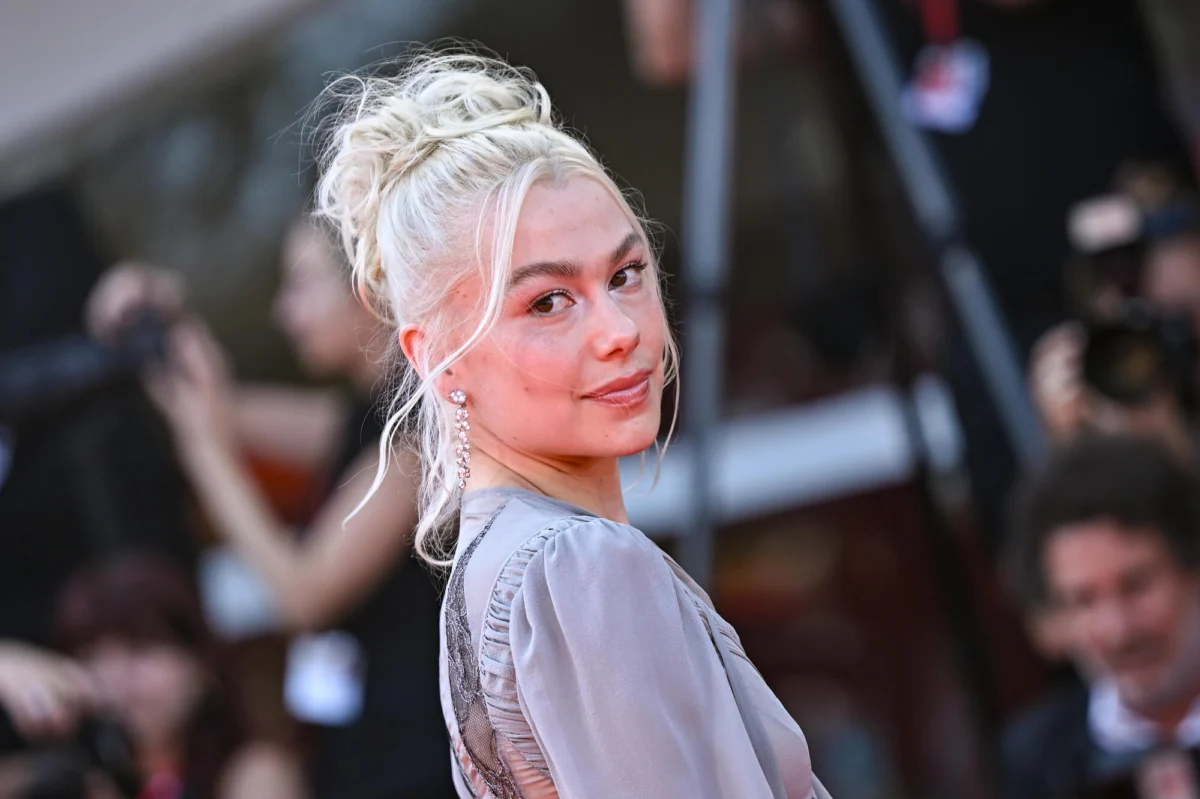
Less than a month after rattling the foundation of the 2026 Grammy conversation with the release of her critically acclaimed third solo LP, Lost Weekend, indie-rock icon Phoebe Bridgers is setting her sights on a new, prestigious prize: the Academy Award for Best Original Song.
The four-time Grammy winner, who has long been a fixture of the alternative music scene, is officially expanding her artistic footprint. Beyond her highly anticipated feature film debut in A24’s Primetime—a stylized dramatization of the controversial To Catch a Predator series featuring Robert Pattinson as Chris Hansen—Bridgers has penned an original composition titled "On Video." Serving as the film’s end title track, the song positions the singer squarely in the sights of the Academy of Motion Picture Arts and Sciences for the upcoming awards cycle.
The Convergence of Music and Cinema: A Creative Evolution
The announcement regarding "On Video" arrives as A24 continues to build momentum for its ambitious autumn slate. Bridgers, known for her melancholic, atmospheric, and deeply confessional songwriting, reportedly found inspiration for the track while collaborating closely with the film’s composer, Ari Balouzian.
While "On Video" remains under wraps—with no official release date for the single as of this writing—the buzz surrounding its inclusion is palpable. Sources close to the production suggest that the track serves as an emotional anchor for the film, bridging the gap between the dark, true-crime-inspired narrative of the Primetime script and the haunting, ethereal aesthetic Bridgers has mastered over the course of her career.
The news of the song’s eligibility coincides with the broader rollout of the film’s auditory landscape. A24 Music has officially dropped the first cut from the soundtrack, titled "Savior," a track that highlights the 24-piece original score composed by Balouzian. The release of "Savior" serves as a thematic appetizer, offering listeners a glimpse into the sonic tension that will define the movie.
Chronology: A meteoric rise to the awards circuit
To understand the weight of this announcement, one must look at the rapid-fire trajectory of Bridgers’ recent career.
- Early August 2026: Bridgers drops Lost Weekend, her third solo LP. The album is immediately met with near-unanimous critical acclaim, with early projections placing it as a dominant force in the major categories for the 2026 Grammy Awards.
- Late August 2026: Primetime makes its world premiere at the Venice Film Festival. Critics are quick to praise the film’s audacity, with Robert Pattinson’s performance as Chris Hansen being immediately touted as a lock for a Best Actor nomination.
- Early September 2026: A24 confirms the release date for Primetime as September 25, alongside the reveal that Phoebe Bridgers will contribute the closing credit song, "On Video."
- September 2026: The official campaign for the 99th Academy Awards begins to take shape, with analysts identifying Bridgers as a formidable contender in the Best Original Song category.
The Competitive Landscape: A Crowded Field
If Bridgers hopes to take home an Oscar, she will have to navigate one of the most competitive fields in recent memory. The Best Original Song race is already shaping up to be a clash of industry titans.
Industry analysts have already flagged a high-profile lineup of competitors, including global pop juggernaut Taylor Swift, the experimental hip-hop visionary Travis Scott (collaborating with legendary filmmaker Christopher Nolan), musical theater mastermind Lin-Manuel Miranda, the perennial awards-season favorite Diane Warren, and the legendary David Byrne.
Unlike the previous awards cycle, which saw a clear, runaway favorite in the form of "Golden" from KPop Demon Hunters, the current race lacks a frontrunner. This vacuum of consensus creates a unique opportunity for an artist like Bridgers. Her ability to pivot between the indie-folk sensibilities of her solo work and the high-concept cinematic requirements of a film soundtrack makes her a wildcard that voters may find difficult to ignore.
The Primetime Effect: A Film of High Stakes
Directed by Lance Oppenheim—who is having a banner year with his concurrent project, You Can See Everything—Primetime is already being discussed as an A24 flagship production. The film’s subject matter, which re-examines the moral and legal complexities of the To Catch a Predator era, is inherently provocative.
Robert Pattinson’s involvement has added an extra layer of prestige to the project. Having pivoted from mainstream blockbusters to high-concept art house cinema, Pattinson’s portrayal of the television host Chris Hansen is being framed as a career-best turn. With the film’s premiere at Venice generating substantial critical goodwill, the "halo effect" for the film’s technical and musical contributors is significant.
For Bridgers, the film provides a perfect vessel for her brand of "sad music" to reach a wider, more mature audience. If the film performs well at the box office following its September 25 release, the visibility for "On Video" will likely spike at the exact moment that Academy voters begin filling out their ballots.
Supporting Data: Why Bridgers is a Formidable Contender
Bridgers’ appeal to the Academy is not merely based on her current popularity, but on her proven track record of industry-recognized excellence. A four-time Grammy winner, she has demonstrated a consistent ability to capture the zeitgeist while maintaining a level of musical integrity that resonates with older, more traditional voters.
Furthermore, the "A24 factor" cannot be ignored. The studio has become a powerhouse in the awards space, with a reputation for successfully shepherding niche projects into the winner’s circle. By pairing one of the most respected songwriters of her generation with a prestige-ready film, the studio is signaling a serious commitment to the Best Original Song category.
Implications for the Music Industry
The transition of singer-songwriters into film composition is a time-honored tradition, but Bridgers’ entry into this space represents a shift in how modern indie artists approach brand diversification. By writing for a film that deals with such stark, real-world subject matter, Bridgers is testing her ability to score a narrative rather than just a personal experience.
If "On Video" proves to be a success, it could signal a permanent shift in her career trajectory. While her fans expect a fourth solo album, the allure of the "EGOT" path (Emmy, Grammy, Oscar, Tony) is a siren song for many artists of her caliber.
Moreover, the song’s inspiration—Ari Balouzian’s score—suggests a symbiotic relationship between film music and pop songwriting. As film scores move away from traditional orchestral motifs toward more contemporary, texture-heavy sounds, artists like Bridgers are becoming the preferred architects of the modern cinematic soundscape.
Conclusion: A Long Road to the Dolby Theatre
As September 25 approaches, all eyes will be on Primetime. The film serves not only as a litmus test for Robert Pattinson’s awards prospects but also as the stage for Phoebe Bridgers’ attempt to join the ranks of Oscar-nominated composers.
While the competition is fierce and the field remains wide open, Bridgers brings something to the table that many of her competitors lack: a singular, unmistakable voice that has defined the sound of the 2020s. Whether "On Video" becomes the song of the season remains to be seen, but one thing is certain: the race for Best Original Song just got significantly more interesting.
As the film makes its way to theaters, the industry will be listening closely. The transition from the Grammy stage to the Academy Awards is a difficult one, but if anyone has the songwriting pedigree to pull off the crossover, it is Phoebe Bridgers. The coming months will be a masterclass in awards campaigning, and as the "On Video" release date nears, the conversation is only set to intensify.
 Ammar Sabilarrohman
 Siti Muinah
 Iffa Jayyana
